
Research Signal – Source date 2022-03-31
Sleep can become harder to start or maintain with age. The registry entry for Elderly Sleep Disturbance Through Home Care Solution, dated March 31, 2022, describes a prospective plan to investigate sleep problems in older adults through home testing and relate those assessments to broader measures of health.
The proposal places sleep within a larger geriatric project rather than treating it as an isolated complaint. Its researchers want to examine how sleep-related problems may relate to physical function, cognition, blood pressure and other health factors. Those are questions the project proposes to investigate, not results it has already demonstrated.
A planned home-testing pathway
The sleep work sits inside a parent project planning to enroll 500 participants. The project proposes access to medical records and screening for sleep-related problems. From that wider group, an estimated 250 people would be invited for home sleep testing.
The number is a planned invitation count. It does not show how many people ultimately enrolled, underwent testing or completed later care. The home setting applies to the proposed sleep assessment; it does not establish that every assessment or subsequent treatment would occur at home.
That sequence gives the study a practical focus. Researchers would begin with a broader group of older adults, identify people affected by sleep problems, and invite a smaller estimated group for home testing. The resulting measurements could offer a way to study sleep in relation to other aspects of aging without making the sleep assessment the whole health evaluation.
Sleep is paired with concrete measures of physical function
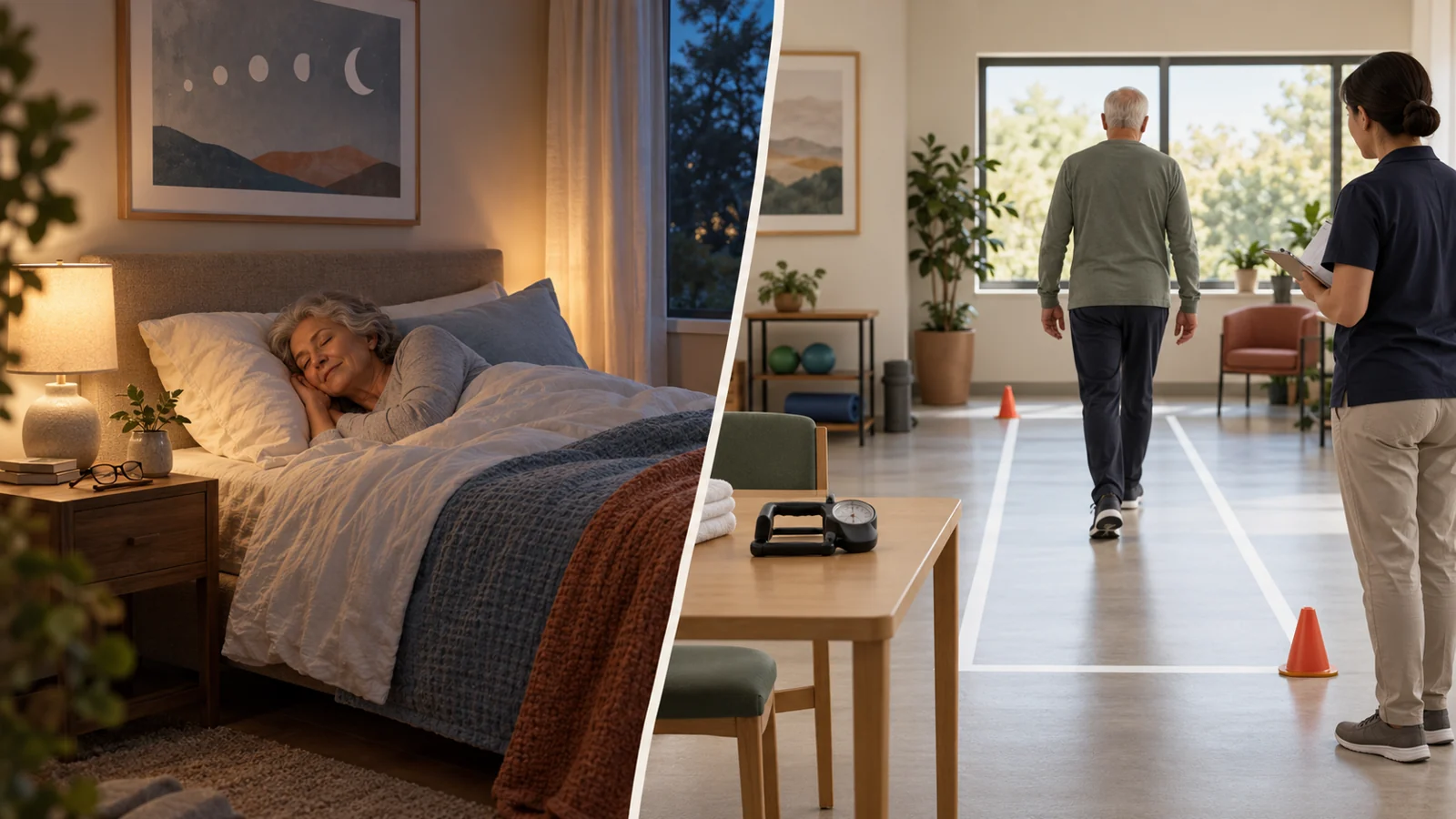
The broader project proposes assessing sarcopenia, meaning loss of muscle strength and mass, through body composition, a four-meter walk and handgrip strength. These measures capture different physical dimensions: body composition describes the body’s makeup, walking provides a simple mobility measure, and grip testing indicates upper-body strength.
They are distinct from cognitive outcomes. The registry plan proposes exploring relationships between common sleep disorders in older adults and factors including cognition, blood pressure, sarcopenia, metabolomics and the intestinal microbiome. The plan therefore links several kinds of information, while keeping the physical tests themselves separate from questions about memory or thinking.
For researchers, this combination could make it possible to ask whether sleep disturbance appears alongside measurable differences in strength or mobility. It also gives the proposed home assessment a clearer role: its value would depend on whether sleep information adds something useful to the wider picture of an older person’s health.
The proposal’s promise has a clear boundary
The investigators present sleep quality as relevant to healthy aging and mention disability and dementia as part of the motivation for the broader work. That motivation is not evidence that the proposed assessment, or any later care, would prevent dementia, preserve independence, improve cognition or strengthen physical function.
Planned measurements alone cannot show whether changing sleep changes those outcomes. The central research question is narrower and more practical: can a coordinated assessment identify clinically useful sleep problems, connect them with physical function and support care that later demonstrates meaningful benefit? The March 2022 registry entry describes a way to investigate that possibility, not an established health effect.
What this could change
If the proposed pathway identifies sleep problems that matter clinically and subsequent care demonstrates meaningful benefit, sleep assessment could become a more actionable part of coordinated geriatric care. A clinician might then consider home sleep information alongside walking ability, grip strength, body composition and other health measures when deciding which problems warrant follow-up.
That would help place nighttime disturbance in the context of physical function rather than treating it as an isolated complaint. The potential benefit depends on the full chain working: useful identification, reliable links to health and care that produces meaningful improvement. From the perspective of this 2022 research plan, that is a possibility to test, not a promise of better sleep or dementia prevention.
Key Sources
- Primary source: Elderly Sleep Disturbance Through Home Care Solution
Government or Regulator · Clinical Trial · 2022-03-31
Keep exploring