
Research Signal – Source date 2023-03-05
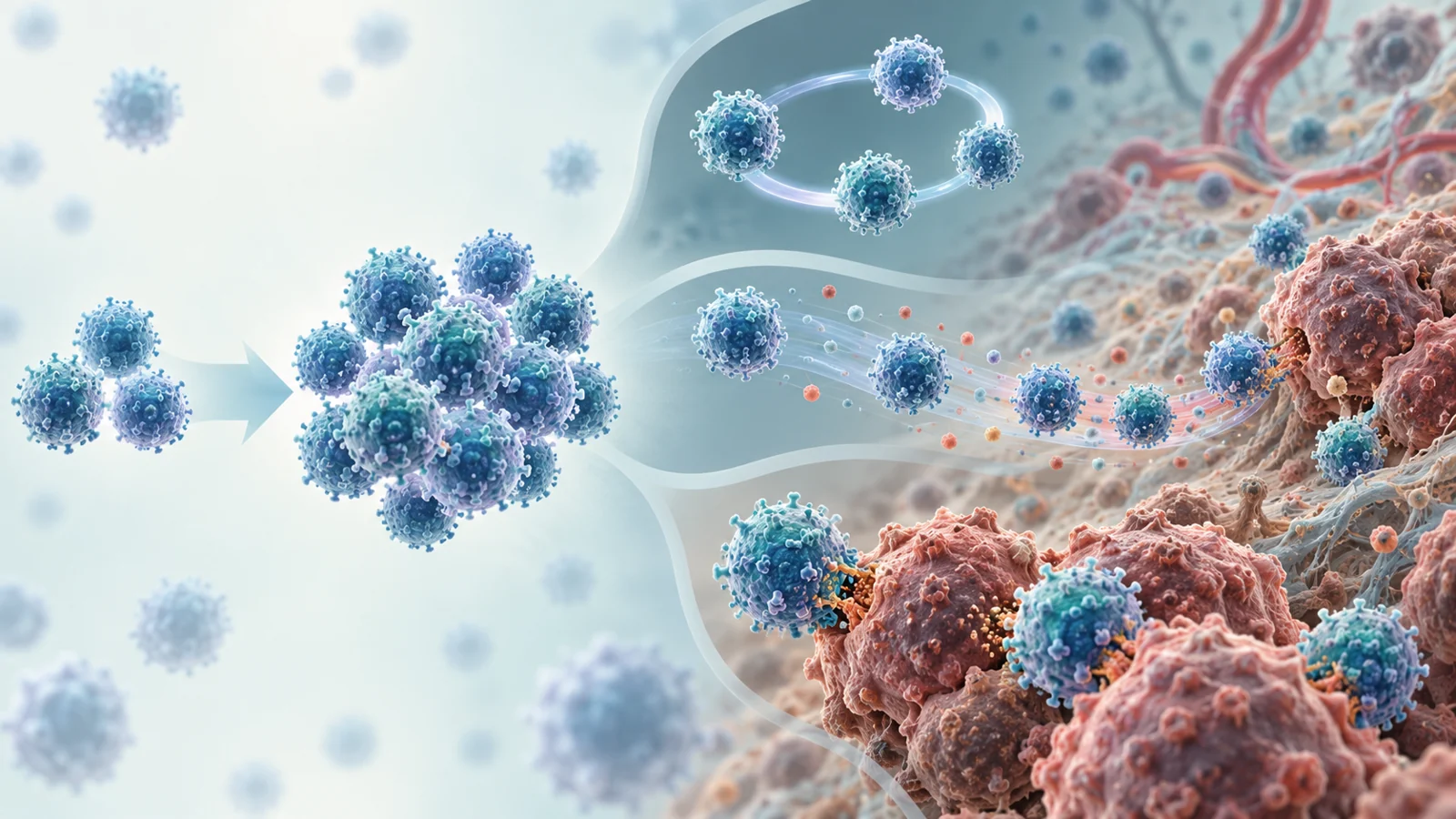
Natural killer cells are immune cells being studied for their ability to attack cancer. One approach, called adoptive transfer, gives patients these cells as a treatment. The field has made progress in finding cell sources and expanding natural killer cells both outside and inside the body. Yet producing more cells is only the starting point. For the cells to become a useful treatment, they also need to remain available, reach the tumor’s surroundings, and kill cancer cells.
Why cell numbers are only the beginning
Expansion answers one practical question: how many cells can be made available for treatment? It does not answer whether those cells will persist in the patient long enough to matter. Persistence means remaining present rather than disappearing before they can contribute to the treatment.
The cells must also move toward the tumor microenvironment, the local surroundings in which a tumor exists. Reaching that setting is a different challenge from producing cells in a laboratory or in the body. Finally, the cells need sufficient cytotoxicity, meaning the ability to damage or kill cancer cells. The review identifies persistence, tumor access, and cancer-cell killing as separate priorities for continued optimization.
These requirements describe a platform with several linked jobs, not a single manufacturing target. Increasing the number of cells may make adoptive transfer more feasible, but it does not by itself show that the cells will remain present, reach the relevant tissue, or perform the intended task there.
One platform across different cancer settings
The review describes natural killer cell transfer in both liquid tumors, such as blood cancers, and solid tumors. It also covers approaches in which the cells are used alone and approaches that combine them with other immunotherapies. That range matters because the platform is being tested in different treatment settings rather than as one uniform intervention.
The underlying idea remains recognizable across those settings: provide patients with natural killer cells and try to improve what happens after transfer. The changes being pursued concern the cells’ availability, movement, and activity. The review presents these efforts as part of a broad clinical translation program involving patients with advanced malignancies.
What the early clinical picture can show
The authors describe numerous early-phase trials as promising. This indicates that the platform had moved beyond laboratory development into clinical investigation by the review’s March 5, 2023 perspective. It does not, on its own, establish that one cell source, combination, or cancer category performs better than another.
The available abstract for this article does not provide trial-level numbers that would allow a comparison of treatment benefit, harms, durability, or performance between blood cancers and solid tumors. It therefore supports a description of an active and varied clinical landscape, but not a numerical estimate of patient benefit or a claim of routine availability. The optimization priorities also remain research goals; they are not evidence that persistence, tumor access, or killing activity has been fully solved.
What this could mean for people with advanced cancer
For people with advanced cancer, the potential value of this work is an additional class of cell-based treatment that could be used alone or alongside other immunotherapies. In the March 2023 view presented by the review, that possibility depended on solving the practical demands placed on transferred cells and then demonstrating patient benefit with acceptable harms in clinical studies. If those conditions are met, natural killer cell therapies could give patients another treatment option where more choices are needed.
Key Sources
- Primary source: The natural killer cell immunotherapy platform: An overview of the landscape of clinical trials in liquid and solid tumors.
DOI or Journal Page · Review or Meta-Analysis · 2023-03-05
Keep exploring