
Research Signal – Source date 2021-01-01
Immune checkpoint drugs are designed to help immune cells attack cancer, but serious adverse events can limit their use. A 2021 review considers a separate question: could nanoparticles change where these drugs go, while leaving their immune action as a distinct part of treatment?
How cancer can use the immune system’s brakes
The immune system has checkpoint mechanisms that regulate its activity. The review describes malignant cells as exploiting these checkpoints, which can help them evade immune surveillance. Blocking a checkpoint became a way to counter that tactic: the drugs interfere with the checkpoint and can help immune cells respond against cancer.
The treatment idea comes with a cost to consider. The authors identify potentially life-threatening adverse events as a concern for checkpoint blockade. The review therefore considers both blockade on its own and combinations with nanoparticles.
A delivery idea, separate from the drug’s action
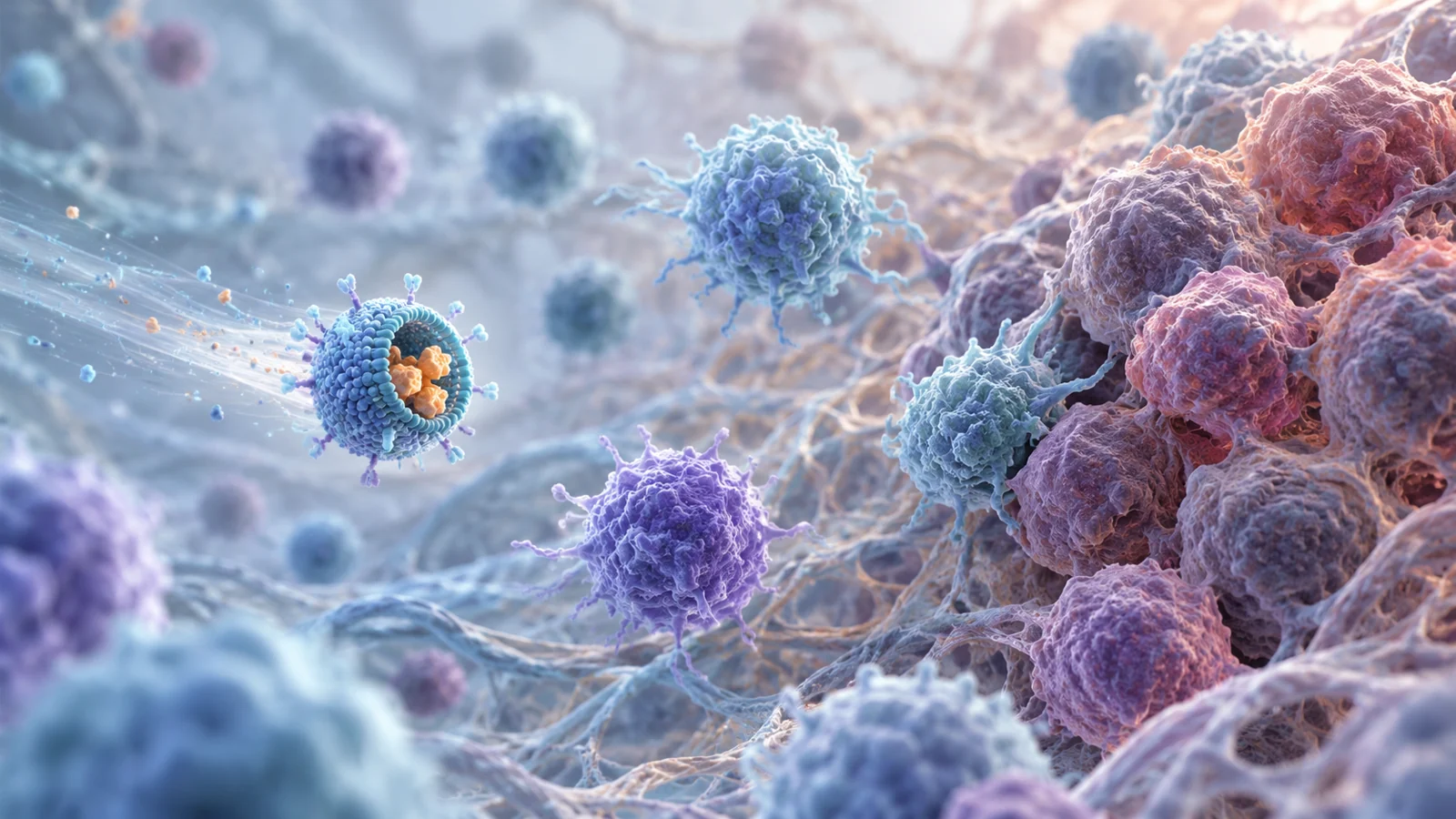
Nanoparticles are proposed as carriers that could direct checkpoint-blocking agents toward a tumor. In this approach, the carrier’s job is to affect delivery; the checkpoint drug’s job is to alter the immune interaction. Pairing the two is intended to address both where an agent goes and what it does.
The review’s abstract describes this combination in forceful terms, saying nano-products ensure delivery to the tumor. But the evidence available for this account contains no measured delivery comparison. It also provides no results showing that the combination reduces adverse events, improves cancer outcomes, or benefits patients. Without those comparisons, the proposed destination cannot be treated as proof of safer or more effective treatment.
What tumor-directed delivery could change in cancer care
If tumor-directed delivery could preserve an antitumor effect while reducing dangerous adverse events, checkpoint treatment might become a more usable option for patients and clinicians. That possibility depends on demonstrating each part of the chain: that the agent reaches the intended site, that safety improves, and that patients benefit. The 2021 review presents the rationale for combining delivery technology with immune checkpoint blockade; the evidence here does not establish those clinical gains.
Key Sources
- Primary source: The application of nano-medicine to overcome the challenges related to immune checkpoint blockades in cancer immunotherapy: Recent advances and opportunities.
DOI or Journal Page · Review or Meta-Analysis · 2021-01-01
Keep exploring