
Research Signal – Source date 2021-01-01
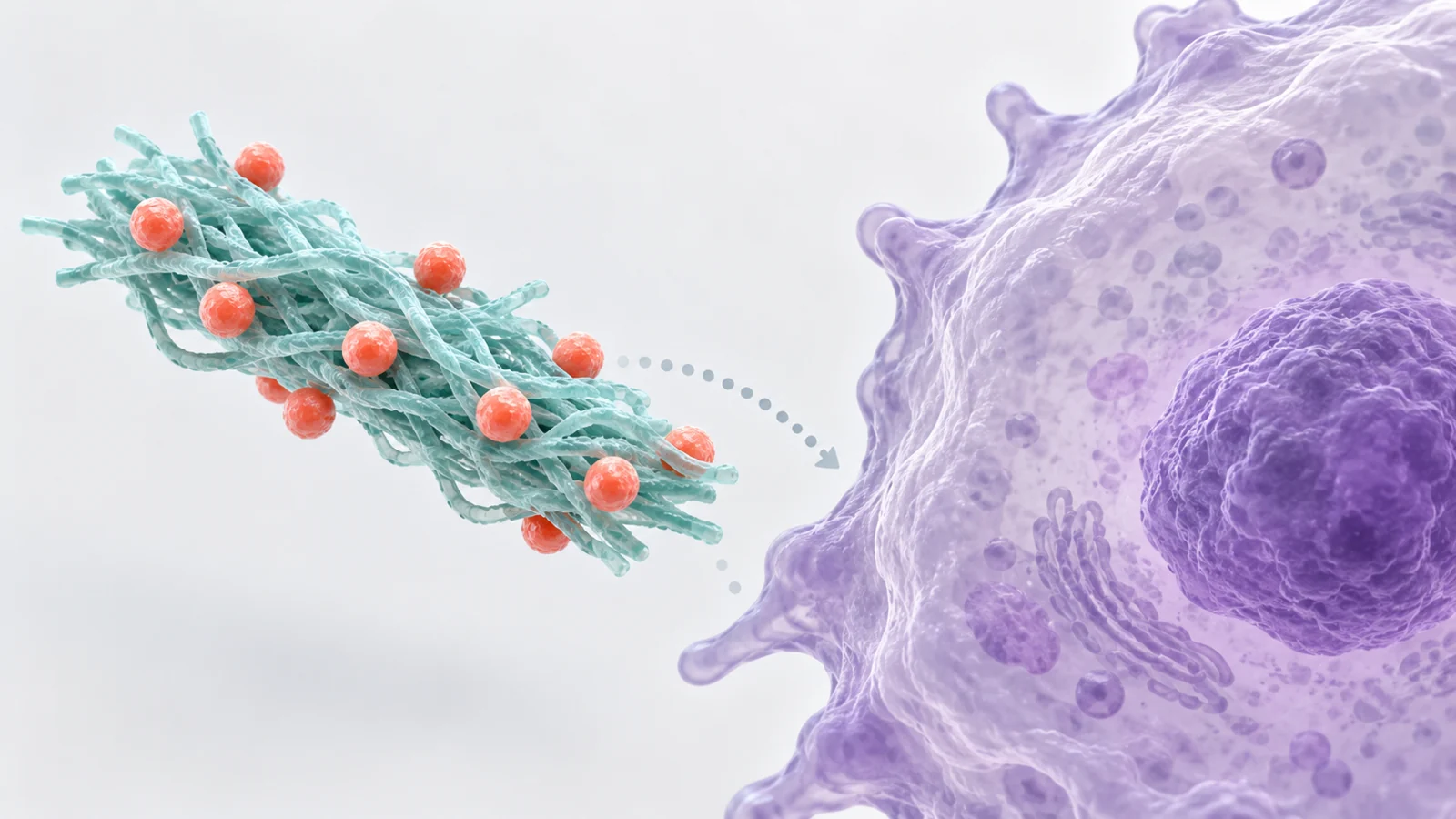
A cancer drug and the material carrying it are different parts of a treatment. The drug is meant to act against cancer; a delivery material is designed to help carry that drug. A 2021 review of nanocellulose-based delivery systems asks whether this material could be useful in designing ways to deliver drugs for cervical cancer.
The question matters because a treatment’s effects depend not only on which medicine is used, but also on how it is delivered. The review presents nanocellulose as a possible material for systems intended to carry different drugs to cancerous cells. Its focus is a design direction, rather than a reported patient treatment result.
The review’s treatment context
The authors name chemotherapy, radiotherapy, surgery and immunotherapy among approaches used to treat cervical cancer. That list gives the broader care context, but the nanocellulose proposal concerns drug delivery: how medicines might be carried. It does not describe a carrier that applies to every treatment in the list.
The review frames targeted therapy as a way that might reduce unwanted effects and improve anticancer treatment. Those are reasons to investigate delivery systems, not outcomes established by the abstract. The source positions nanomedicine as a field that can provide biocompatible, non-toxic delivery systems, while the supplied evidence does not establish those properties for a particular nanocellulose system.
A material proposed for drug delivery
Nanocellulose is the material the authors consider for designing delivery systems. Their stated interest spans different drugs and cancerous cells, with cervical cancer as the focus of this review. In practical terms, the material is being considered as a carrier component that could be paired with medicines.
The abstract does not specify a particular nanocellulose formulation, drug pairing, dose or mechanism for reaching cancer cells. Those details would determine what a system actually does. The review’s stated aim is to investigate nanocellulose’s potential for establishing therapeutic methods for cervical cancer; the abstract alone does not show how any specific system performed.
An aim, not a treatment result
The review expresses hope that new delivery systems could reduce side effects and increase the efficacy of anticancer drugs. That hope describes the intended value of the research direction. The evidence supplied here is the review’s abstract, which does not provide a verified comparison, treatment outcome or safety result for patients with cervical cancer.
So the useful contribution at this stage is the question the review brings into focus: could a material used to carry a drug help make delivery more useful in cancer care? Answering that for cervical cancer requires evidence about a defined system and what happens when it is used. The abstract gives readers the rationale and research aim, but not a demonstrated benefit.
What better drug delivery could mean for cervical cancer care
If a specific nanocellulose delivery system can carry an anticancer drug effectively, reduce side effects and show acceptable safety, it could help make drug treatment gentler while strengthening its anticancer effect. That potential benefit depends on the system demonstrating those properties; this review abstract does not show that it has happened in cervical cancer patients.
Key Sources
- Primary source: Nanocellulose-based Delivery Systems and Cervical Cancer: Review of the Literature.
DOI or Journal Page · Review or Meta-Analysis · 2021-01-01
Keep exploring