
Research Signal – Source date 2024-04-04
Reducing unwanted microwave radiation is a materials problem with many possible ingredients. Carbon-based substances, conducting polymers, magnetic materials and two-dimensional materials all feature in research on absorbers. What connects these different candidates, and what makes a material effective at absorbing microwave energy?
A review published on April 4, 2024, Progress in microwave absorbing materials: A critical review, approaches that question through the interactions and energy-loss processes involved. Its abstract emphasizes optimizing those processes to improve absorption. Understanding that emphasis starts with separating what happens to a wave’s path from what happens to its energy.
Following the wave and its energy
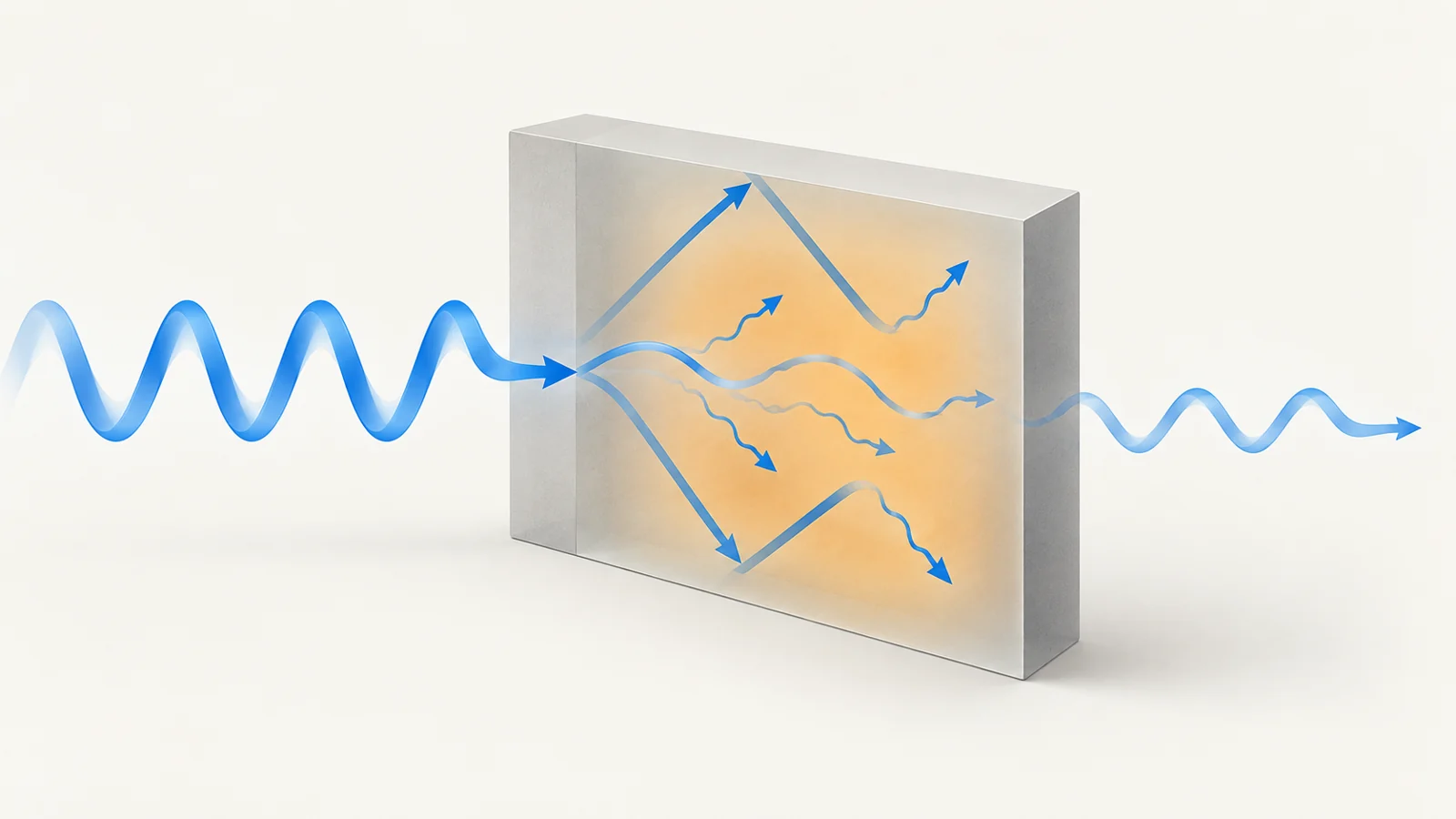
The review discusses multiple reflections, scattering and polarization. Reflections redirect radiation; repeated reflections involve more than one such encounter. Scattering spreads radiation into different directions. Polarization concerns how electric charges within a material respond to an electric field. These terms describe different aspects of the interaction between radiation and matter.
A redirected wave and an absorbed wave are not equivalent. To understand absorption, the next question is how the material dissipates electromagnetic energy. Here, “loss” describes energy leaving the electromagnetic wave through its interaction with the material. It is a useful property for an absorber.
The abstract identifies dielectric, conduction, relaxation, magnetic and morphological losses as relevant to performance. In plain language, these categories concern electrical response, charge movement, the time taken for a response to adjust, magnetic response, and effects associated with a material’s shape or structure. They give researchers several aspects of an absorber to consider together.
The organizing idea is therefore broader than choosing a substance with an attractive name. The review emphasizes optimizing different losses. Its account connects the way radiation interacts with a material to the processes through which that material can dissipate energy.
A wide range of candidate materials
The material families covered extend well beyond a single chemistry. Carbonaceous materials are based on carbon; conducting polymers bring electrical conductivity into polymer materials. Magnetic materials, metals and composites also receive attention. Composites combine constituents within one material system.
The review additionally covers two-dimensional materials, including MXenes and transition metal dichalcogenides, as well as biomass-derived materials, carbides, sulfides and phosphides. It highlights two-dimensional and high-entropy materials among the emerging directions with potential to advance absorption properties.
According to the abstract, the review examines the characteristics, advantages and limitations of these families. That breadth makes the article useful as an introduction to the range of approaches researchers are investigating.
There is a clear limit to the interpretation available here. The verified abstract establishes the topics and emphasis of the review; it does not provide enough detail to rank candidates, compare numerical performance under matched conditions, or select an absorber for a particular use. Those judgments require verified details beyond the abstract. Nor does this account establish a newly validated device or commercial readiness.
What this could change
If researchers can optimize the relevant energy-loss processes in materials that work under their intended operating conditions, designers could build components that suppress unwanted microwave radiation more effectively. The causal link is direct: better control of how a material dissipates microwave energy could improve its ability to attenuate that radiation. This is a prospective engineering capability suggested by the review’s emphasis, with the eventual benefit depending on performance in the setting where the absorber is used.
Key Sources
- Primary source: Progress in microwave absorbing materials: A critical review.
DOI or Journal Page · Review or Meta-Analysis · 2024-04-04
Keep exploring