
Research Signal – Source date 2025-04-09
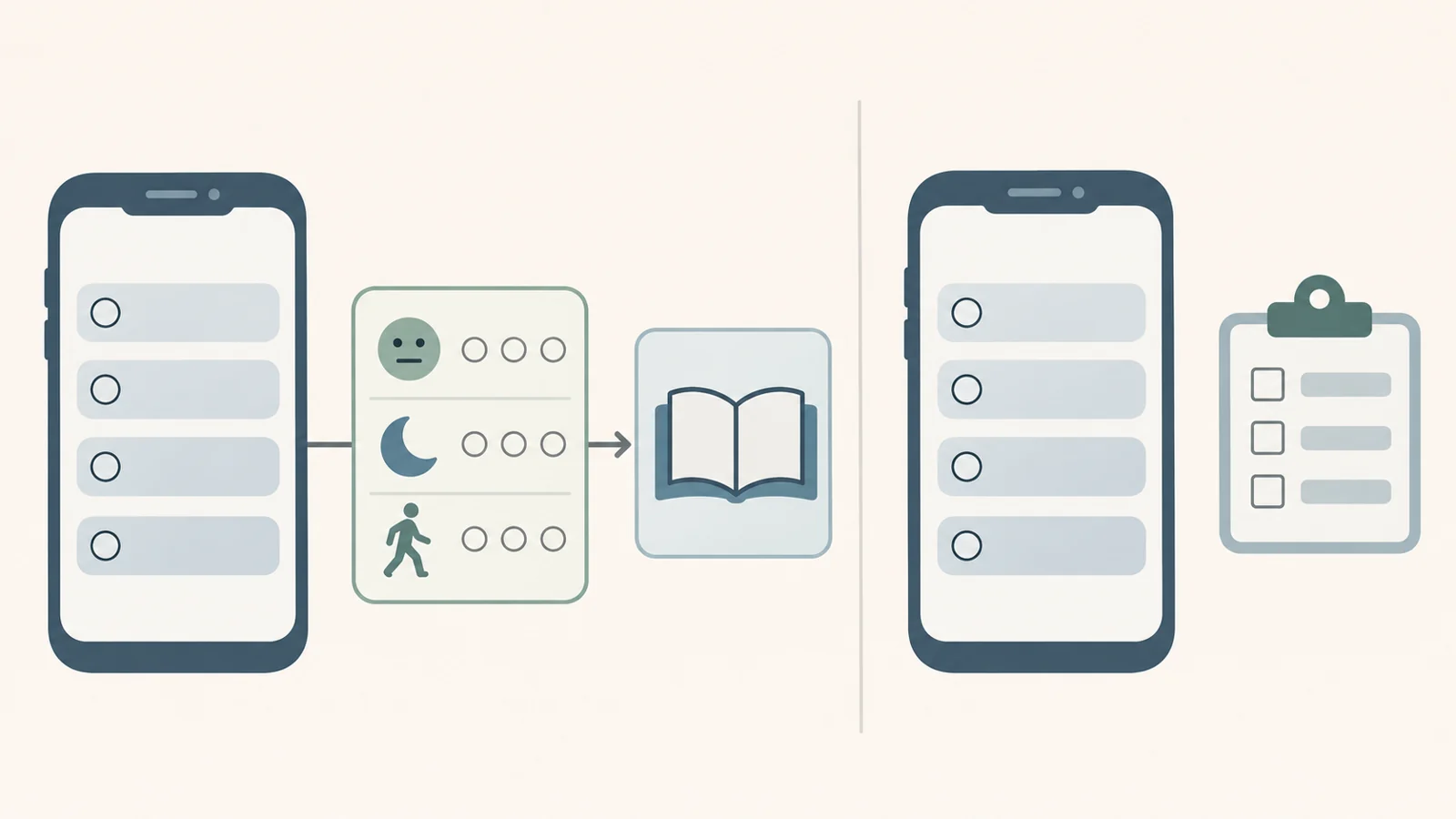
Both groups in the MENTINA trial use an app on their phones. The difference is what the app lets them do: one group gets daily self-monitoring, educational content and rule-based feedback, while the other uses the app for study measurements. That setup can help researchers ask whether the full self-management package makes a difference beyond simply taking part in regular measurement.
The ClinicalTrials.gov entry was first posted on April 9, 2025. Its available updated record lists the study’s actual start as May 13, 2025, and estimates completion in May 2027. The trial is designed to test an approach; the registry information here describes its plan, not results.
Two app experiences create the comparison
MENTINA is a randomized, parallel-group study planned across three centers in Denmark, Germany and Spain. The registry estimates 660 adult participants, or 220 at each center. Participants are assigned to one of two groups.
In the active group, the app supports daily entries about symptoms such as mood, sleep and activity. It also includes a library of information about depressive symptoms. Rules using participants’ self-reported measures are intended to suggest relevant reading or, in some circumstances, contacting emergency health care. The app also collects sensor-based data from smartphones, which are part of the intervention package described in the record.
The comparison group also has the app installed, but uses it for study outcome measurements and sensor-data collection. It does not get the app’s content, daily self-monitoring or rule-based feedback. So the trial compares access to a bundle of features with an app used for measurement. If the groups eventually differ, this design alone cannot identify whether the difference came from the diary, library, feedback rules or sensor data individually.
The feedback rules are described as responding to self-reported measures. The record does not establish that phone data can diagnose depression or predict a worsening episode. Those are different claims from collecting information and using rules to suggest a next step.
Who the study is designed to include
Participants must be at least 18 and own and use a smartphone. Eligibility includes depressive symptoms above the stated Patient Health Questionnaire-9 threshold or a current or previous depressive episode. The trial therefore includes people with current symptoms as well as some with a history of depression.
The registry excludes people with certain diagnoses or circumstances, including dementia, schizophrenia, mania or bipolar disorder, ongoing substance abuse, current psychotic depression, current suicide risk and acute somatic illness requiring intensive care. Participants also need sufficient Danish, German or Spanish language skills for their study site. These boundaries matter when considering who the eventual findings could apply to: the planned sample does not represent every person experiencing depression or psychological distress.
Repeated symptom scores are the main test
The primary outcome is the self-reported Patient Health Questionnaire-9, or PHQ-9, a nine-item measure of depressive symptoms. Participants are scheduled to complete it every 14 days over the 12-month study period. Researchers plan to compare total scores between the groups. The registry also lists secondary measures including quality of life, anxiety symptoms, perceived stress, health-care contacts and negative effects, along with changes in PHQ-9 scores over time.
A repeated score can show how reported symptoms change during the year and whether the patterns differ between groups. Because the main measure is self-reported and the study is open-label, participants know which app experience they receive. Their expectations and attention to symptoms could shape their answers. The result would therefore need to be interpreted as a comparison of reported symptoms under these two study experiences.
The registry provides no comparative outcome estimate in the material described here. The planned measures explain what researchers intend to compare; they do not tell us whether the active app improves symptoms or quality of life.
Monitoring itself is part of the safety question
Frequent check-ins may help make changes in symptoms visible, but the registry also identifies a possible downside: focusing more on one’s illness could worsen depressive symptoms or suicidal thoughts. This is a risk the study plans to assess, not a harm reported as having occurred.
The negative-effects questionnaire is among the listed outcomes. The exclusion of people with current suicide risk also defines an important limit on what this trial can tell us about using the app in that higher-risk group. Any eventual interpretation of symptom scores belongs alongside the safety results, rather than on its own.
Where this research could lead
If future evidence supports benefit and safety, people with depressive symptoms could use daily entries to receive relevant reading suggestions or, in some circumstances, a prompt to contact emergency health care. MENTINA tests an early version of that possibility by comparing an app with daily check-ins, reading material and rule-based suggestions against the same app used for study measurements.
The next milestone is whether the groups differ in reported depression scores over 12 months, considered alongside the negative-effects results. If the full package improves outcomes without unacceptable downsides, it could support further work on using this kind of self-management tool in care. Whether it belongs in clinical practice would depend on the trial findings and additional evidence about safety, usefulness and fit for the people who might use it.
Key Sources
- Primary source: The Effect of Digital Markers in the Self-management of Depressive Symptoms
Government or Regulator · Clinical Trial · 2025-04-09
Keep exploring