
Research Signal – Source date 2021-04-20
When advanced melanoma progresses on anti-PD-1 immunotherapy, another checkpoint treatment may still shrink tumors in some patients. A review published April 20, 2021, pooled an objective response rate of 23.08% for ipilimumab combined with nivolumab, and 8.19% for ipilimumab alone.
An objective response means that a tumor met the study measure for shrinking. These percentages describe groups in the studies; they are not an individual patient’s odds of benefit. The review also considered anti-PD-1 retreatment or continuation after progression, but its abstract does not report a pooled response percentage for that treatment category.
Three treatment approaches after progression
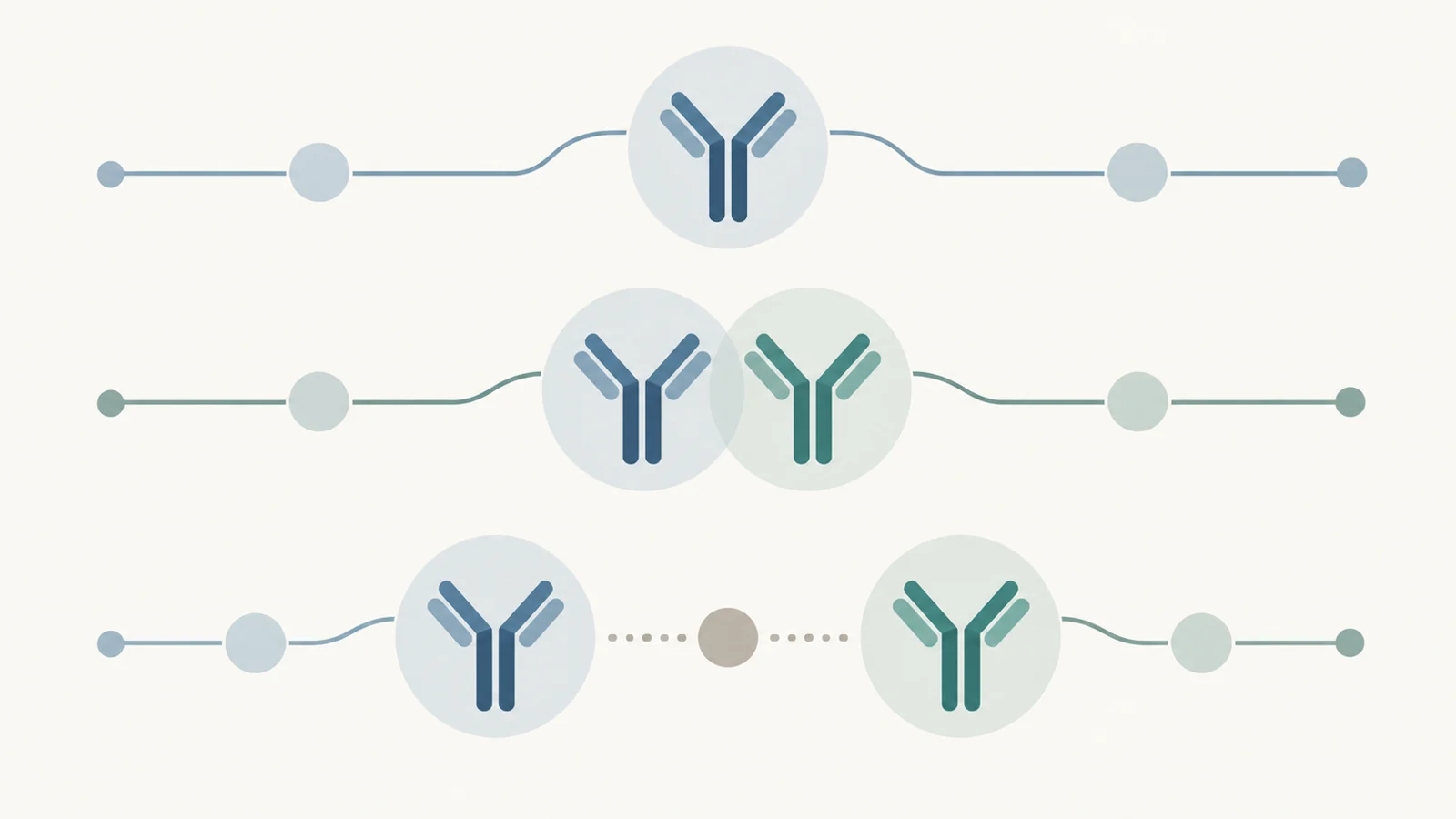
The review examined advanced melanoma that had progressed on anti-PD-1 therapy and then received one of three approaches: ipilimumab alone, ipilimumab with nivolumab, or anti-PD-1 treatment again. The last category included retreatment or continuing treatment beyond progression. These are distinct options, and the results should not be blended into a single “next immunotherapy” rate.
The combination had the higher pooled response estimate among the two approaches with figures provided: 23.08% (95% confidence interval, 16.75% to 30.03%), compared with 8.19% (95% confidence interval, 5.78% to 10.92%) for ipilimumab alone. A confidence interval shows the uncertainty around a pooled estimate; it is not a range of outcomes for a particular person.
What pooled results can—and cannot—compare
The authors combined findings from 14 studies involving 1,460 patients. Twelve studies reported objective response rates, and nine reported immune-related adverse events, which are side effects linked to the immune system. The authors used fixed- or random-effects statistical models according to the variation they detected across studies.
The two response percentages are pooled separately by treatment group. They do not come from a single direct comparison in which patients were assigned to one approach or the other under the same conditions. Differences among studies and their patient groups can affect results, so these estimates do not establish that the combination is superior to ipilimumab for an individual or in a head-to-head comparison.
The review’s authors said responses were lower than those seen with the same treatments in patients who had not previously received anti-PD-1 therapy. That comparison provides context, but it does not make the previously treated and treatment-naïve groups matched populations.
Tumor response is only one part of the tradeoff
For ipilimumab, the pooled estimate for grade 3 or 4 immune-related adverse events was 43.77%, with a 95% confidence interval of 22.55% to 66.19%. The grade 3 or 4 label denotes severe immune-related adverse events. The broad interval signals considerable uncertainty in this estimate.
A response percentage alone cannot describe the tradeoff: it says whether tumors shrank by the study’s measure, not what harms accompanied treatment. The review’s abstract does not report a combination-specific estimate for severe immune-related adverse events, so the ipilimumab figure should not be applied to the combination.
Survival asks a different question
In the ipilimumab group, the reported median overall survival ranged from 5.1 to 7.4 months across the studies. Median survival is the time point at which half the group had died and half were still alive. This group-level measure is separate from whether tumors shrank: an objective response by itself does not show that treatment extended survival.
The authors also described survival as inferior to that in anti-PD-1-naïve patients receiving ipilimumab. As with the response comparison, that observation does not establish what would happen to a particular patient or isolate the effect of prior treatment.
What another immunotherapy option could mean after melanoma progresses
If prospective studies confirm which patients are likely to respond and clarify the accompanying harms and longer-term outcomes, clinicians could make better-grounded choices among checkpoint treatment options after anti-PD-1 progression. That could give some patients another chance of tumor control, while the balance of benefit and harm remains specific to the evidence those studies establish.
Key Sources
- Primary source: Systematic review and meta-analysis efficacy and safety of immune checkpoint inhibitors in advanced melanoma patients with anti-PD-1 progression: a systematic review and meta-analysis.
DOI or Journal Page · Review or Meta-Analysis · 2021-04-20
Keep exploring