
Research Signal – Source date 2021-01-01
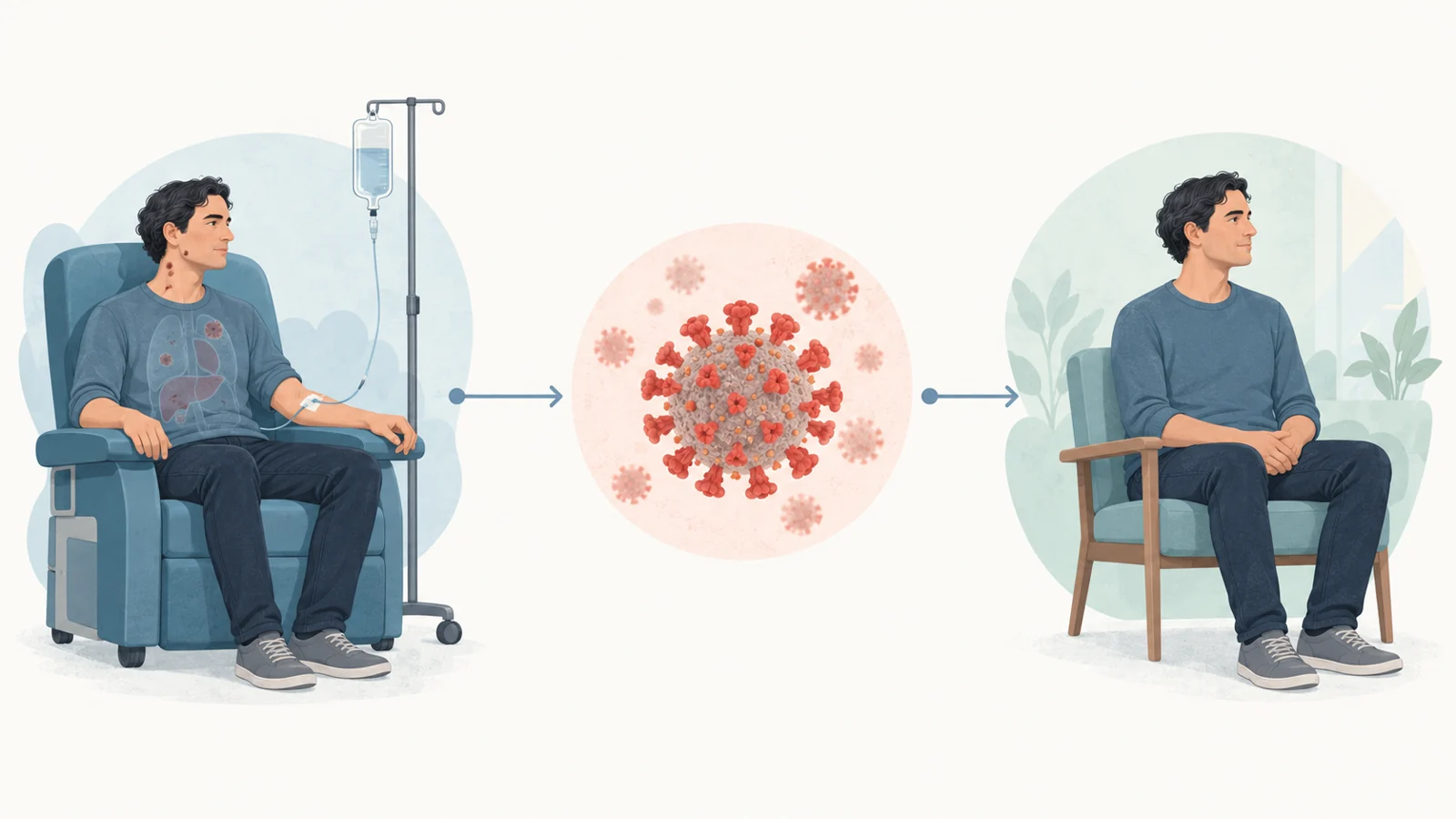
A person with metastatic melanoma who had responded to anti-PD-1 treatment—a type of cancer immunotherapy—contracted SARS-CoV-2 and recovered without lasting effects. The case offers a concrete example of recovery during a period when clinicians were still trying to understand how COVID-19 might affect people receiving cancer treatment. It does not, by itself, settle whether treatment should continue during an infection.
The 2021 paper presents the case alongside a critical review of the literature. Its authors considered two related but distinct concerns: cancer and treatments such as chemotherapy or radiotherapy might worsen COVID-19 outcomes, while the course of infection in people receiving immunotherapy remained uncertain.
A recovery in a setting of uncertainty
The reported patient had metastatic melanoma and had been a long responder to anti-PD-1 blockade before contracting SARS-CoV-2. The authors say the patient recovered without sequelae, meaning without lasting effects reported in the account.
That outcome is encouraging for this individual. It is also only one patient’s course. The supplied abstract does not establish whether anti-PD-1 treatment was continued, paused, or restarted during the infection, so the recovery cannot be attributed to a particular treatment decision.
What the authors thought the limited evidence could support
After reviewing the literature available to them, the authors described the data as limited but said they supported the possibility of continuing immunotherapy in patients whose cancer was under control. This is a qualified interpretation, not a general instruction for people receiving treatment.
The practical question is whether to interrupt immunotherapy when a patient’s cancer is under control and that patient develops COVID-19. The paper raises the possibility of continuing treatment in that situation, but its one reported recovery does not show which choice is safer for an individual.
What one case cannot show about COVID-19 risk
A single recovery cannot show how often people receiving anti-PD-1 treatment develop severe COVID-19, or how their risk compares with that of people receiving other cancer treatments. This case also cannot identify which patient circumstances might change that risk.
The authors’ suggestion therefore does not establish that continuing immunotherapy is safe for every patient. It also does not provide an individual treatment rule. The reported case illustrates one possible course; it cannot tell another patient what will happen or what decision is right for them.
How this could change cancer immunotherapy decisions
Broader evidence about patient outcomes and the conditions surrounding treatment could help clinicians make better-grounded decisions about continuing anti-PD-1 therapy for suitable patients whose cancer is controlled when SARS-CoV-2 infection is a concern. The 2021 paper raised that possibility, while the limited evidence available at the time left the relevant risks and conditions unresolved.
Key Sources
- Primary source: Course of Sars-CoV2 Infection in Patients with Cancer Treated with anti-PD-1: A Case Presentation and Review of the Literature.
DOI or Journal Page · Review or Meta-Analysis · 2021-01-01
Keep exploring