
Research Signal – Source date 2021-04-01
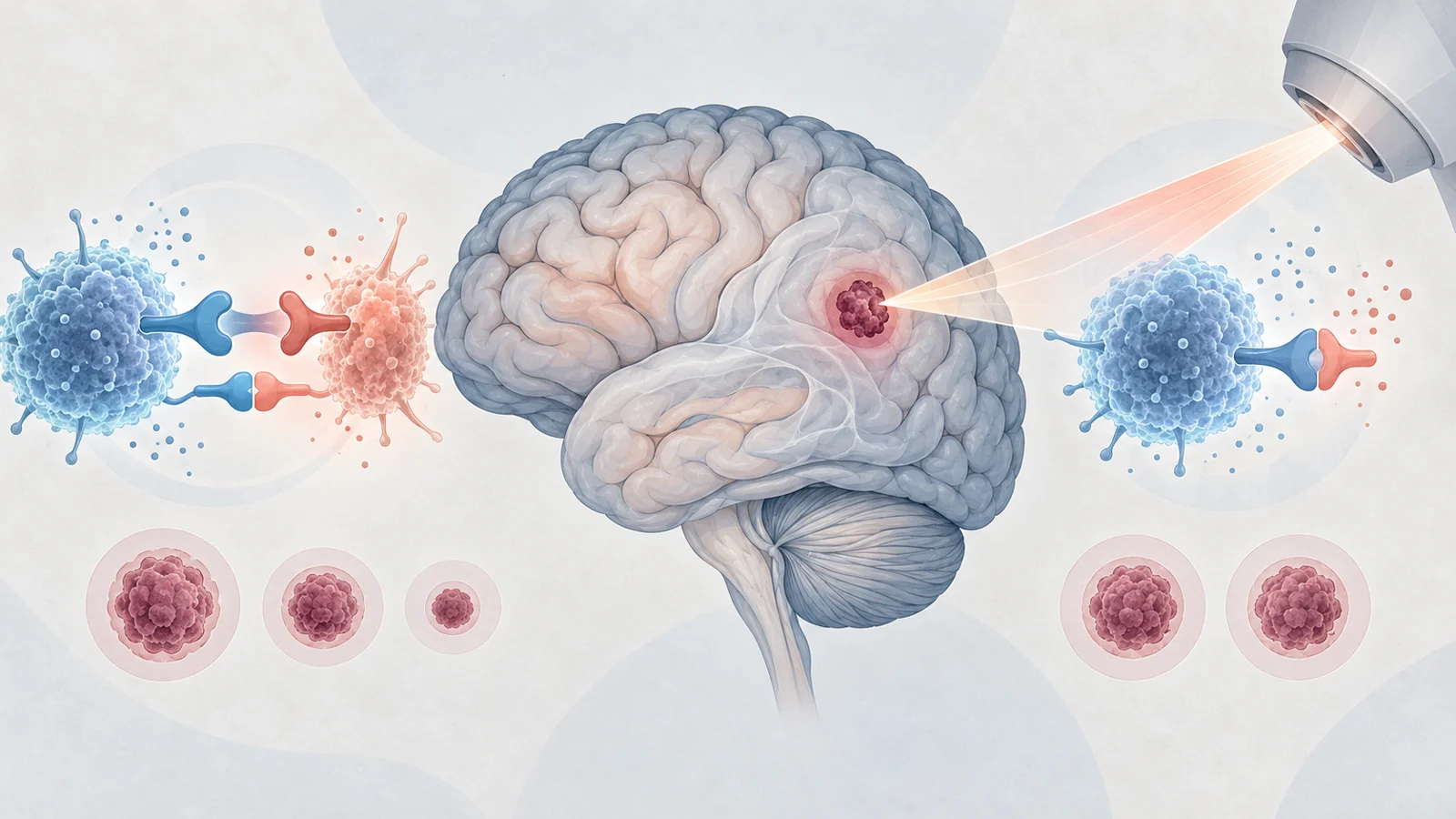
A pooled analysis of melanoma brain metastases found a striking split between two treatment combinations. Two immune checkpoint inhibitors had the higher rate of tumors shrinking, while one inhibitor paired with radiation had the higher rate of tumors either shrinking or staying stable. The combinations also differed in reported severe side effects.
Those percentages came from separate groups of studies, not a direct trial assigning comparable patients to each approach. The review, published April 1, 2021, searched studies available through October 12, 2019. Its results raise a useful question about what a brain scan counts as a response—and how much confidence indirect comparisons can support.
A response and disease control count different outcomes
An objective response means a tumor had a complete or partial shrinkage on imaging. Disease control includes those responses plus stable disease, where the tumor did not meet the criteria for shrinkage but was not classified as growing. The two measures therefore answer different questions.
Across the included study groups, the pooled objective response rate was 15% with one immune checkpoint inhibitor, 42% with an inhibitor plus radiotherapy, and 53% with two inhibitors. For disease control, the estimates were 26%, 85%, and 57%, respectively. The radiation combination’s disease-control estimate varied substantially across studies, so its 85% figure is especially difficult to treat as a stable ranking.
These main pooled figures excluded symptomatic cohorts. They should not be read as expected outcomes for every person with brain metastases, particularly people who had symptoms. In the two studies reporting symptomatic groups separately, objective response was 5% among 21 people receiving one inhibitor and 17% among 18 receiving two. Those small groups are not enough to settle how treatment approaches compare for symptomatic patients.
The combinations use different routes
“Two inhibitors” means a combination of immune checkpoint drugs. The other combination paired one immune checkpoint inhibitor with radiotherapy, which directs radiation at brain metastases. These are distinct treatment strategies, not interchangeable versions of the same intervention.
The authors proposed that radiation might help immune treatment by damaging tumor cells and releasing markers that can alert the immune system. Radiation may also make the barrier between the blood and brain easier to cross, and immune effects might reach beyond the irradiated area. These are possible explanations; the pooled scan results do not show that any of them caused the response rates.
Severe side effects separated the groups
Pooled grade 3 or 4 adverse-event rates—a category for serious or severe events—were 60% with two inhibitors, 11% with one inhibitor, and 4% with an inhibitor plus radiotherapy. The estimate was highest for the two-drug immune combination. The authors found no statistically significant difference between groups in severe central nervous system-related events: pooled rates were 9% with two inhibitors, 8% with radiotherapy plus an inhibitor, and 5% with one inhibitor.
Those are separate safety measures. Similar-looking central nervous system estimates, without a statistically significant difference, do not demonstrate equal neurological risk. Also, the studies reporting overall severe events did not all report severe central nervous system events, limiting how directly the two sets of percentages can be compared. The authors also noted radiation necrosis—damage to brain tissue after radiation—as a concern whose frequency in this setting remained uncertain.
A brain scan can be harder to read than it looks
The studies did not all use the same criteria to judge whether a brain metastasis had responded. They used several systems, including criteria designed for brain metastases and modified versions of broader tumor-response rules. The time of response assessment ranged from four to 16 weeks after treatment began. A percentage pooled across studies therefore combines measurements made at different times and under different rules.
Imaging can also mimic growth before a lesion later recedes, a pattern called pseudoprogression. The review noted reported cases after both immune treatment alone and immune treatment with radiotherapy. If an early scan is read in isolation, this pattern can complicate the interpretation of whether treatment is working. The review’s pooled response categories cannot erase that ambiguity.
The evidence does not rank the combinations directly
The analysis included 11 studies grouped into 14 treatment cohorts. Five studies were phase II trials, and six were retrospective. All studies of immune treatment combined with radiotherapy were retrospective. The comparisons were indirect: the pooled groups were assembled from different studies rather than from a single trial that compared the combinations under the same conditions.
That matters because patient groups, scan criteria, and assessment schedules can differ between studies. The radiation combination’s disease-control results also showed substantial heterogeneity, meaning the study estimates varied more than would be expected from sampling differences alone. The analysis used study-level results and did not have enough detail to adjust thoroughly for factors such as symptoms, metastatic burden, or response criteria.
The findings suggest that both combinations may have local activity against melanoma brain metastases, while the reported patterns of shrinkage, stable disease, and severe adverse events differ. But they cannot establish which combination is superior for comparable patients, or whether a higher scan response translates into longer survival or better quality of life.
A clearer treatment choice for melanoma in the brain
Comparable prospective trials could help clinicians and patients weigh adding radiation against adding a second immune drug. If those trials measure brain control and serious harms consistently, they could give people a better grounded view of the likely tradeoff. This review points to the need for that evidence; it does not provide a direct treatment choice.
Key Sources
- Primary source: Immune Checkpoint Inhibitor with or without Radiotherapy in Melanoma Patients with Brain Metastases: A Systematic Review and Meta-Analysis.
DOI or Journal Page · Review or Meta-Analysis · 2021-04-01
Keep exploring