
Research Signal – Source date 2022-01-22
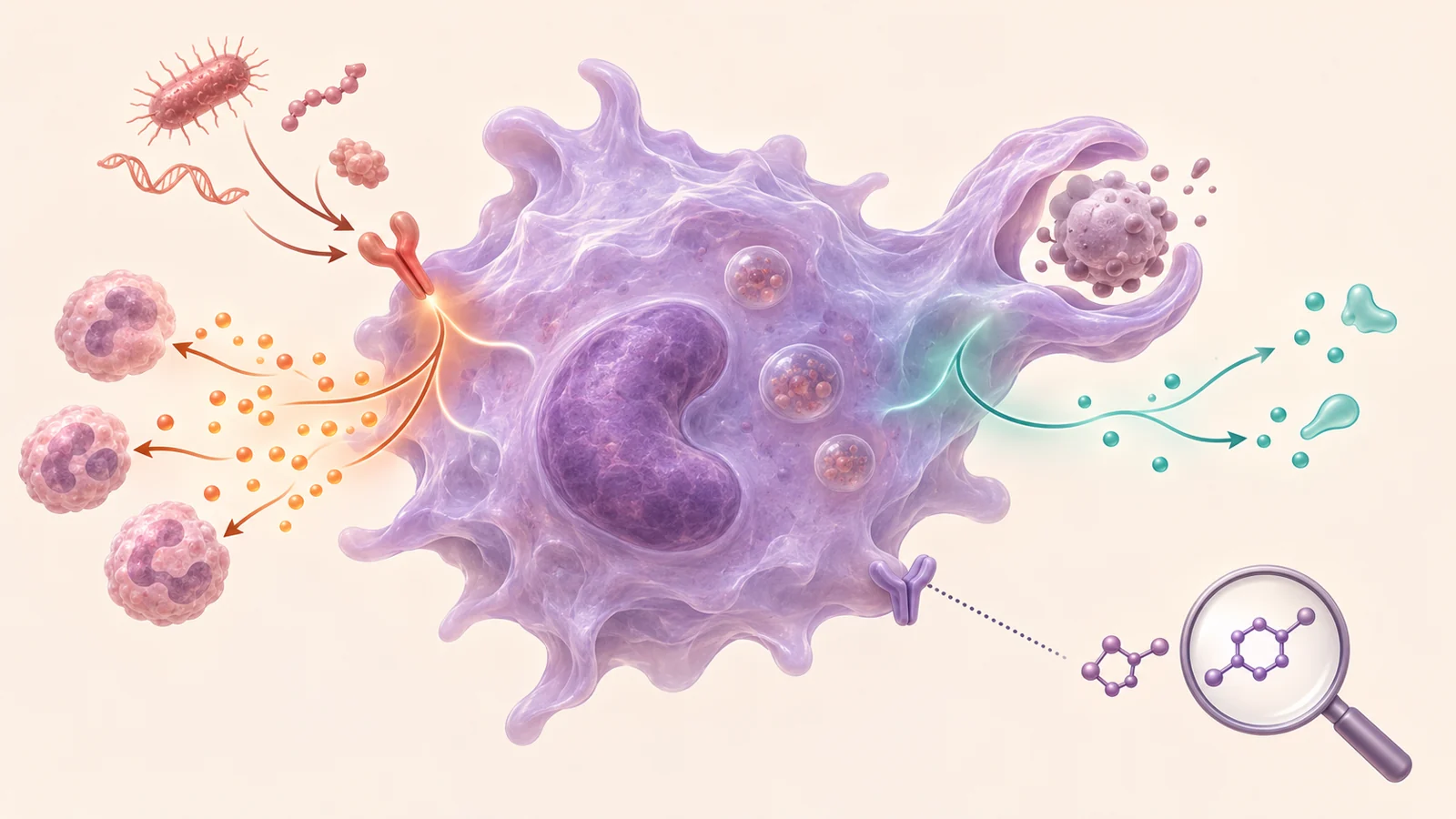
Macrophages are immune cells involved in both starting inflammation and helping it resolve. That two-sided role helps explain why researchers have considered them as treatment targets: they are part of processes that can intensify or settle inflammation. It does not mean either activity can simply be switched on or off.
Looking beyond lymphocytes
In a review published on January 22, 2022, the author described most immunotherapy approaches as focused on the lymphoid compartment—the part of the immune system that includes lymphocytes, another group of immune cells. The review turned attention to macrophages, whose involvement in both the induction and resolution of inflammation offered a reason to study them alongside that established focus.
This was a shift in research attention, not a report that macrophage-directed treatment had become effective. The review surveys past and newer strategies and considers their potential to move into clinical use. Its abstract gives a broad rationale and scope; it does not establish a patient benefit from a particular intervention.
One cell type, different disease questions
The review considers macrophage-focused strategies across human diseases, including cancer and inflammatory diseases. These conditions raise different treatment questions. Their appearance in the same review reflects the broad interest in macrophages, not evidence of one shared treatment mechanism or a universal therapy.
A strategy’s relevance would depend on the condition it is meant to address. The review flags translational challenges, but the supplied evidence does not specify particular obstacles or outcomes. Its contribution is the case for widening the field’s focus: macrophages’ roles in inflammation make them relevant to research beyond approaches centered on lymphocytes.
What this could change
If further research develops and validates a dependable macrophage-directed treatment for a specific inflammatory disease, clinicians could eventually have another option to consider alongside existing immune therapies. The possibility follows from the review’s focus on macrophages’ involvement in inflammation and its account of immunotherapy’s emphasis on lymphocytes. Whether that research can produce a useful treatment remains an open question.
Key Sources
- Primary source: Hacking macrophages to combat cancer and inflammatory diseases – Current advances and challenges.
DOI or Journal Page · Review or Meta-Analysis · 2022-01-22
Keep exploring