
Research Signal – Source date 2022-09-01
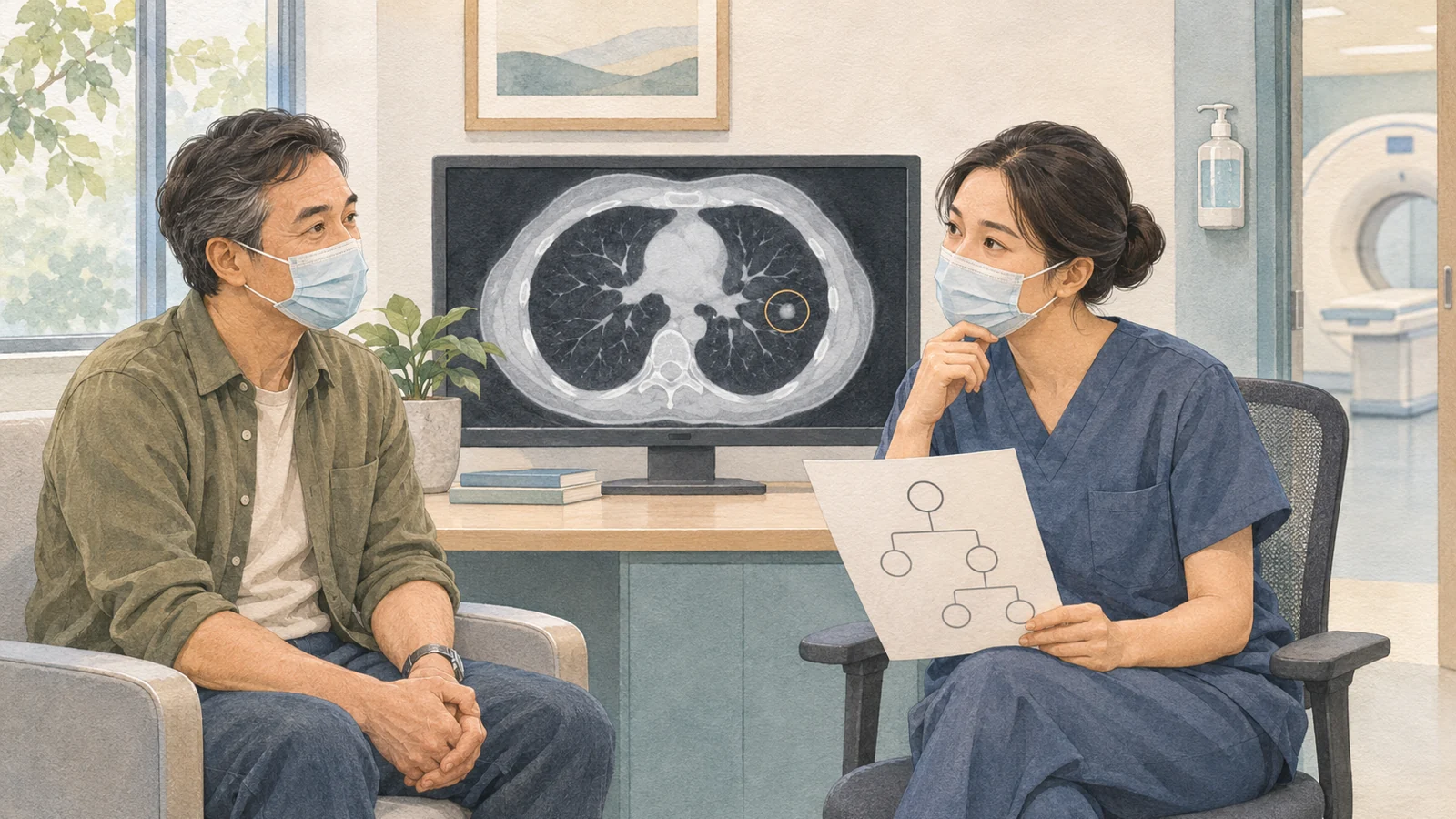
During the COVID-19 pandemic, reopening a lung cancer screening clinic did not immediately bring patients back. At one US center, missed appointments rose sharply, and a larger share of completed scans showed nodules considered suspicious for cancer. The review reporting those figures also describes a harder problem beyond attendance: COVID-19, lung cancer progression, and inflammation caused by some treatments could look alike, even though each might call for a different response.
The tension shaped care throughout the pathway. Patients needed protection from infection, but screening gaps, diagnostic delays, and limited hospital resources could also put timely cancer care at risk. A 2022 review gathered observational studies and professional recommendations from the pandemic’s early years. Its examples show why reopening a service was only one part of restoring care—and why clinicians did not use one delay rule for every patient.
Reopening did not restore the old screening pattern
The review describes a study at the University of Cincinnati that compared lung screening before service disruption with screening after operations resumed. Even after the clinic fully reopened, monthly scans for new patients remained low. The share of patients who missed an appointment increased from 15% before the pandemic to 40% during it.
Among completed scans, the share classified as Lung-RADS 4 rose from 8% to 29%. That category denotes a finding suspicious for malignancy: it signals a need for further clinical evaluation, not a confirmed cancer diagnosis. The two changes occurred in the same screening program, but the comparison cannot show that missed visits caused the increase in suspicious findings. It does show that reopening alone did not quickly restore the earlier pattern of attendance or scan results.
A screening appointment is only the first step. A finding must be assessed, and people who miss or defer appointments may remain outside that process until they return. During the pandemic, fear of exposure added another reason to stay away. The review notes that this concern could be especially pressing for people with lung cancer risks or diagnoses, including older adults and people with other health conditions.
Overlapping symptoms and scans complicated diagnosis
COVID-19 and lung cancer can share symptoms such as cough and shortness of breath; the review also notes hemoptysis, or coughing up blood, among overlapping signs. For a primary care clinician, those symptoms could make it difficult to distinguish an infection from cancer. Imaging did not always resolve the question: COVID-19 pneumonia could resemble lung cancer progression or pneumonia occurring alongside cancer.
Treatment added another possible cause of lung changes. Immune checkpoint inhibitors, a type of cancer therapy that affects immune activity, can be associated with pneumonitis—inflammation in lung tissue. When it appeared, clinicians had to consider whether the cause was the treatment, progressing cancer, or SARS-CoV-2 infection. These explanations carry different implications for care, so confusing them could affect what happened next.
This was not simply a question of recognizing one symptom or scan pattern. An infection-control response and a cancer-treatment decision had to account for the possibility that the same respiratory signs reflected different conditions. The review presents the need for a systematic differential diagnosis as a particular challenge for patients receiving immunotherapy.
Access barriers could begin before diagnosis
Even when the diagnostic question was clear, reaching the next appointment could be difficult. The review describes hospitals moving staff into COVID-19 screening and care as patient demand rose. At three teaching hospitals in Korea, staff involved in general cancer diagnosis were reassigned to COVID-19 screening wards amid a nursing shortage. Other reports cited in the review found cancer registration in the Netherlands fell by about 25% between March and May 2020, while referrals for suspected cancer in the UK dropped by about 80% during the pandemic.
Those figures come from different settings and measures; together they illustrate how pressure on healthcare services could interrupt the route to diagnosis. A patient might also avoid a facility out of concern about infection. For people relying on public transport, travel added practical, health, and financial burdens. The review warns that such barriers could fall unevenly on socially disadvantaged groups, ethnic minorities, and older people.
Stage shifts raised concern about timing
The review summarizes studies in which more patients were diagnosed at an advanced stage during the pandemic. At the Korean hospitals, stage III–IV non-small cell lung cancer made up 74.7% of diagnoses in 2020, compared with 57.9% in 2017, 66.7% in 2018, and 62.7% in 2019. The researchers also found a lower share of earlier-stage diagnoses in 2020.
A separate UK referral study reported a 7.6% increase in patients presenting with stage III disease and a corresponding reduction in stage II cases. Despite new COVID-19 measures at the hospitals, 7% fewer patients received treatment intended to eliminate the cancer. These comparisons are consistent with concern that disruption and delay affected when some cancers were found, but they do not isolate the pandemic’s causal effect on an individual diagnosis or outcome. The studies also reflect particular hospitals and periods, not every patient or health system.
Timing matters because some treatment windows can be consequential. The review cites a database study associating a wait of more than eight weeks between diagnosis of stage I lung cancer and surgery with lower five-year survival. That association makes delays a clinical concern; it does not establish that every postponement has the same effect or that a single timetable suits all cases.
Triage weighed urgency against infection and capacity
The recommendations summarized in the review treated priority as a clinical judgment shaped by both cancer risk and available resources. European Society for Medical Oncology guidance grouped cases into three broad tiers: high priority when a condition was life-threatening or treatment’s likely benefit outweighed its risks; medium priority when a delay of up to six to eight weeks was not expected to significantly affect the overall outcome; and low priority when treatment could be deferred without a significant effect on survival or quality of life. These were pandemic-era recommendations, not a universal rule for an individual patient.
Surgical guidance similarly changed with hospital conditions. A thoracic surgery consensus described phases tied to COVID-19 prevalence and resource availability. In a semi-urgent setting, surgery was prioritized when survival could be compromised by waiting more than three months; examples in the guidance included solid lung tumors larger than two centimeters and lung cancer that had spread to lymph nodes. When resources were devoted to COVID-19 patients, the guidance reserved surgery for emergencies with an immediate effect on survival.
Immune therapy and radiation show why the balance could differ even within cancer treatment. The review reports expert advice not to delay immune checkpoint inhibitors in the absence of COVID-19 when they offered a significant survival benefit. For a confirmed infection, the same recommendations favored withholding treatment until the infection had resolved. Patient registries raised concern about combining chemotherapy and immune therapy during COVID-19 infection. In a separate study of 69 outpatients with lung cancer, prior treatment with one type of immune checkpoint inhibitor was not associated with COVID-19 severity. Those findings address different evidence and patient groups, so they do not collapse into a single answer.
Radiation recommendations also depended on the situation. One set of experts advised weighing the risk of cancer recurrence or progression against the severity of COVID-19 when considering whether to continue curative chest radiation. Another international panel recommended postponing treatment for COVID-positive patients when resources remained available, while advising clinicians facing reduced capacity to weigh life expectancy, general condition, chance of cure, and likely radiation benefit. The variation reflects the competing risks and constrained settings the guidance was trying to address.
Where this research could lead
A more resilient care pathway could help patients complete screening and diagnostic follow-up while hospitals manage infectious disease, reducing the chance that an appointment gap becomes a longer break in evaluation. Reaching that capability would depend on more than reopening: services would need to sustain attendance, distinguish infection from cancer-related and treatment-related lung changes, and make timely decisions despite staffing and resource pressure. The review offers an early record of those challenges, not proof that any one triage plan solved them. A meaningful milestone would be evidence that care systems can maintain follow-up and appropriate treatment across different resource conditions without leaving patients with the greatest access barriers behind.
Key Sources
- Primary source: COVID-19 and lung cancer: update on the latest screening, diagnosis, management and challenges.
DOI or Journal Page · Review or Meta-Analysis · 2022-09-01
Keep exploring