
Research Signal – Source date 2025-06-10
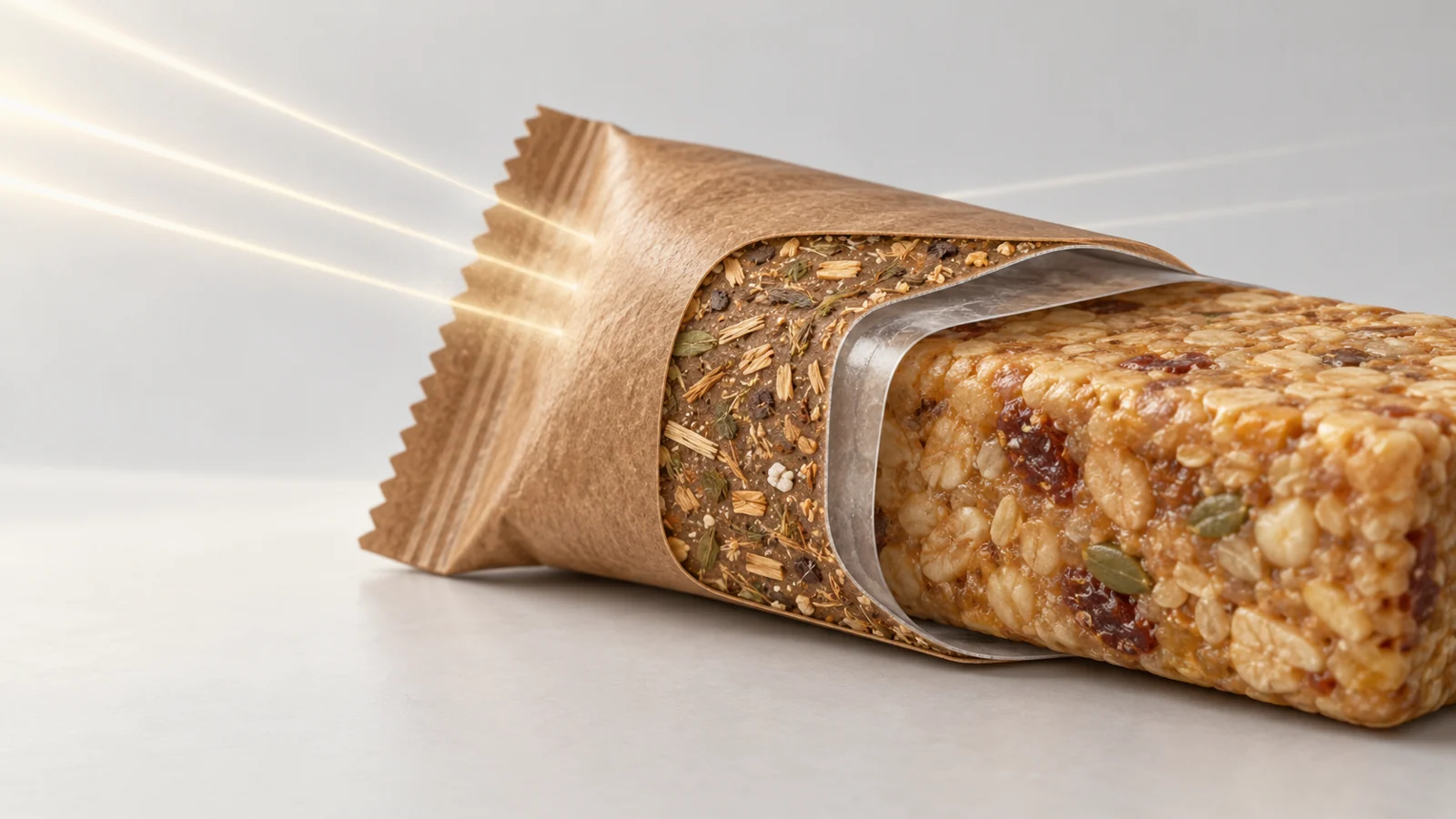
A food wrapper has to do more than hold its contents. Its material can also help limit the effects of light and other factors that contribute to food deterioration. A 2025 review considers lignin, a complex polymer found in plants, as a possible ingredient in renewable food-packaging materials. It discusses lignin’s use as both an adhesive and a filler, and associates mussel-inspired approaches to using it with ultraviolet-light blocking, antioxidant and antimicrobial properties.
Those are proposed material functions, not a measured shelf-life result for a particular package. The review’s central practical challenge is more basic: lignin from different plants, or obtained through different extraction methods, can vary in quality. That variation may make a material’s performance less dependable from batch to batch.
A plant polymer with two packaging roles
The review considers two ways lignin could work in a packaging composite, a material made by combining different ingredients. As an adhesive, lignin could help bind those ingredients; as a filler, it could be mixed into the material. The review also examines ways to modify lignin’s properties.
Here, “mussel-inspired” means using mussels’ adhesive behavior as a design model; the review connects that approach to lignin’s proposed adhesive and protective roles. The supplied account does not provide a particular molecular recipe or one standardized formulation. Instead, it surveys lignin-derived materials, ways to control their synthesis and approaches to modifying their surfaces.
For food packaging, the attraction is that a material could combine structural functions with properties associated with shielding contents from ultraviolet light, oxidation and microbes. Each property could matter to how a package performs, but the review does not establish that any one formulation delivers a specific level of protection in use.
The batch problem starts upstream
Lignin is not a single, uniform ingredient. Its quality can differ with the plant source and the method used to extract it. Those differences carry through to how lignin behaves when it is modified or combined with other materials, making performance harder to control in industrial production.
This is the key obstacle between a promising material concept and a dependable packaging ingredient. If the starting lignin varies, a recipe that works with one supply may not produce the same material from another. Consistent performance therefore depends on managing variation in the feedstock and processing, as well as designing the composite itself. The review identifies that consistency challenge, but the supplied evidence does not establish reproducible industrial production of a particular package.
Cost belongs beside performance
The review compares lignin-based biocomposites with other biocomposites in terms of performance and cost. Both matter to a food business: a material needs useful properties, and its cost must make sense for the job. A comparison based on only one side would not tell manufacturers whether lignin is a practical option.
The supplied summary gives no figures or ranked result from that comparison, so it cannot support naming a best-performing or least-cost material. Its value here is in framing the decision: lignin’s protective potential has to be considered alongside how consistently a material can be made and what it costs relative to alternatives.
What this could change
Imagine opening food wrapped in a renewable material designed to help shield its contents. Lignin’s discussed adhesive and filler roles, together with the protective properties associated with mussel-inspired use, provide a path toward that kind of packaging. A dependable version could make those functions practical across production, and longer shelf life may be possible if the material’s protection is demonstrated in use.
A nearer milestone is simpler to observe: lignin from different plant sources or extraction methods should produce comparable protective performance under the same packaging tests. That consistency would help show whether the idea can move from varied material samples toward a reliable packaging ingredient. The review points to the opportunity; it does not establish that such a package is already commercially available or proven to extend shelf life.
Key Sources
- Primary source: Leveraging lignin as mussel-bioinspired adhesives and fillers for sustainable food-packaging applications: A review.
DOI or Journal Page · Review or Meta-Analysis · 2025-06-10
Keep exploring