
Research Signal – Source date 2022-06-23
Immune checkpoint drugs are increasingly central to treatment for advanced clear cell kidney cancer, yet their benefit is not reliable or lasting for everyone. A review published on June 23, 2022, describes this tension: immune-based treatment had shown some clinical efficacy in the overall patient population, while response rates and durability remained challenges.
The issue is not simply whether treatment can activate immune cells. It is whether that activity can produce a response, and how long that response can be maintained. The review surveys the treatment approaches and checkpoint mechanisms behind the field’s growing interest in immune-based care, as well as the unresolved gap between clinical efficacy and dependable, lasting benefit.
Three routes for systemic treatment
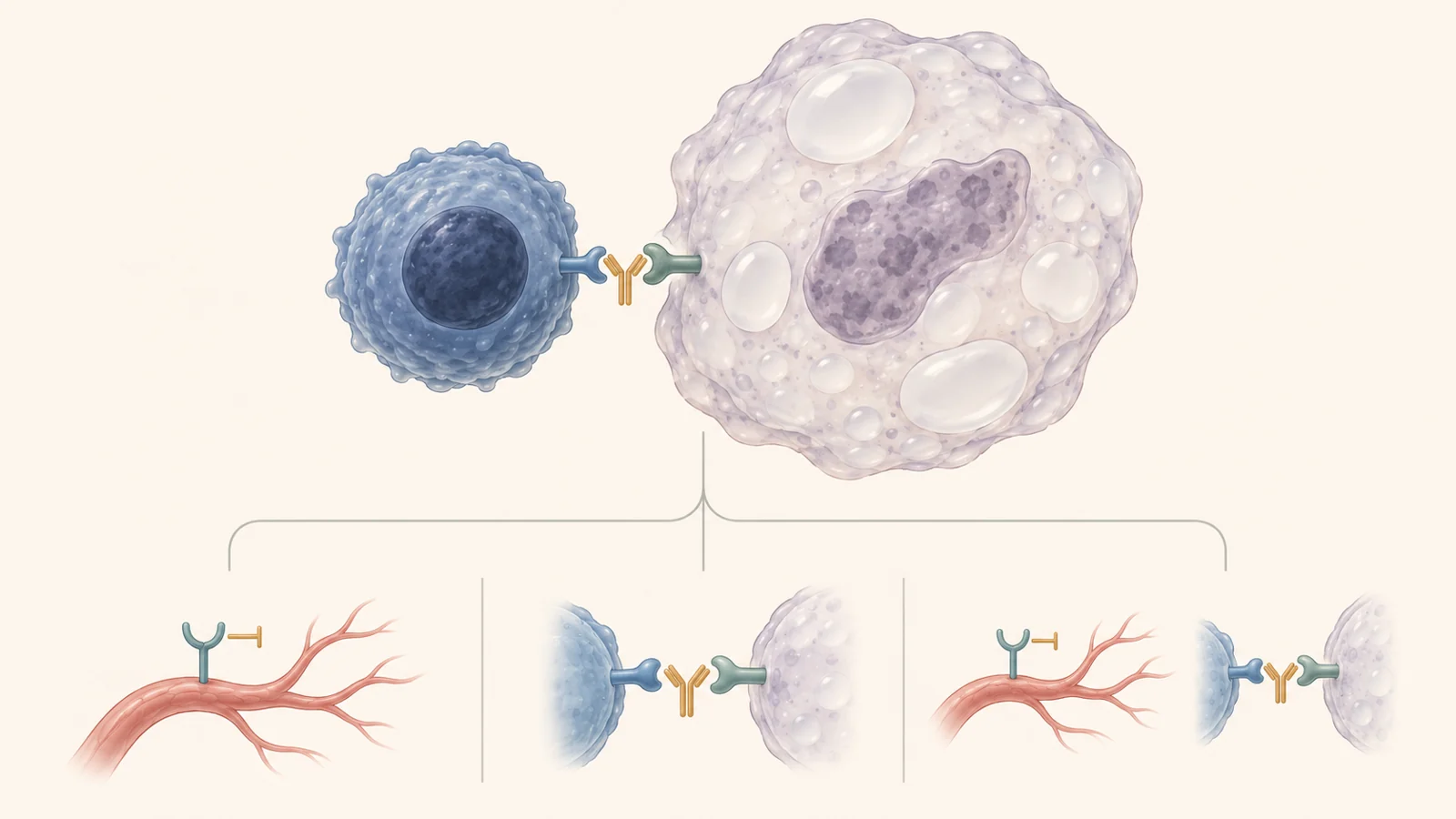
For advanced clear cell renal cell carcinoma, or ccRCC, the review describes three broad systemic approaches: treatment that limits blood-vessel growth (antiangiogenic therapy), immune checkpoint blockade, and combinations of the two. Systemic treatment acts beyond a single local site in the body. These approaches represent different ways of treating the cancer, though the review’s central focus is the increasing role of checkpoint inhibitors.
The growing place of immune checkpoint inhibitors reflects accumulating clinical evidence, not a claim that one approach works for every person. The review presents checkpoint treatment as part of a changing treatment landscape in which combinations are also being studied. The review explains how checkpoint drugs affect immune cells, while treating response rates and durability as unresolved clinical questions.
Releasing limits on T-cell activity
T cells are immune cells involved in the body’s response to cancer. The review describes conventional checkpoint inhibitors as drugs that block specific targets: PD-1, PD-L1, or CTLA-4. The review describes blocking these targets as a way to reactivate T cells and strengthen the immune response against the tumor.
The target names identify what a drug blocks; the important point for readers is the intended effect on T cells. These drugs are designed to help immune activity recover. That mechanism helps explain why checkpoint blockade became an important part of ccRCC treatment, but a biological rationale and a clinical response are different things. Reactivating T cells does not make a lasting response predictable for each patient.
Efficacy does not settle how long a response lasts
The review’s central clinical message is a balance: checkpoint-based therapies have achieved some efficacy in the overall ccRCC population, but response rates and durability remain challenges. A treatment can help some people without producing a dependable response across the population. And even when a response occurs, its duration matters to patients and clinicians deciding what that treatment can offer.
This is why the review points to new immune checkpoints and combinations based on checkpoint inhibitors as directions under development. They are efforts to address the limits of current strategies. The evidence summarized in the review does not establish that any proposed checkpoint or combination produces a more durable benefit, or that it outperforms existing treatment. The promise depends on clinical evidence showing both whether people respond and how long responses last.
How this could shape the future
For a person facing advanced clear cell kidney cancer, the farther possibility is a better chance of sustained disease control through immune-based treatment. That future depends on new checkpoints or combinations proving their value in independent clinical studies; the review itself does not demonstrate that improvement. Existing checkpoint therapies already show clinical efficacy, but a more dependable and lasting benefit remains a goal.
A meaningful nearer milestone would be comparative clinical evidence that reports both response rates and response duration for a proposed strategy alongside existing approaches. Those two measures would help show whether a new option brings more people a response, helps responses last longer, or both. Until such comparisons establish a benefit, the prospect of more sustained control remains conditional.
Key Sources
- Primary source: Immune checkpoint inhibitor-based therapy for advanced clear cell renal cell carcinoma: A narrative review.
DOI or Journal Page · Review or Meta-Analysis · 2022-06-23
Keep exploring