
Research Signal – Source date 2026-06-24
Interleukin-2 is an immune messenger with an unusual history: high-dose treatment is approved for metastatic kidney cancer and melanoma, yet the same signal can stimulate cells that restrain immune activity. Its short lifetime in the body and significant systemic toxicity also limit its use. A review published June 24, 2026, surveys efforts to change how this messenger works and where it goes, in hopes of making its effects more selective.
The central challenge is not simply to switch immunity on. Interleukin-2 affects several kinds of immune cells, and they do different jobs. Better control over which cells respond could help preserve useful activity while reducing unwanted effects. The review discusses two broad design routes: engineering the molecule itself and developing delivery systems intended to direct it toward selected cells.
One message reaches cells with different jobs
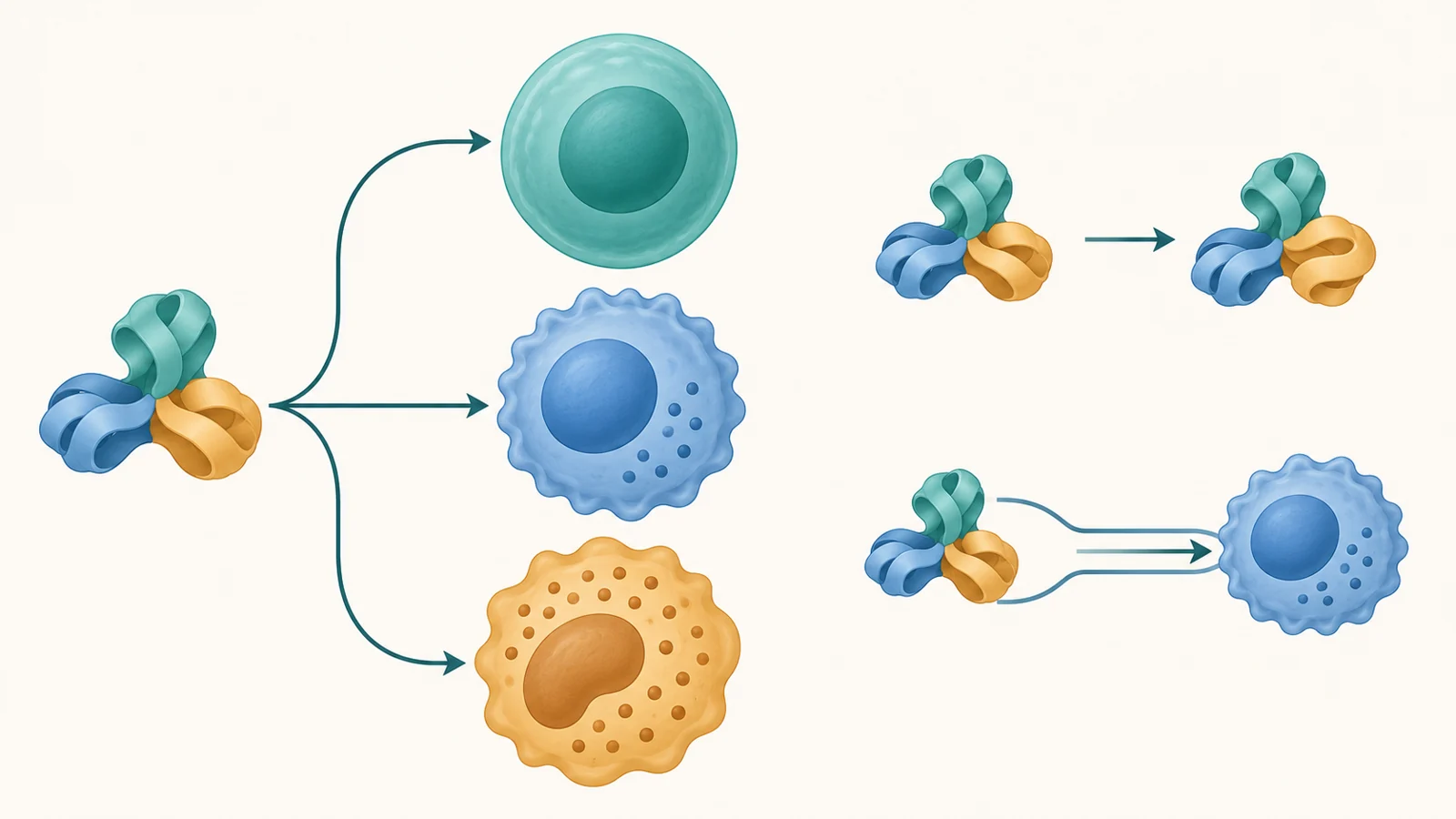
Interleukin-2 supports the growth, development and activity of regulatory T cells, effector T cells and natural killer cells. Regulatory T cells, often shortened to Tregs, help restrain immune responses. That role is useful for keeping immune activity regulated, but it can work against a cancer treatment if the aim is to strengthen cells attacking a tumor. Effector T cells and natural killer cells are among the immune cells involved in fighting cancer.
The balance of these responses helps explain the treatment’s trade-off. High-dose interleukin-2 has been used clinically against metastatic renal cell carcinoma and melanoma, but its activity is not confined to cells that would be desirable to stimulate in cancer therapy. The review identifies preferential activation of regulatory T cells, along with a very short lifetime in the body and systemic toxicity, as constraints on treatment and its effectiveness.
Cells respond through interleukin-2 receptors, and receptor composition and distribution influence which cells receive the signal. The review examines how those receptor relationships connect to cell responses. The practical design question is whether researchers can use that understanding to favor immune activity that helps fight cancer, while limiting effects that make treatment difficult to use.
Changing the messenger or directing its delivery
One strategy is to engineer interleukin-2 variants. This changes the molecule in an effort to alter its therapeutic balance: which responses it encourages and how those responses relate to the drawbacks of existing high-dose treatment. The review describes protein engineering as a way to work with the relationship between interleukin-2 and its receptors. The supplied evidence does not identify one variant as the winner or establish that a particular design improves outcomes for patients.
A second strategy addresses a different part of the problem. Delivery systems are intended to make the messenger more selective by directing it toward effector cells. In principle, changing the molecule can influence how it signals, while changing its delivery can influence which cells are reached. These routes may both pursue a better therapeutic balance, but they are not interchangeable: one acts on the messenger’s design, and the other on its targeting.
The review says that engineering and delivery approaches have made progress in mitigating interleukin-2-related systemic toxicity. That is a broad account of work across design strategies, not a quantified comparison of a specific formulation. The evidence summarized here does not establish a reduction in toxicity for a named approach, rank the available strategies, or report a new treatment approval or patient benefit.
Where this research could lead
A future cancer clinic might have an interleukin-2-based option that directs immune activation more reliably toward tumor-fighting cells and imposes a more manageable burden on the rest of the body. That possibility depends on the design routes described in the review: understanding receptor relationships, modifying the messenger, and directing its delivery. High-dose interleukin-2 is already an approved treatment for some patients; the new capability would be dependable selectivity and safety. The review offers a design basis for pursuing that goal, while clinical development beyond it would be needed to show whether the goal can be reached.
A useful nearer milestone would be a comparative human study of a defined new approach. It would report which immune cells respond, the systemic adverse effects, and cancer outcomes. Seeing those measures together could show whether a design changes the balance in practice, and whether that change matters to patients.
Key Sources
- Primary source: Advances in Interleukin-2 Engineering and Delivery Systems for Cancer Immunotherapy.
DOI or Journal Page · Review or Meta-Analysis · 2026-06-24
Keep exploring