
Research Signal – Source date 2021-02-02
A tumor can shrink during treatment without that change proving that patients live longer. A February 2, 2021 systematic review and meta-analysis of immune checkpoint inhibitors in advanced upper tract urothelial cancer found measurable tumor responses, but its comparison with platinum chemotherapy did not establish a survival advantage.
Upper tract urothelial cancer begins in the lining of the part of the urinary system above the bladder, including the kidney’s urine-collecting area and the tubes that carry urine to the bladder. The review’s authors considered this cancer separately because its molecular and genetic features differ from those of the most common bladder cancer. They raised the possibility that it might respond differently to immune checkpoint inhibitors, drugs that help the immune system recognize and attack cancer. That was a reason to examine the evidence, not proof of a different treatment effect.
The response figure covers a smaller group
The analysis combined results from six prospective trials, which together included 2,537 patients. Of those, 396—about 16 in every 100—had advanced upper tract cancer. These upper tract estimates therefore rest on a much smaller group than the overall trial population.
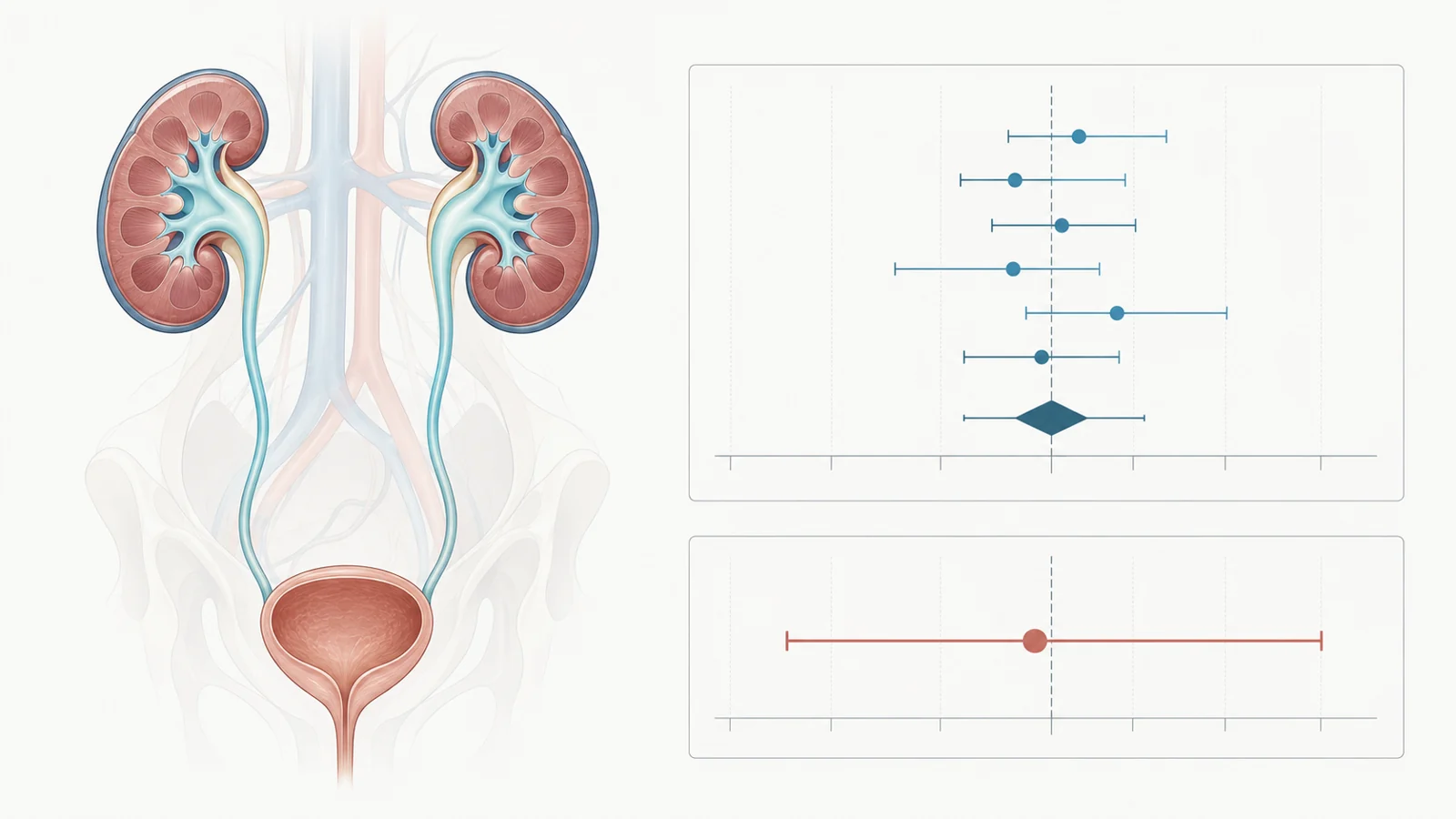
Across that subgroup, the pooled objective response rate was 21.2%. In plain terms, about one in five patients had a measured reduction in tumor burden that met the trials’ response criteria. The 95% confidence interval ran from 12.5% to 33.7%, showing that the pooled estimate has considerable uncertainty.
A response rate describes tumor change in the patients assessed. It does not tell us, by itself, whether treatment helped patients live longer. The survival comparison requires a separate measure.
The survival estimate leaves room for different outcomes
Compared with standard platinum-based chemotherapy, the pooled hazard ratio for death was 0.76. The point estimate corresponds to a 24% lower hazard of death in the checkpoint inhibitor group during the comparisons. But the 95% confidence interval ranged from 0.41 to 1.40. It includes both a potentially lower hazard and a potentially higher one; in particular, it crosses 1, the value that would indicate no difference in the relative hazard.
The p-value was 0.37, so the analysis did not find a statistically significant survival effect. The result does not establish that checkpoint inhibitors extend life over platinum chemotherapy for people with advanced upper tract cancer. Nor does the point estimate alone settle the comparison: its interval is broad enough to include materially different possibilities.
The reported I² was 70%, indicating substantial variation among the results combined in the survival estimate. That spread adds to the difficulty of reading one pooled number as a settled answer for this subgroup. The authors’ conclusion was correspondingly measured: the available evidence did not support a statistically significant effect over standard treatment.
What a clearer survival answer could change
If adequately informative, preplanned analyses of upper tract patients in randomized trials establish how checkpoint inhibitors compare with platinum chemotherapy, clinicians and patients could make treatment choices with a clearer estimate of any survival benefit or harm. That practical benefit depends on a comparison clear enough to distinguish a meaningful advantage from no advantage or harm. The 2021 synthesis identified the unanswered question; its pooled results did not yet resolve it.
Key Sources
- Primary source: Outcome of patients with advanced upper tract urothelial carcinoma treated with immune checkpoint inhibitors: A systematic review and meta-analysis.
DOI or Journal Page · Review or Meta-Analysis · 2021-02-02
Keep exploring