
Research Signal – Source date 2022-07-01
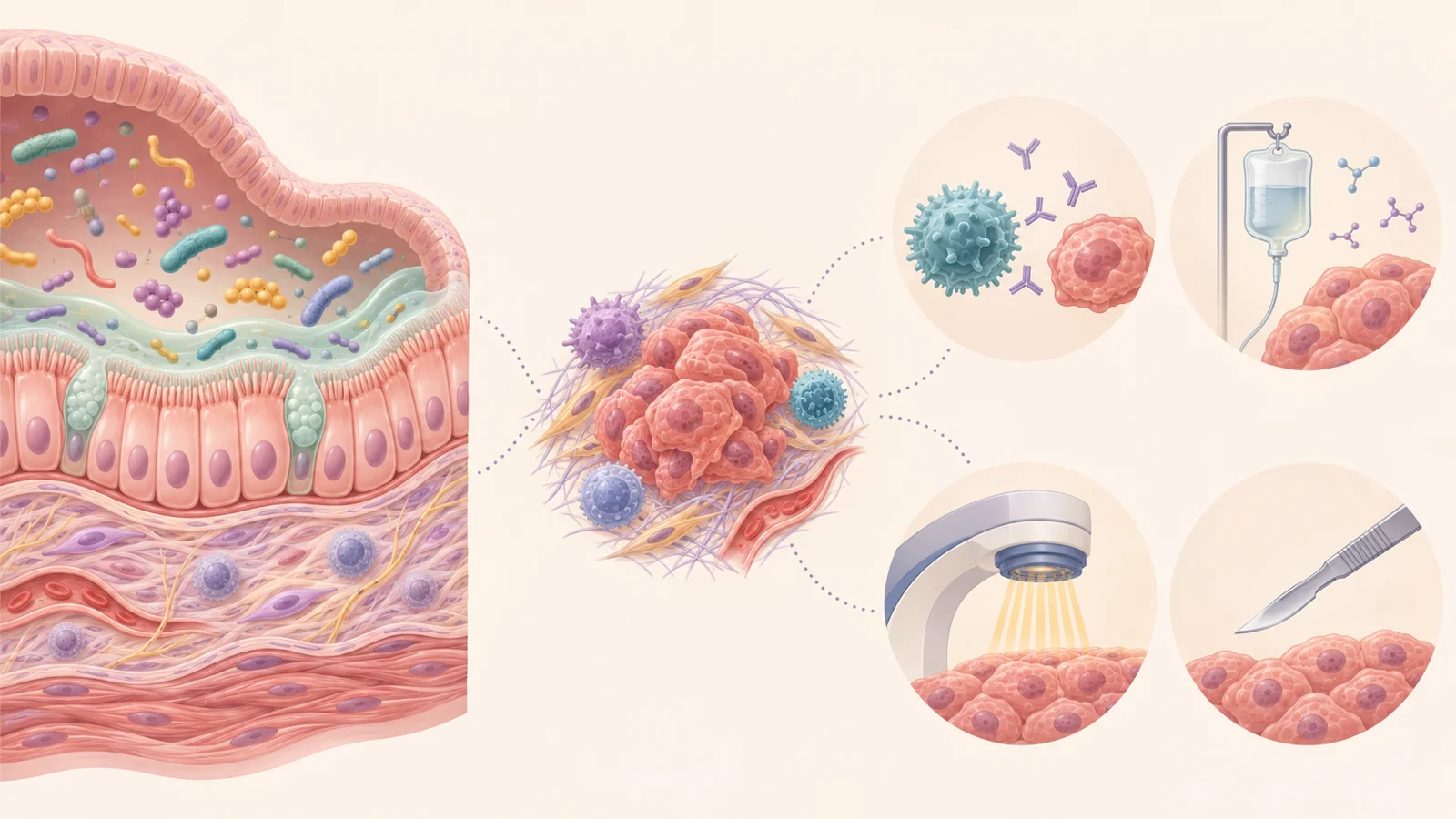
Bacteria in the gut are being discussed alongside chemotherapy, radiation and surgery because researchers are studying whether the gut microbiome is associated with how people respond to cancer treatment. A 2022 review in JAMA Oncology brings that question beyond immunotherapy, considering several kinds of cancer care and possible ways to work with the microbiota.
The gut microbiome is the diverse community of bacteria and other microorganisms that live in the digestive tract. Its familiar connection is digestion, but the review describes a broader research question: whether this community may also relate to cancer development and treatment response. That possibility has drawn attention as sequencing technology has made it easier to study microbial communities.
The question spans more than immunotherapy
The review considers reported associations between the gut microbiome and responses to immunotherapy, chemotherapy, radiotherapy and cancer surgery. Those treatments work in different ways and pose different clinical questions. Grouping them in one review signals the breadth of interest; it does not make findings from one treatment setting interchangeable with findings from another.
Immunotherapy is one prominent part of the discussion, but it is not the whole question. The review places it alongside drug treatment, radiation and surgery, asking whether gut microbes may be relevant across the wider course of cancer care. Its abstract gives this cross-treatment scope, without supplying comparable effect estimates that would show whether one category has a stronger association than another.
A possible bridge between the gut and a tumor
Why might microbes in the digestive tract be relevant to treatment elsewhere in the body? The review points to the tumor microenvironment: the conditions in and around a tumor. It suggests gut bacteria may play important roles in that environment, offering a possible connection between the gut and how cancer therapies work.
That is a proposed biological bridge, not a fully specified explanation in the evidence summarized here. The abstract does not detail a single pathway or show that the same process links microbes to every treatment category. The useful takeaway is narrower: researchers are considering whether the gut community and the surroundings of a tumor belong in the same account of treatment response.
From association to a treatment strategy
A relationship between a microbial community and treatment response raises a practical next question: could deliberately targeting the microbiota change what happens when a patient receives cancer therapy? The review discusses contemporary approaches to targeting gut microbes and proposes exploring them in combination with biological, immune, cell-based and surgical treatments.
That proposal is a step beyond observing an association. The evidence summarized in the supplied abstract does not establish that changing gut microbes improves cancer outcomes, or support advice for patients to alter their microbiome during treatment. A treatment strategy would need to be tested alongside established cancer care, with patient outcomes assessed in a defined setting.
How this could shape the future
If future research validates a dependable way to assess a patient’s gut microbes and shows clinicians how to use that information, it could become one useful input when they weigh an established cancer treatment. It would add context to a clinical decision; it would not replace the treatments already in use. Reaching that kind of consultation depends on more than finding an association: the information must prove useful for real decisions, and a microbiome-directed approach must show that it can improve outcomes.
One meaningful milestone would be a prospective study in a clearly defined treatment setting that tests whether a microbiome-directed intervention changes patient outcomes. Such a result would help establish whether the proposed combination can move from a broad research question toward a practical option in cancer care.
Key Sources
- Primary source: The Potential of the Gut Microbiome to Reshape the Cancer Therapy Paradigm: A Review.
DOI or Journal Page · Review or Meta-Analysis · 2022-07-01
Keep exploring