
Research Signal – Source date 2025-04-30
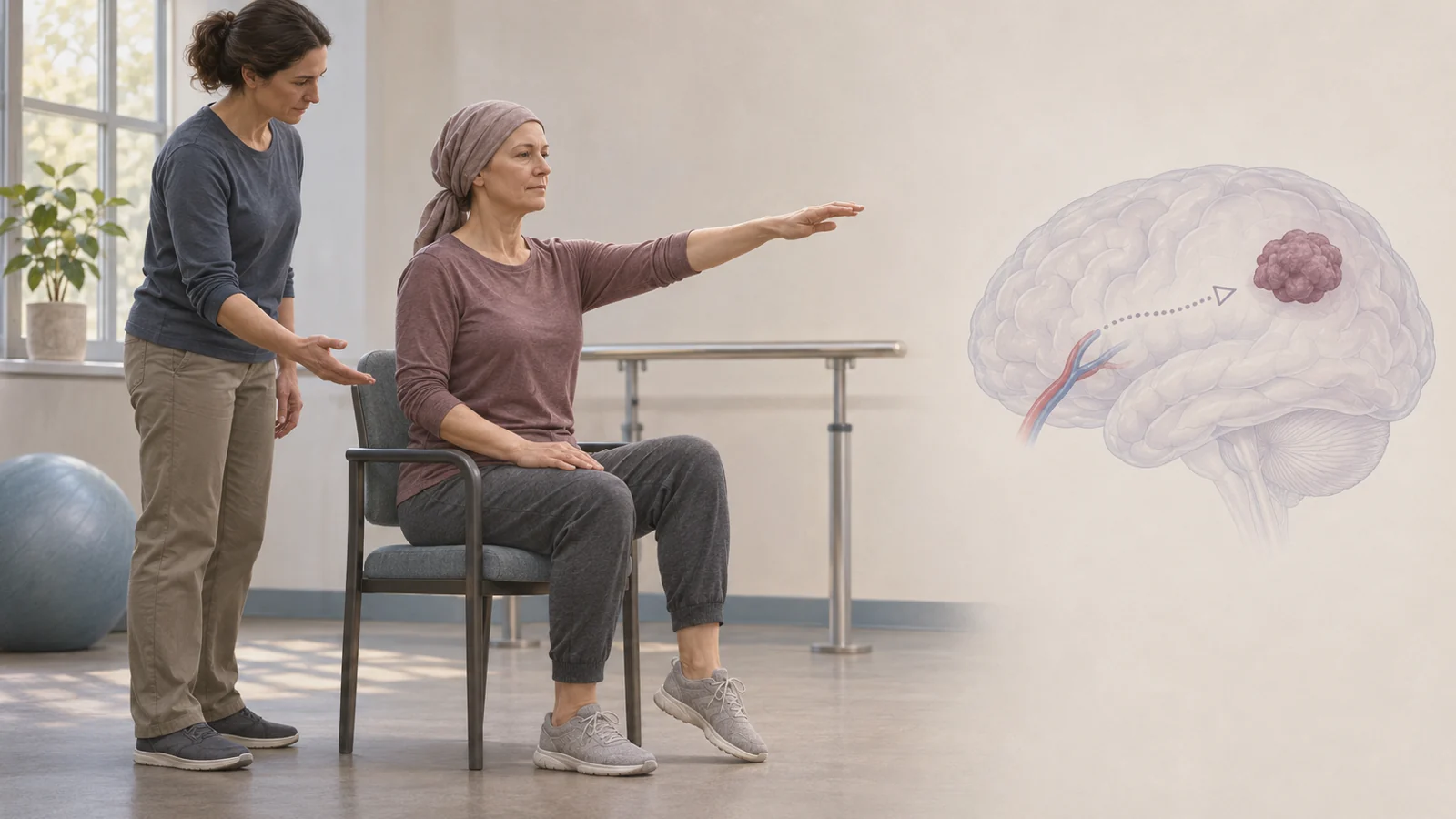
Glioma is a type of brain tumor. For people being treated for a glioma, exercise raises two related but separate questions: could it help them manage daily life, and could it help drugs act against the tumor? The first question concerns symptoms and function. The second is a treatment hypothesis that depends heavily on animal and mechanistic research.
A review published April 30, 2025, brings these lines of work together. It describes reports of improved physical function and quality of life in people with glioblastoma, as well as research on fatigue in people with high-grade gliomas. It also proposes that exercise could affect immune activity, the blood-brain barrier and blood flow within tumors. Those proposed routes are scientifically interesting, but the review does not establish that an exercise program makes glioma drugs more effective in patients.
What exercise studies have reported in people
Glioblastoma is an aggressive form of glioma, and treatment can leave patients dealing with neurological symptoms, reduced strength and other challenges to everyday activity. The review cites exercise intervention reports in people with glioblastoma that describe improved functional performance and quality of life. These are meaningful outcomes in their own right: being better able to move and carry out daily tasks is different from changing how a tumor responds to treatment.
The review also discusses research in people with high-grade gliomas, a broader category that includes aggressive brain tumors. In this work, exercise interventions were described as feasible and associated with relief of cancer-related fatigue. Fatigue can substantially affect quality of life, so a program that patients can take part in and that helps with symptoms may have practical value during treatment.
These patient-facing findings should not be merged with broader observations about brain cancer. The review also cites associations between higher physical activity and fewer symptoms or better quality of life across brain cancer populations. Such associations do not by themselves show that exercise caused the difference, and they do not establish that a tumor grew more slowly or that patients lived longer. The review characterizes the evidence for these benefits as preliminary and calls for stronger studies.
Getting medicine to a brain tumor is difficult
A drug intended to treat a brain tumor must reach the relevant tissue in sufficient amounts. The blood-brain barrier, which helps regulate what passes from blood into the brain, can limit access. Gliomas can also create a complicated local environment: the review describes abnormal tumor vessels, uneven blood supply and areas of low oxygen. These features can affect how reliably a drug reaches tumor cells.
The review proposes that exercise might influence this delivery problem in two ways. Changes in blood-brain barrier function could affect how readily some antitumor drugs enter brain tissue. Changes to tumor blood flow could also matter: in glioblastoma models, exercise was discussed in connection with improved blood supply and more orderly vessels, which could support drug delivery. These are proposed biological routes, with much of the relevant evidence coming from animal or preclinical work. The evidence here does not show that an exercise program has increased drug penetration into human gliomas.
This matters because improving general circulation or fitness is not the same as demonstrating that a particular cancer drug reaches a tumor more effectively. To make that treatment claim, research would need to connect an exercise program to drug access and then to a tumor response in patients receiving a defined regimen.
Immune activity offers another possible route
The review also considers how exercise might affect immune surveillance, the process by which immune cells recognize and attack abnormal cells. It discusses natural killer cells, which can identify and kill tumor cells, and cytotoxic T cells, which can recognize specific targets and destroy them. Exercise-related changes in the number or activity of these cells could provide a reason to investigate whether exercise influences antitumor responses.
The tumor environment can suppress immune activity, and the review describes exercise as a possible influence on both immune cells and inflammatory signals. These mechanisms help frame a testable hypothesis: if exercise changes immune activity in ways that matter inside a glioma, it might interact with immunotherapy or other treatments. But a mechanism is a proposed explanation, not a patient outcome. The review does not report a human glioma trial showing that exercise-enhanced immune activity improves response to a drug.
Mouse tumor findings answer a different question
The review recounts an experiment in a high-grade glioma mouse model in which voluntary exercise reduced tumor-cell proliferation and delayed the onset of motor problems caused by the tumor. These findings connect exercise to tumor behavior and movement in that model, giving researchers a reason to study the relationship more closely.
They are not equivalent to the patient reports of function, quality of life or fatigue. A mouse-model result can show that a biological effect is possible under the conditions tested; it cannot establish that the same effect occurs in people receiving glioma treatment. Nor does the reported experiment establish that exercise improved the effect of a drug. The animal findings and the human symptom reports therefore support different parts of the research question.
Who can take part shapes what researchers learn
Exercise during brain tumor treatment cannot be treated as one standard activity plan for every patient. A person’s physical condition, neurological deficits, other health problems and current treatment needs can all affect what is workable and safe. The review emphasizes that plans would need to be individualized and guided by a medical team.
Those same factors complicate research. The review notes that many studies have been observational, involved small groups and had substantial participant attrition. People with brain tumors may have conditions such as heart disease or neurological impairment that make participation difficult; when they are excluded or unable to remain in a study, the participants who complete it may not represent the broader patient population. Differences in exercise programs also make results harder to compare.
Larger, multicenter studies could help test whether findings hold across different patients and settings. Researchers also need to establish which timing, intensity and frequency are appropriate for particular treatment circumstances. Until then, the patient evidence is most useful for understanding possible effects on symptoms and function, while claims about drug response remain a separate question for clinical trials.
What this could make possible
For someone receiving drug treatment for a glioma, a clinician-tailored activity plan could help preserve the strength and function needed for daily life. If future trials show that the same kind of supervised program also improves response to a specific drug regimen, exercise could become a way to support both the person’s day-to-day capacity and the treatment’s effect on the tumor. The first possibility is already being explored in patient studies; the second would be a new clinical capability.
The bridge between them is still being built. Patient reports point to potential benefits for function and fatigue, while the proposed effects on drug access and tumor blood flow come substantially from preclinical research. A meaningful nearer milestone would be a controlled glioma study that reports both tumor response and patient function for the same drug regimen, comparing treatment with and without a supervised exercise program. If such studies show a dependable benefit, and clinicians can adapt activity safely to individual needs, exercise might become a more integrated part of glioma care. That outcome remains conditional on stronger evidence.
Key Sources
- Primary source: Role and mechanisms of exercise therapy in enhancing drug treatment for glioma: a review.
DOI or Journal Page · Review or Meta-Analysis · 2025-04-30
Keep exploring