
Research Signal – Source date 2024-09-25
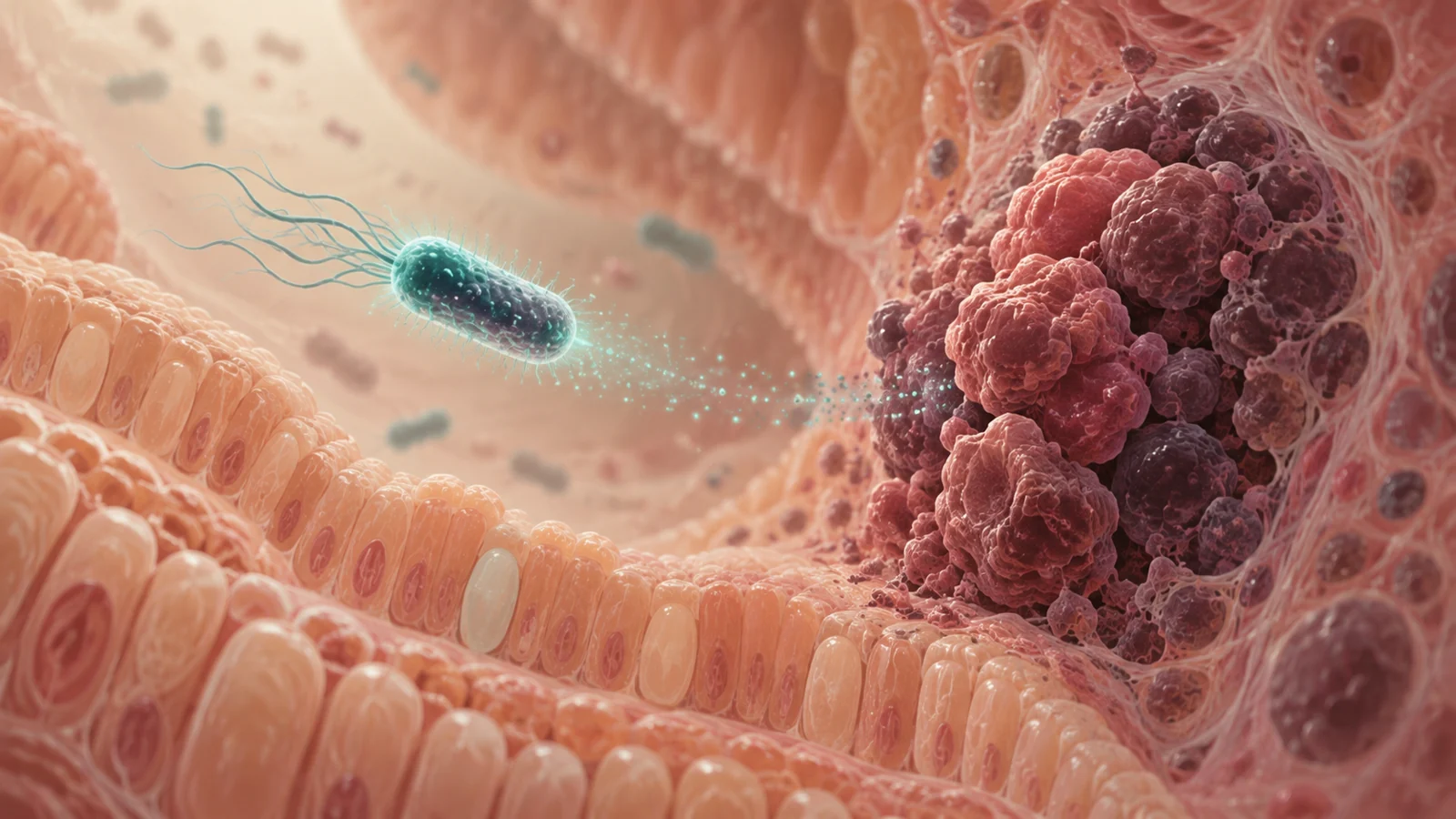
Colorectal cancer develops through a changing combination of genetic and environmental factors, often moving from an adenoma toward carcinoma. The treatments already used in clinical care, including surgery, chemotherapy, and radiation, can face problems such as resistance and toxicity. A review published on September 25, 2024, brings together several emerging ideas that approach the disease from a different direction: using bacteria or bacteriophages alongside genetic tools to influence tumor cells and the immune response.
The attraction is easy to understand. Microorganisms can be studied as biological agents with potentially specific behaviors, while gene-editing methods may allow researchers to alter those behaviors or target genes involved in cancer progression. But the review surveys proposed strategies and research findings across a developing field. It does not establish a proven bacterial treatment or show that these approaches improve outcomes for people with colorectal cancer.
Why bring microbes and gene editing together
The review treats bacterial therapy and genetic engineering as connected parts of the same research landscape. Bacterial approaches could act through direct effects on tumor biology or by helping the immune system recognize and attack cancer cells. Genetic tools could then be used to change the properties of the bacteria, influence their activity, or study molecular targets linked to colorectal cancer.
This combination matters because colorectal tumors are not defined by one process. Their development involves multiple genetic and epigenetic changes, and the surrounding biological environment also affects how a tumor grows and responds. A microorganism that can be designed to behave differently in that environment could, in principle, provide a new way to deliver an effect that is difficult to achieve with a conventional drug alone.
The wording matters here. The review describes what researchers are trying to make possible, not a single finished platform. It covers bacteriophage therapy, bacterial immunotherapy, CRISPR-Cas9, prime editing, and gene-silencing approaches. These methods belong to different technical categories, so their mechanisms, delivery problems, and safety questions cannot be treated as interchangeable.
Several routes could alter tumor biology
One proposed route involves bacteriophage therapy and cancer-cell survival signaling. The review discusses the NF-κB pathway, which can support inflammation and cell survival in cancer cells. Certain bacteriophages are described as potentially interfering with the degradation of IκBα, a step that would limit NF-κB’s movement into the nucleus. The proposed consequence is lower expression of anti-apoptotic genes such as Bcl-2 and survivin, making programmed cell death more likely in the cancer cells under study.
The same section describes a possible effect on the PI3K/AKT pathway, which regulates cell survival and proliferation and is frequently altered in colorectal cancer. Bacterial therapies may reduce phosphorylation in this pathway, lowering downstream survival signals and increasing the pressure toward apoptosis. These are mechanistic proposals reviewed in the article. They help explain why bacterial agents are being investigated, but they do not by themselves demonstrate that a treatment will reach a tumor at a useful dose or produce a benefit in patients.
A second route is immune activation. The review describes work in colorectal cancer mouse models involving an anaerobic E. coli strain and lymphocyte responses. The reported response includes CD8+ and CD4+ T cells, with CD8+ cells described as important effectors during tumor recognition and destruction. The discussion also connects these cells with longer-term immune surveillance during a memory phase.
For readers, the key difference is that the bacterium is not being considered only as a substance that kills a tumor cell directly. It may also be used as a trigger for an immune response. That possibility creates another layer of biological dependence: the outcome would be shaped by the interaction among the microorganism, the tumor, and the host immune system.
Engineering changes the possible target
CRISPR-Cas9 is a gene-editing tool that can alter selected DNA sequences. In the review, it is presented as a way to modify bacterial DNA with greater precision and potentially program bacteria to recognize cancer cells, change their metabolites, or stimulate immune activity. The intended value is control over what a bacterial strain does once it encounters the tumor environment.
The review also discusses prime editing and gene-silencing techniques as newer ways to adjust genetic activity. These approaches could support the design of bacterial strains such as E. coli or Salmonella typhimurium for particular anti-tumor functions. At the same time, the article considers molecular targets in colorectal cancer, including RNA-binding proteins involved in RNA processing, localization, and translation. Because tumor cells can depend on intensive RNA synthesis, such regulatory systems are discussed as possible treatment targets.
These are related but distinct uses of genetic engineering. Editing a bacterium could change its behavior or the molecules it produces. Editing or silencing a cancer-related target could affect how tumor cells function. A conceptual design that combines the two does not amount to proof that the engineered organism will distinguish tumor tissue from healthy tissue, remain controllable, or perform consistently inside a person.
CRISPR-Cas9 also brings a specific safety concern: off-target editing. Cas9 can cut regions other than the intended target, potentially creating unwanted insertions, deletions, or rearrangements. The review emphasizes why this matters in colorectal cancer, where mutation and chromosomal instability can make unintended genetic changes especially consequential. An editing system that disrupts an oncogene, tumor-suppressor gene, or another necessary cellular function in the wrong place could undermine the intended therapy.
The hard part is control inside a living body
Bacterial therapies must operate within a body that can react to them. The review identifies unintended immune reactions, inflammation, systemic infection, and possible gene transfer as risks. It also points to the possibility of changing favorable parts of the gut microbiome. Those concerns are not peripheral details. They are part of the central challenge of using living or biologically active agents as treatment tools.
Delivery adds another problem. A proposed mechanism in a cell or mouse model does not answer whether an agent can consistently reach colorectal tumor tissue, remain active long enough, and avoid harmful activity elsewhere. Nor does the supplied evidence establish how the different strategies would perform across the biological variation found in human tumors and patients.
The review describes clinical research involving bacteriophage therapy, CRISPR-Cas9, and bacteria-based approaches, while calling for further in vivo testing and clinical trials. That combination of promise and unfinished validation is important. The field has enough mechanistic and preclinical evidence to justify investigation, but the source does not establish one article-level development stage for a specific treatment or show superiority over conventional care.
From promising mechanism to usable treatment
A useful therapy would need more than an interesting interaction with a cancer pathway. Researchers would have to show that the agent can be designed, delivered, and controlled with an acceptable safety profile, while producing a meaningful clinical effect. The review’s emphasis on the microbiome, immune system, and cancer cells points to a problem that cannot be solved by measuring tumor-cell death alone.
Personalization may eventually become part of the idea. The review suggests that understanding each patient’s microbiome could help tailor bacteriotherapy, and it also discusses microorganisms as possible carriers for therapeutic activity. These remain future-facing possibilities in the supplied evidence. They describe the direction of research rather than an established patient-selection method or treatment protocol.
Could engineered bacteria make colorectal cancer treatment more selective?
For people facing colorectal cancer, the potential payoff would be a treatment approach that directs a biological effect toward tumor tissue while reducing harm to healthy cells. Engineered bacteria could offer researchers another way to combine tumor recognition, immune stimulation, and molecular intervention. That benefit remains conditional on solving the practical problems of targeting, delivery, off-target activity, infection risk, immune reactions, microbiome disruption, and gene transfer.
The review therefore supports a measured conclusion. Bacteria and genetic editors may expand the set of tools available for studying and attacking colorectal tumors, but their clinical value still has to be demonstrated through stronger in vivo evidence and intervention trials. Until that work establishes reliable safety and patient benefit, engineered bacteria remain an important research possibility rather than a validated treatment.
Key Sources
- Primary source: Innovative Bacterial Therapies and Genetic Engineering Approaches in Colorectal Cancer: A Review of Emerging Strategies and Clinical Implications.
DOI or Journal Page · Review or Meta-Analysis · 2024-09-25
Keep exploring