
Research Signal – Source date 2021-08-06
Dialysis removes waste from the blood, but useful small molecules can leave with it. One is creatine, a substance that helps cells respond to sudden demands for energy. For people whose kidneys can no longer support its normal production, losing creatine during treatment could make an already difficult replenishment problem worse.
A paper published on August 6, 2021, brings together the biological case for this problem and proposes a way to investigate it. The authors suggest adding creatine to dialysis fluid so that treatment could help replace it. Their paper is a review accompanied by a proposed pilot protocol; it reports no completed results for this intervention. Its contribution is to explain why replacement deserves testing and how researchers could begin to measure whether it reaches patients’ cells.
An energy reserve that needs replenishing
Creatine helps maintain a rapidly available energy reserve. Cells use ATP to power their work, and creatine can receive a phosphate group from ATP to become phosphocreatine. When energy demand rises, that reserve helps replenish ATP quickly. This buffering system operates in muscle and other tissues that must adjust their energy use from moment to moment.
Creatine is different from creatinine, its breakdown product. The similar names can obscure their different roles. Creatine participates in energy handling; creatinine forms as part of the creatine pool breaks down and is normally excreted by the kidneys. The review estimates that about 1.6–1.7% of the body’s creatine pool undergoes this breakdown each day, creating a continuing need for replacement.
Food and the body’s own synthesis normally share that job. Meat and fish supply creatine directly. Production within the body involves a partnership between organs: the kidneys are a major site for making guanidinoacetate, a precursor that travels to the liver for conversion into creatine. Severe kidney dysfunction therefore raises a question about production as well as waste removal. The authors argue that this synthesis pathway may be substantially impaired in dialysis-dependent kidney disease.
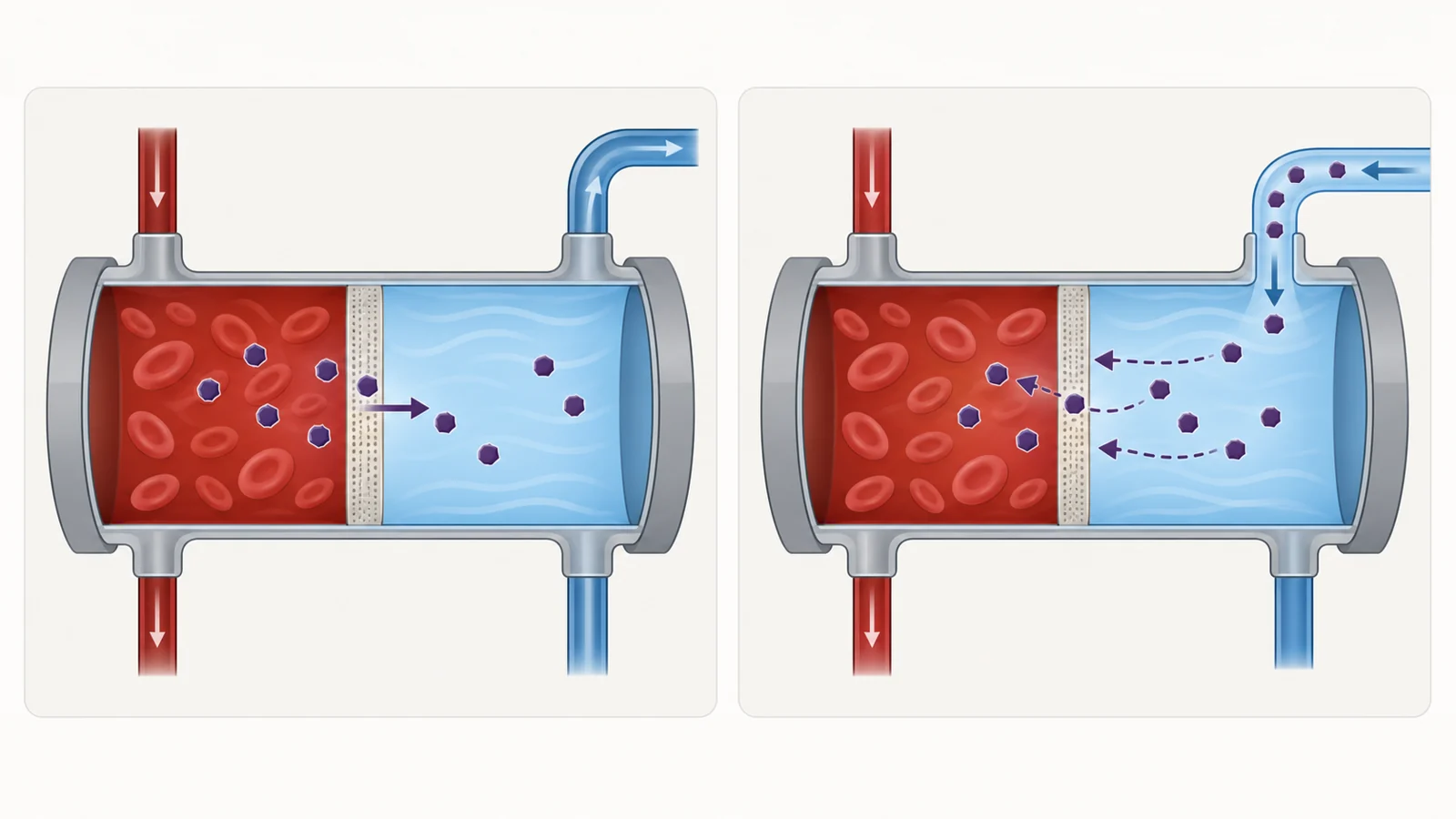
Dialysis adds another route of loss. A functioning kidney can reabsorb much of the creatine that passes through its filtering system. A dialysis membrane has no equivalent recovery mechanism. Creatine can pass from blood into the dialysis fluid, or dialysate, and leave with the used fluid. Precursors and amino acids involved in making creatine can also be lost.
Dietary supply completes the balance. The review discusses a move toward more plant-based eating in kidney care because it can reduce phosphorus and acid loads. Those are meaningful nutritional considerations. Plant foods, however, provide little naturally occurring creatine. Although they supply amino acids used to make it, those ingredients cannot by themselves ensure adequate production when the relevant kidney pathway is impaired. The authors identify a tradeoff within kidney nutrition, rather than a reason to assume one diet suits every patient.
What the patient evidence adds
The case extends beyond a plausible biochemical pathway. The review describes earlier studies finding lower fasting blood concentrations of creatine and its precursor in dialysis patients than in healthy comparison groups. That is notable because impaired kidney clearance causes many other small molecules to accumulate in blood.
Evidence from tissue studies points toward disturbed energy reserves as well. The authors summarize muscle biopsies reporting low ATP and phosphocreatine in chronic kidney disease, alongside imaging studies showing reduced phosphocreatine or altered phosphocreatine-to-ATP ratios in the heart and skeletal muscle of dialysis patients. These measurements concern different parts of the energy system; they are not interchangeable with a blood creatine test.
The review also reports associations between higher plasma creatine and lower odds of low muscle mass, low protein intake, low albumin and severe fatigue in hemodialysis patients. Such findings connect the chemistry with problems patients experience. They cannot establish the direction of cause, however. Better nutritional or physical condition could influence creatine concentrations, and other aspects of illness could influence both.
A small oral-supplementation trial offers a more direct treatment precedent. As summarized in the review, a randomized, double-blind, placebo-controlled study enrolled 10 patients with frequent cramps during hemodialysis. After four weeks, the creatine group had a reported 60% reduction in cramps, while the placebo group showed no change. Cramp frequency returned to its previous level after supplementation stopped. This was a short study in a selected group, using creatine taken by mouth. It provides a reason to investigate further, while leaving delivery through dialysis fluid as a separate experimental question.
Using the fluid side of the dialyzer
The proposed intervention changes what enters the dialyzer on the dialysis-fluid side. Blood and dialysate remain physically separated by a membrane that allows small molecules to cross. Adding creatine to the incoming fluid would change the concentration difference across that membrane, potentially reducing outward loss and allowing creatine to move toward the blood.
In the protocol, an infusion pump would add a creatine solution to the incoming dialysate hose. The creatine would then reach the patient through transfer across the membrane. The method does not involve injecting the solution directly into the blood line.
The authors favor this approach partly because dialysis already provides repeated, supervised treatment sessions. Taking an oral supplement over months or years adds another routine to a demanding treatment schedule. They also identify the fluid used to dissolve oral creatine as a concern for patients managing fluid balance. Delivering it through dialysate could avoid that additional drinking burden and bring replacement into the same session in which losses occur.
The concentration in the dialysis fluid would not, by itself, reveal how much creatine the patient absorbed. Some of what enters the machine could remain in the outgoing fluid. Measuring that difference is a central task of the proposed pilot.
Following creatine through a six-week pilot
The researchers propose enrolling 16 hemodialysis patients at two centers in Groningen, the Netherlands. Participants would enter four groups using dialysate creatine concentrations of 0.5, 1.0, 1.5 or 2.0 millimoles per liter. Each group would contain three people assigned to creatine and one assigned to placebo, with treatment allocation concealed through similar-looking coded solutions.
Higher concentrations would be introduced in stages. The lowest-concentration group would start first; the next group would begin if no adverse effects appeared after one week. Treatment would run for six weeks, with three dialysis sessions each week. Measurements would take place before treatment, at weeks three and six, and after a further two weeks without supplementation.
The main measurements would be creatine concentrations in plasma, the liquid portion of blood, and inside red blood cells. Samples taken before and after dialysis would help distinguish changes during a session from changes across the treatment period. Red-cell creatine would serve as an accessible proxy for uptake into tissues, allowing the researchers to look beyond a temporary rise in circulating creatine.
The team also plans to collect the spent dialysate and calculate uptake from the amount of creatine added minus the amount recovered in the outgoing fluid. Urine would be collected from participants who still produce it, providing another part of the accounting of what leaves the body. Together, these measurements would help connect the machine’s delivery settings with the patient’s actual exposure.
A separate set of measures would examine function and symptoms. These include handgrip strength, body composition, questionnaires about fatigue and physical health, and simple performance tasks involving balance, walking and repeated chair stands. They answer a different question from the blood tests: whether changes in creatine availability are accompanied by changes in what a person can do or how they feel.
Where uptake would leave the clinical questions
A rise in plasma or red-cell creatine would be useful evidence about delivery, but it would not directly demonstrate restoration of muscle or brain stores. Nor would it establish that creatine depletion is responsible for an individual patient’s symptoms. Muscle wasting and fatigue in dialysis can arise alongside low food intake, inflammation, reduced activity, other illnesses and the effects of treatment itself. Changing one biochemical factor may have different consequences depending on those other pressures.
The pilot’s size also defines what it can resolve. With only three active recipients at each concentration, it is intended chiefly to explore uptake and obtain information needed to size a larger trial. It cannot reliably establish lasting improvements in strength or quality of life, identify an optimal concentration, or rule out uncommon harms. The authors’ expectation of few side effects remains an expectation; tolerability of this new delivery route requires observation.
The proposed eligibility criteria further narrow the initial picture. Participants would be adults receiving conventional hemodialysis three times weekly, with exclusions including active infection, malignancy and inability to complete the questionnaires. Findings from such a group would need careful interpretation before being extended to the broader dialysis population. The proposal therefore supplies no basis for patients to begin supplementation, change their renal diet or alter dialysis treatment.
What this could change
If delivery through dialysate safely replenishes relevant tissue stores, and larger trials show that this improves physical function, an existing dialysis session could also provide continuing nutritional support. Better energy buffering in muscle could help patients preserve strength and manage ordinary activities, such as getting out of a chair or walking, with less fatigue.
Integrating replacement into supervised sessions could also reduce the burden of maintaining a separate oral regimen over years of treatment. The potential practical gain is a form of support built into care patients already receive, with delivery that can be measured and adjusted. Reaching that point depends on connecting three things the proposal sets out to investigate: transfer across the membrane, replenishment within the body, and benefits that patients can feel in daily life.
Key Sources
- Primary source: Chronic Dialysis Patients Are Depleted of Creatine: Review and Rationale for Intradialytic Creatine Supplementation.
DOI or Journal Page · Review or Meta-Analysis · 2021-08-06
Keep exploring