
Research Signal – Source date 2026-04-20
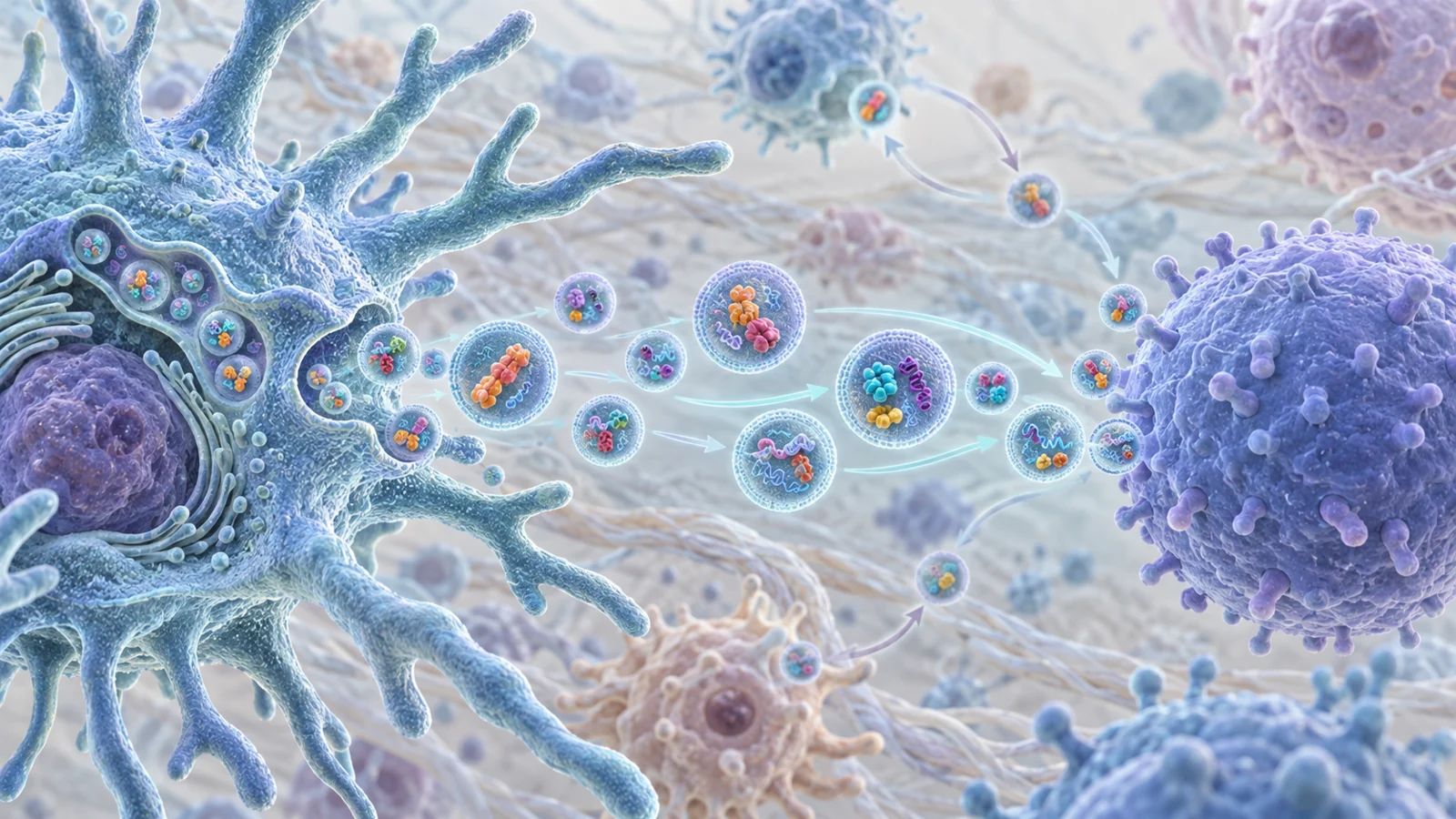
A dendritic cell helps coordinate immune responses by presenting information about threats to other immune cells. Researchers are interested in whether tiny particles released by these cells could carry some of those instructions without administering the whole cell. A review published April 20, 2026, describes ways dendritic-cell extracellular vesicles might be adapted for cancer immunotherapy, alongside substantial obstacles to turning them into a reliable treatment. It does not establish that these vesicles improve outcomes for patients.
A message carried beyond the cell
Extracellular vesicles are small particles released by cells. They can carry molecular cargo, including proteins, genetic material, lipids, and other components. What a vesicle carries can vary with the condition of the cell that released it.
The proposed cancer use draws on the role of dendritic cells as antigen-presenting cells. Their vesicles may carry tumor-related antigens and immune-regulating molecules to other immune cells, including T lymphocytes. In principle, that cargo could help shape how those cells recognize or respond to a tumor. The vesicles act as messengers between cells; their effect depends on what they carry and which cells receive it.
This cell-free approach is attractive because the package may be easier to store and manipulate than the parent cells. The review discusses those as potential practical advantages, not as established clinical safety benefits over cell-based treatment.
Engineering a more specific message
The review describes a bispecific vesicle design intended to combine tumor recognition with interference in an immune checkpoint pathway. In that experimental example, dendritic cells were modified to incorporate a CD19-targeting component and PD-1. After systemic administration in the reported experiment, the engineered vesicles were reported to reach a solid-tumor site expressing human CD19. The review also describes checkpoint-related immune regulation in the tumor environment and targeting of circulating tumor cells in that example.
The design illustrates the ambition: equip a vesicle to recognize a chosen target while carrying a component intended to alter immune regulation. It is one engineered approach, not evidence that the same construct works across cancers or that patients benefit from it. The review presents a range of proposed engineering strategies; these do not amount to one standardized vesicle treatment.
The destination matters as much as the cargo
A carefully designed particle still has to reach the intended cells. The review notes that vesicles can be taken up by different cell types, which may reduce delivery to tumor cells. Some vesicle surface features can also encourage interactions with blood vessels in tissues such as the lungs and liver, diverting particles from the intended destination.
Tumors can change, too. A tumor antigen carried by a vesicle may be reduced or altered, and tumors can contain different cell populations. A message aimed at one target may therefore reach only part of the disease. The review also identifies dose and delivery to lymphoid tissues as unresolved practical questions. These factors shape whether the immune message gets to the right place in a useful amount.
Cell-therapy trials answer a different question
The review includes a table of clinical trials involving dendritic cells or other antigen-presenting-cell approaches. Its search for that table is dated October 7, 2025. One listed study, for example, involved dendritic cells prepared with tumor lysate or selected peptides for patients with pancreatic cancer.
Such studies concern administered cells or other antigen-presenting-cell strategies. They are not trials establishing the effects of cell-derived dendritic-cell vesicles. The table therefore provides context for related immune approaches, not a patient-benefit estimate for the vesicles discussed here. The review does not establish that the vesicle approach improves cancer outcomes in people.
A treatment also has to be reproducible
Even if a vesicle design delivers a useful message in an experiment, a clinical treatment would need to be made consistently. The review identifies the need for workable standards for dendritic-cell culture and vesicle collection, as well as decisions about dose. Differences in preparation and cargo could make results difficult to compare or reproduce.
Engineering adds choices about which molecules to load or display, and how to do so reliably. The review describes sophisticated biotechnology as a possible route toward larger-scale production, while treating consistent preparation and translation into human medicine as challenges still to address. Without repeatable products and protocols, a promising result from one preparation may not transfer cleanly to another.
What cell-free immune delivery could change
If researchers can produce dendritic-cell vesicles consistently and show that they deliver the intended signals at a workable dose, these particles could offer a configurable way to direct cancer immunity without administering whole dendritic cells. That could give clinicians a cell-free option for carrying tumor-recognition and immune-regulating signals. Its value for patients will depend on effective delivery, reliable production, and human studies that demonstrate benefit and safety.
Key Sources
- Primary source: Application of dendritic cell extracellular vesicles as a valid nanoparticle platform for cancer therapies: a narrative review.
DOI or Journal Page · Review or Meta-Analysis · 2026-04-20
Keep exploring