
Research Signal – Source date 2026-01-23
Caring for a family member with dementia can make ordinary routines difficult to protect. A caregiver may need to stay alert at night, adjust plans during the day and fit personal activities around changing needs. Sleep, exercise and social activity can become irregular not because self-care is unimportant, but because caregiving leaves little control over the clock.
A ClinicalTrials.gov record dated January 23, 2026 describes an intervention designed around that problem. It combines sleep-wake monitoring with personalized feedback and motivational health coaching. The practical question is whether those additions could help caregivers understand their own patterns and work toward routines that are manageable under the demands of care.
Caregiving can disrupt the cues that organize a day
The registration’s rationale focuses on recurring timing cues for the body’s daily clock. Regular periods of sleep and activity can provide information about when the day is beginning, when rest is occurring and how activity is distributed. Caregiving responsibilities may interrupt those patterns, leaving sleep and daytime activity less predictable.
The study description presents this as a reason to test a circadian-informed behavioral approach. That rationale is not evidence that the intervention restored biological-clock function or improved participants’ health.
The program adds guidance to sleep tracking
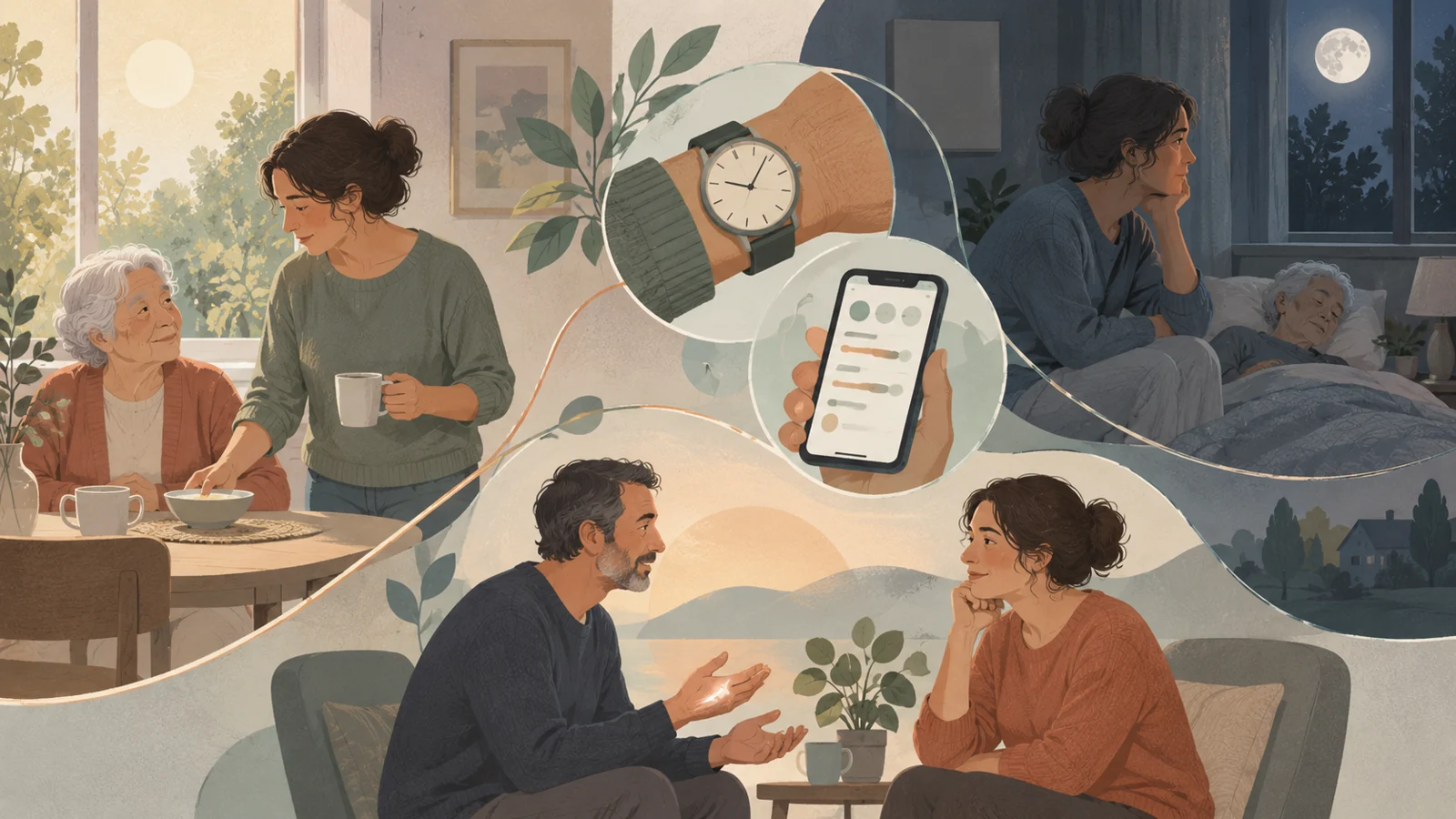
The described sequence has three connected parts. An Apple Watch collects information about sleep-wake rhythms. A new app gives the participant personalized feedback about those patterns. Health coaches then call weekly for up to six weeks to help participants work toward their own sleep and health goals and build self-knowledge about their routines.
That means the proposed program offers more than a record of when someone slept or moved. The measurement is intended to make a person’s pattern visible. The app is intended to interpret that information in personalized feedback, while the coaching calls provide a human conversation around goals and possible routine changes. Participants are also meant to help improve the app’s design and content, so their experience would inform how the digital component develops.
The registration does not describe a promise that every caregiver can maintain a fixed schedule. Its more practical possibility is a feedback loop: notice how care demands affect sleep and activity, discuss those patterns with a coach, and consider goals that fit the person’s circumstances.
The goal is symptom improvement, not a result already shown
The stated intervention goals are to reduce depressive symptoms and insomnia symptoms. Those goals are distinct from the elements used to pursue them. A watch can collect sleep-wake information; an app can return personalized feedback; and a coach can support conversations about sleep and health. Describing those components does not show that symptoms improved, nor does it show which component would be responsible if improvement occurred.
These intervention details do not establish whether participants completed the program, whether symptoms improved or how the approach compares with alternatives. The watch measurements are planned research measures; describing them does not establish a corrected biological clock or validate the watch as a clinical assessment tool.
This matters because a promising care concept has to work in the setting that created the problem. A routine that looks helpful in a data record may still be difficult to follow when a caregiver is awake at night or responding to an unplanned need. The relevant test is not simply whether sleep and activity can be tracked, but whether feedback and coaching help a caregiver use that information in daily life and whether the intended symptom benefits follow.
What this could change
For dementia caregivers, the potential value lies in turning personal sleep and activity information into practical support rather than leaving it as passive tracking. If the feedback-and-coaching approach eventually demonstrates fewer insomnia and depressive symptoms, and if caregivers can use it amid unpredictable responsibilities, it could provide a more adaptable form of self-care support built around real routines.
That would give caregivers a way to connect their own patterns with manageable health goals while giving researchers a clearer way to study sleep and mood together in dementia caregiving. The registry record dated January 23, 2026 describes that aim; the intervention details alone do not establish that the benefit has been achieved.
Key Sources
- Primary source: Self-Care for Dementia Caregivers
Government or Regulator · Clinical Trial · 2026-01-23
Keep exploring