
Research Signal – Source date 2022-04-20
Cytokines are proteins that carry signals between cells. In cancer, they can help immune cells recognize, enter and attack a tumor, but the same signaling network can also support cells that restrain immune activity. That tension helps explain why giving patients more of an immune-stimulating cytokine has so often produced less benefit than its laboratory promise suggested.
A review published on April 20, 2022, examined cytokine-based immunotherapy across cancer, with particular attention to lymphoma. It brought together biological evidence, preclinical experiments and clinical studies involving cytokines such as interleukin-2, interleukin-12 and interleukin-18. Its central practical question was not simply whether a cytokine could activate immunity. It was whether the signal could be delivered to the right cells, at a useful intensity, in a setting where its benefits outweighed its harmful effects.
One immune signal can reach opposing cellular targets
IL-2 shows why immune stimulation is not a single directional switch. It can encourage activated CD8 T cells to multiply and develop into cytotoxic lymphocytes, while also stimulating the killing activity and cytokine production of natural killer cells. Those effects can support an attack on cancer cells.
IL-2 also acts on regulatory T cells, or Tregs. These cells help suppress immune responses, and the high-affinity IL-2 receptor is constitutively expressed on them. As a result, the same cytokine that helps expand cancer-fighting cells can also expand a population capable of dampening the response. The result depends partly on which cells receive the signal and how strongly they respond to it.
Dose therefore becomes a biological tradeoff, not merely a question of turning treatment up. Lower-dose IL-2 may favor expansion of Tregs over the activation of natural killer and CD8 T cells. The higher doses needed to stimulate those effector cells can produce serious systemic toxicity, including hypotension, cytopenias, organ failure and vascular leak syndrome. In plain language, vascular leak means that blood-vessel walls become unusually permeable, allowing fluid to escape into surrounding tissues and making it harder for the circulation to maintain normal pressure.
High-dose IL-2 received approval for metastatic renal cell carcinoma and metastatic melanoma, but the 2022 review described its substantial toxicity and modest efficacy as reasons it was used infrequently at that time. The history illustrates the problem for cytokines more broadly: a signal may be powerful enough to activate immune cells and still be too difficult to control as a whole-body treatment.
What the IL-12 and rituximab comparison reveals
The lymphoma studies involving IL-12 and rituximab show why a response rate from a combination study needs a comparator. In an early phase I study summarized by the review, 43 patients with CD20-positive non-Hodgkin lymphoma received subcutaneous IL-12 with rituximab. Responses occurred in 29 patients, with more responses among those who received higher IL-12 doses. That result suggested biological activity, but both treatments were present, so it could not identify how much of the response came from IL-12.
A later randomized phase II study separated the treatment strategies more clearly. One group received rituximab together with subcutaneous IL-12. The other received rituximab first and was given IL-12 only after documented nonresponse or progression. Responses occurred in 11 of 30 patients in the concurrent-treatment arm, or 37%, and in 13 of 25 patients in the sequential arm, or 52%.
The figures cannot be read as evidence that delayed IL-12 was better. All the responses in the sequential arm occurred while patients were receiving rituximab; none occurred during the later IL-12 treatment. The reported randomized comparison did not establish an advantage for concurrent IL-12 plus rituximab over the rituximab-first strategy. The absence of responses during subsequent IL-12 treatment also provided no evidence of benefit from that later treatment in this study.
The lesson is not that IL-12 lacks activity. Rather, the clinical question is more demanding than asking whether patients responded while a cytokine was included. A useful treatment partner must show that its contribution is real in a relevant comparison, while remaining tolerable at the exposure needed to affect the tumor environment.
Engineering can change where a cytokine acts or what disables it
The review describes several ways to address the limits of ordinary cytokine treatment. They solve different problems and should not be treated as interchangeable.
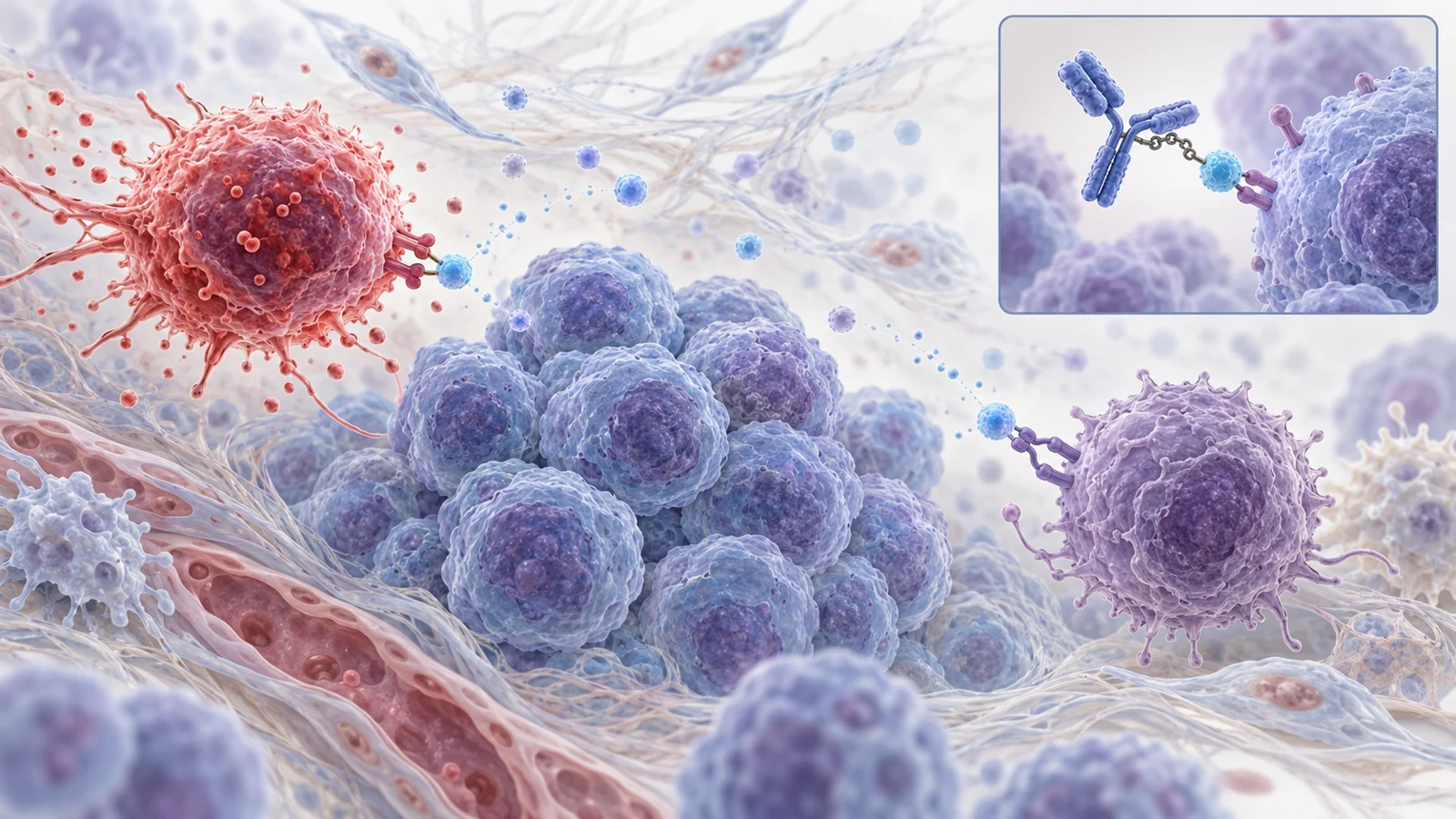
One strategy is targeted delivery. Local or intratumoral IL-12 aims to concentrate the cytokine near the tumor rather than exposing the entire body to the same level. Antibody-linked cytokines, sometimes called immunocytokines, use an antibody directed at a tumor-associated target as a delivery component. The intended logic is to bring immune stimulation closer to cancer cells and reduce unnecessary exposure elsewhere. These approaches are designed to alter distribution, not to prove that the cytokine is intrinsically safer or more effective.
Another strategy is to engineer cells or delivery vectors to produce IL-12. IL-12 has been explored in engineered viruses, plasmids, modified immune cells and proposed chimeric antigen receptor T-cell designs that can express IL-12. The review also discusses cytokine combinations with antibodies, vaccines and checkpoint inhibitors. These approaches seek to coordinate immune activation with tumor recognition or to place cytokine production closer to the relevant immune cells.
IL-18 illustrates a different engineering obstacle. IL-18 binding protein is a natural antagonist that binds IL-18 and neutralizes its activity. The review describes an engineered form of IL-18 designed to resist this binding protein. In mouse experiments, that variant produced potent antitumor responses. This is a resistance-to-neutralization strategy: it tries to preserve the signal in the presence of an inhibitor, whereas local delivery tries to control where the signal is released.
The review reported that a phase I human study of engineered IL-18 had been initiated by the time of publication. That initiation is separate from the mouse findings, and the supplied material does not provide completed human efficacy results for the engineered treatment. The significance in April 2022 was that engineering had created a testable way to address a known biological constraint, not that the constraint had already been solved for patients.
IL-18 shows why biological setting matters
IL-18 also complicates the idea that preserving or increasing an immune signal must be beneficial. The review describes a favorable toxicity profile for IL-18 but limited efficacy as a single treatment. It also points to contrasting preclinical results. In one mouse melanoma model, a low dose promoted metastasis, apparently alongside a reduction in mature natural killer cells, while a higher dose that produced serum levels above 1 nanogram per milliliter inhibited tumor growth without that decrease in mature natural killer cells.
Those findings show that the effect of IL-18 can depend on the biological setting and the level of exposure. They do not provide a safe or effective human dosing threshold. The concentrations observed in an experimental mouse model cannot be translated directly into a clinical target for patients.
The lymphoma observations discussed by the review are a different kind of evidence. In a phase I study, 19 people with CD20-positive non-Hodgkin lymphoma received rituximab with escalating doses of recombinant human IL-18. Five patients responded, including two complete responses. Among eight patients with indolent lymphoma who received doses associated with the study’s defined optimal biological responses, the reported response rate was 62%. The combination was considered safe in that study, with a safety profile similar to IL-18 alone.
The proposed mechanism was also specific to the treatment context. Rituximab marks CD20-positive lymphoma cells, while IL-18 can enhance antibody-dependent cellular cytotoxicity involving natural killer cells and monocytes or macrophages. That provides a plausible way for the cytokine to strengthen an antibody-led attack. It does not establish that IL-18 would have the same effect in every lymphoma subtype, with every antibody, or as a standalone treatment.
IL-18 may also increase PD-L1 expression on tumor cells through interferon-gamma, according to the review, creating a rationale for combining it with PD-1 checkpoint inhibition. At the same time, preclinical work raised the possibility that IL-18 could promote tumor invasiveness or progression in some circumstances. The important point is not to rank IL-18 as simply good or bad. Its effect depends on which cells are present, what other treatment is active, how the tumor responds and whether natural inhibitory mechanisms can be managed.
What better control of immune signals could mean for lymphoma treatment
For people with lymphoma, the most useful future role for cytokines may be as a more precisely controlled partner for tumor-targeting antibodies. A cytokine could help natural killer cells or other immune cells attack cancer cells marked by an antibody. Local delivery and antibody linkage aim to concentrate that activity near tumors; engineering IL-18 to resist its binding protein instead aims to prevent neutralization.
That possibility remained conditional in April 2022. Engineered cytokines still needed to demonstrate added patient benefit and acceptable toxicity in relevant clinical comparisons. If those requirements were met, better control of immune signals could turn cytokines from broadly activating drugs into more focused tools for helping the immune system act where lymphoma treatment needs it most.
Key Sources
- Primary source: Cytokine Based Immunotherapy for Cancer and Lymphoma: Biology, Challenges and Future Perspectives.
DOI or Journal Page · Review or Meta-Analysis · 2022-04-20
Keep exploring