
Research Signal – Source date 2024-08-01
Growing animal cells into food leaves a set of everyday questions unanswered. What will the meat taste and feel like? What nutrients will it provide? And how will it retain desirable qualities between production and the moment someone eats it?
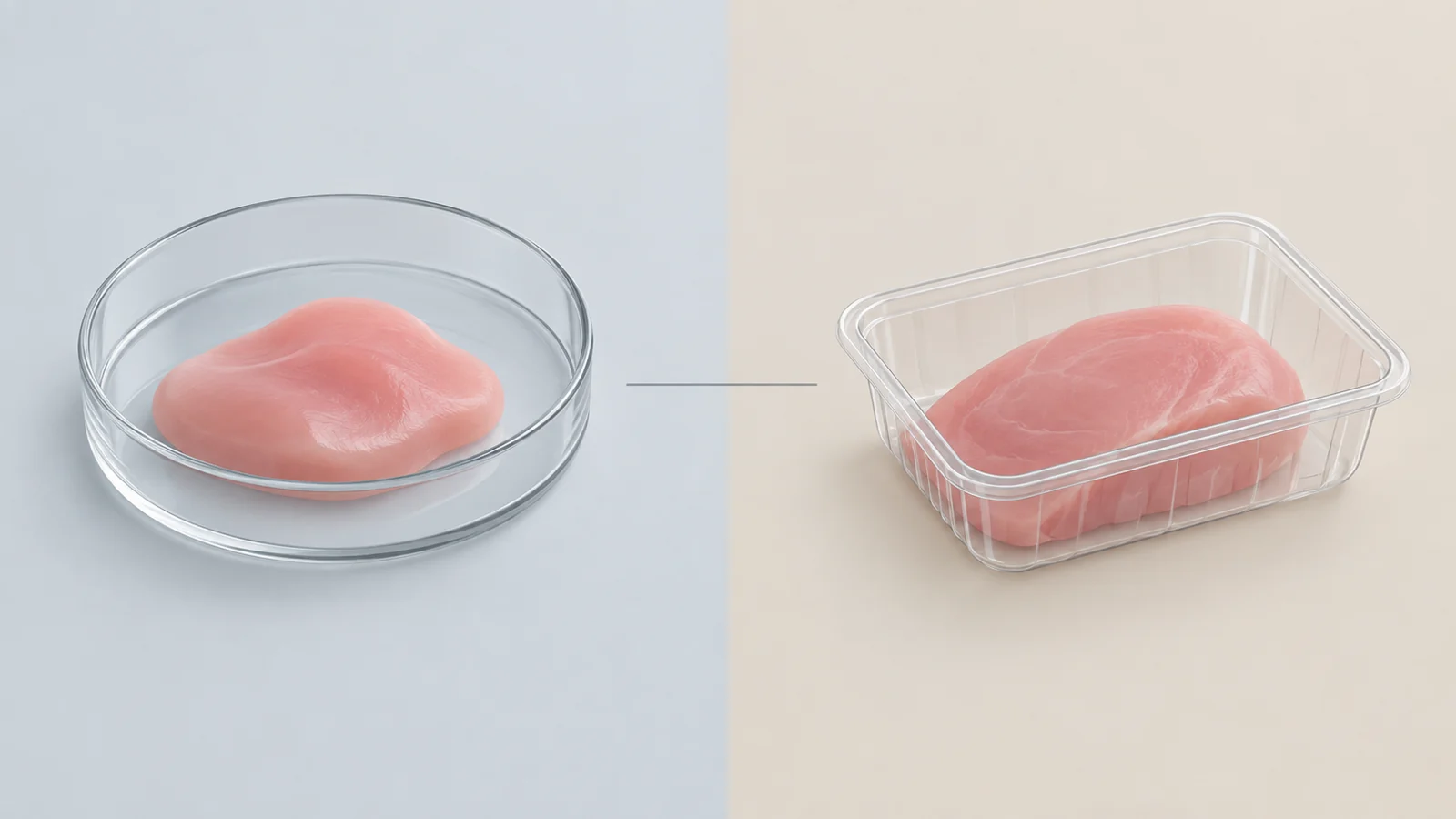
An article dated August 1, 2024, brings those questions together by considering cultivated meat—meat grown from animal cells—alongside its packaging. Its abstract describes an analysis of production limitations and recommendations for improving quality, with packaging considered part of delivering safe, appealing food with a suitable shelf life.
The useful connection is between developing the food’s attributes and preserving them afterward. Physical characteristics, nutritional content and sensory properties all matter in comparisons with conventional meat. Each asks something different of a product; a favorable comparison on one dimension would not settle the others.
Quality takes shape during production
The authors identify several production choices that deserve attention, including stem cells, scaffold materials and the development of muscle tissue. These span the cells used to begin production, the materials that support tissue development and the characteristics of the resulting tissue.
The abstract specifically mentions increasing muscle tissue cells with actomyosin, part of muscle’s protein machinery. That detail gives substance to the quality question. The authors’ concerns extend beyond obtaining cells to developing the attributes of meat. Their inclusion of scaffold materials likewise makes the supporting material a food-development consideration.
Genetic modification also appears among the considerations for improving quality. Together, these are variables for development, rather than a production recipe. The practical question is how choices at these different stages could contribute to a product’s physical, nutritional and sensory attributes. For a reader comparing future products, those attributes offer more useful criteria than the fact that animal cells were successfully grown.
Packaging has a protective job as well as an environmental one
Once a product has been made, the design problem shifts toward maintaining safety and quality over a desirable shelf life. Packaging therefore needs to be considered in relation to the food it will hold and the qualities that should survive storage and sale.
The authors propose modifying packaging materials with emerging technologies and exploring materials derived from by-products or biological sources. These suggestions connect material choice with environmental aims, while retaining the package’s protective function as a central requirement. Where a material comes from and how well it serves the food are separate questions that have to be considered together.
Labeling adds a communication concern. The authors emphasize transparency as a way to address reluctance toward unfamiliar foods. Clear information could help people understand what they are considering buying; it serves a different purpose from the physical package that holds the product.
What the available abstract lets us conclude
The article’s abstract supports an account of the problems the authors identify and the directions they recommend. It does not, by itself, establish that a particular cultivated-meat product matches conventional meat in nutrition, texture or sensory performance. Nor can it substantiate a shelf-life duration, the effectiveness of a specific packaging material or measured benefits from genetic modification.
This interpretation is limited to the abstract available through Europe PMC. The full text is not available here to assess the methods or detailed evidence behind the recommendations. That limits what can be concluded from this account, without implying that the paper itself contains no further evidence. In particular, an environmental advantage for a specific combination of meat and packaging remains unverified here.
What this could change
If production improvements yield desirable meat qualities and suitable packaging preserves them through storage and sale, consumers could gain cultivated-meat products that remain useful beyond the production facility. The payoff would be food that can reach a store and then a kitchen with the attributes people value still intact.
Packaging made from by-products or bio-based materials could also contribute to environmental goals, provided both its protective performance and its environmental advantages are demonstrated. That would connect the development of an appealing food with a suitable way to deliver it to the people who might choose to eat it.
Key Sources
- Primary source: Designing cultivated meat: Overcoming challenges in the production process and developing sustainable packaging solutions
DOI or Journal Page · Peer-Reviewed Paper · 2024-08-01
Keep exploring