
Research Signal – Source date 2025-06-01
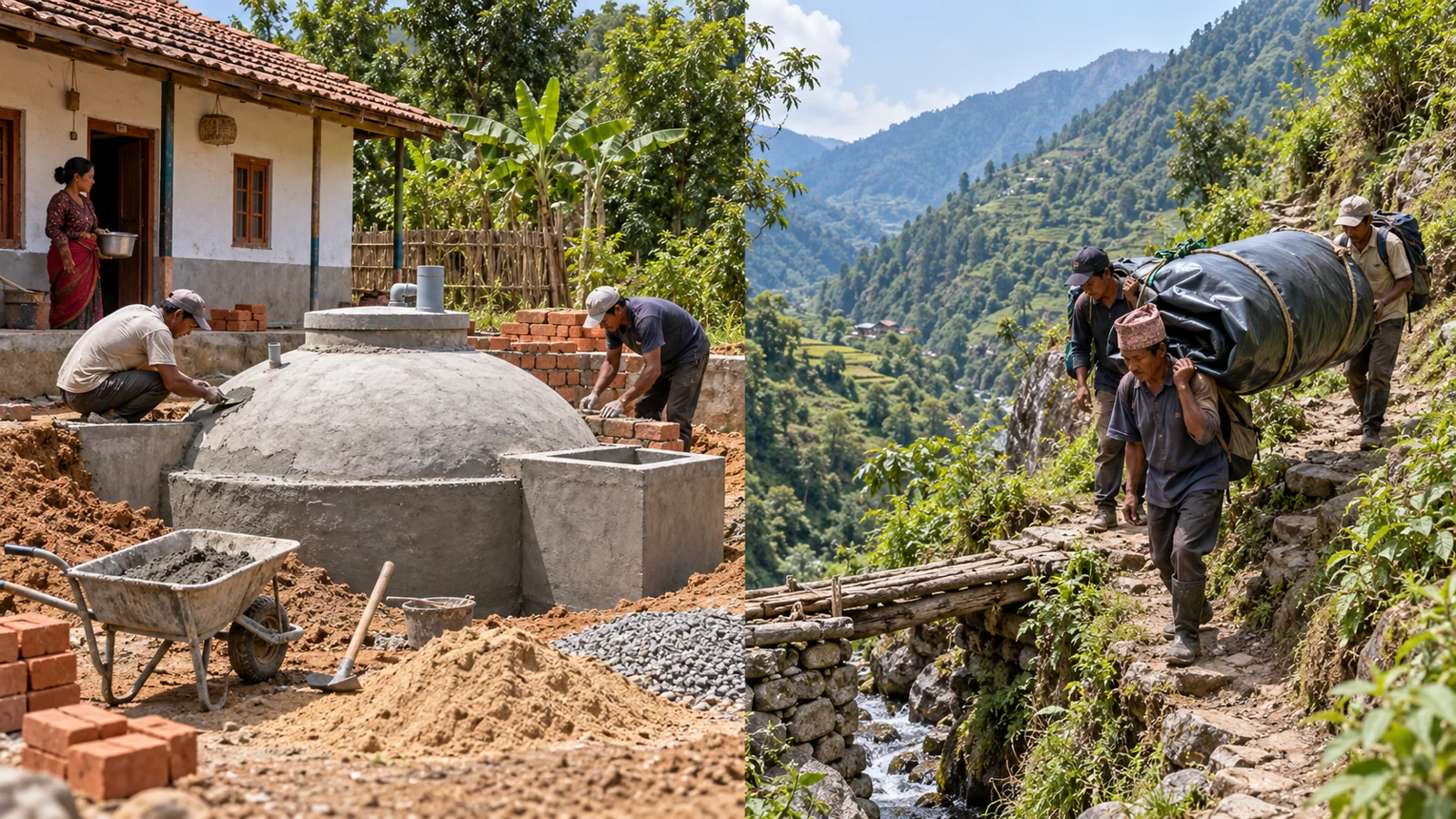
A biogas digester is a tank where organic material produces gas. The material for one may depend on where it will be built and what the structure needs to do. A review published June 1, 2025, describes cement-based materials as common in small household digesters, while plastic is an option in places where shipping or material availability is a problem. The comparison points to different practical constraints, rather than one material that fits every site.
Cement is a common household choice
For small domestic digesters, the review describes cement-based construction as common, citing resilience, longevity and cost-effectiveness.
Plastic answers a different challenge. The review describes plastic digesters as flexible, reusable and resistant to chemicals. Where conventional building materials are hard to ship or obtain, these properties can make plastic digesters worth considering. They are existing alternatives; their appeal here is tied to logistics as well as material properties.
Delivery and scale change the calculation
At commercial or large facilities, the decision broadens beyond the household comparison. Environmental conditions and material properties both shape the choice. The review considers a wider set of options, including concrete, stone, metals and composites, as well as plastics. A material that fits one site or structure may not answer the needs of another.
The review also considers combining materials for different structural or functional roles. That offers another way to think about a design: materials need not be treated as competing choices for every part of a digester. But the qualitative synthesis does not establish that a particular combination was built and validated.
The review compares existing research qualitatively. Its discussion can explain why cement is common in small domestic digesters and why plastic may appeal when delivery is difficult. It does not provide a numerical, site-by-site ranking of lifespan or performance, so the comparison alone cannot show which option will succeed at a particular location.
What this could change
If comparisons under stated site conditions show which options remain durable, a household or community facing difficult deliveries could have a more dependable route to building a workable digester. Plastic alternatives already exist; the potential advance is better-grounded selection among materials suited to local conditions. Dependable use would still depend on the design and its operation, which this material comparison does not settle.
A useful nearer milestone would be comparable field observations of cement-based and plastic designs under stated site conditions, reporting durability and maintenance over time. That could connect the review’s comparison of resilience, transport and location to choices people can use when planning a digester.
Key Sources
- Primary source: Advancements in Biogas Digester Materials: A Review of Strength, Durability, and Suitability.
DOI or Journal Page · Review or Meta-Analysis · 2025-06-01
Keep exploring