
Research Signal – Source date 2024-02-07
A review published on February 7, 2024, asks a central biological question: how might an intervention that affects dying tumor cells also change the body’s immune response? Its subject is traditional Chinese medicine, but the category covers interventions that may act differently. The review’s account is therefore best read as a synthesis of possible connections, not as evidence that every treatment has the same effect or that a particular treatment is ready for wider use.
A review built around two routes to immune change
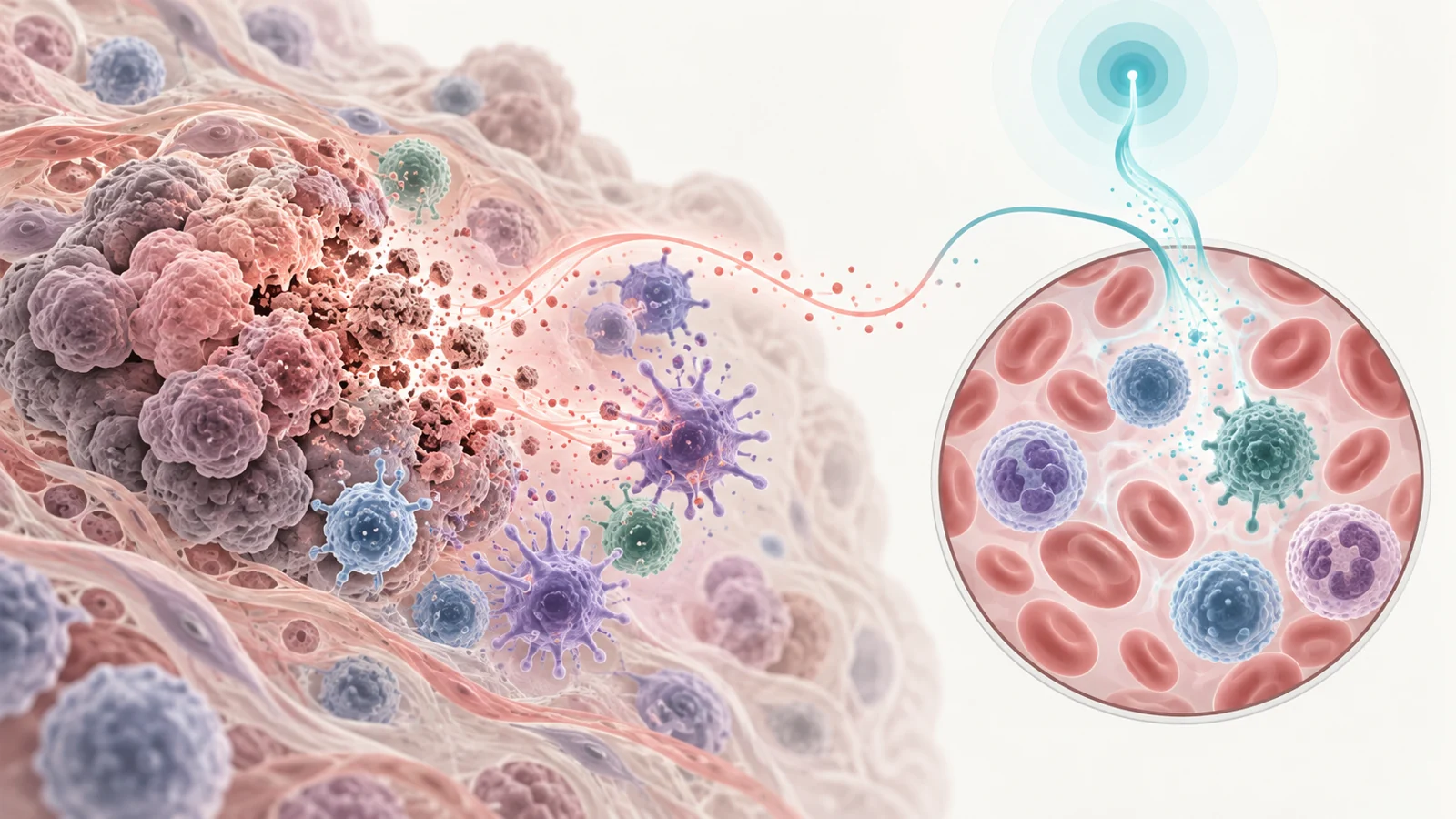
The authors describe one route that begins with tumor-cell death. They group apoptosis, autophagy, pyroptosis, necroptosis, and ferroptosis among the regulatory cell death pathways discussed in relation to traditional Chinese medicine interventions. In the review’s model, changes associated with induced tumor-cell death may alter the immune environment around the tumor and increase the infiltration of immune cells with antitumor roles.
A second route is more direct. The review also describes interventions that may increase the population of, or activate, immune-cell groups with antitumor roles. This is a different proposed connection from the immune changes associated with tumor-cell death. Keeping the routes separate matters because an intervention could be discussed as changing the immune environment through what happens to tumor cells, through a direct effect on immune function, or through both.
Where the immune change is observed
The location of an immune change affects what it can tell us. Immune-cell infiltration into tumor tissue concerns the local environment in which malignant cells are present. The review separately refers to changes in the proportion of antitumor immune cells in the spleen or peripheral blood, which concern the broader immune status of the tumor-bearing host.
These observations are related, but they are not interchangeable measures of treatment success. A local change in tumor tissue does not by itself describe the whole body’s immune status. A change in the spleen or peripheral blood does not by itself show what is happening inside a tumor. The review’s value here is to connect these locations within one proposed account while preserving their different biological contexts.
What the available evidence leaves open
The abstract presents traditional Chinese medicine as having clinical potential and includes discussion of its use alongside immunotherapy. It also refers broadly to reduced side effects and improved immune status. Those statements describe the review’s overall rationale, but the supplied material does not identify the size of a benefit for a named intervention, cancer type, or patient group.
The abstract does not specify which individual observations came from cell models, animals, or human studies, nor does it name the compounds, formulations, doses, immune-cell subtypes, or treatment schedules involved. These omissions limit what readers can conclude about particular interventions: the mechanistic synthesis does not establish whether a specific combination is effective or safe for patients. The review’s inclusion of clinical application and immunotherapy combinations marks an area of interest, not proof of improved outcomes.
What this could mean for cancer immunotherapy
The patient-facing possibility is conditional. A defined intervention from this research area might eventually help an immunotherapy produce a more effective antitumor response by influencing tumor-cell death, the immune environment around the tumor, immune activity elsewhere in the body, or a combination of these routes. Reaching that point would require a reproducible intervention, evidence that it adds benefit to immunotherapy, and an acceptable safety profile in patients. From the February 2024 perspective, the review offers a biological rationale for investigating that possibility, not a treatment recommendation or a demonstrated clinical result.
Key Sources
- Primary source: The Effectiveness of Traditional Chinese Medicine in Treating Malignancies via Regulatory Cell Death Pathways and the Tumor Immune Microenvironment: A Review of Recent Advances.
DOI or Journal Page · Review or Meta-Analysis · 2024-02-07
Keep exploring