
Research Signal – Source date 2021-07-13
A study published on July 13, 2021, asked whether the severity of reported childhood abuse was associated with measurable differences in brain chemistry among people with bipolar I disorder. The researchers focused on metabolites involved in the brain’s creatine cycle, a set of compounds related to energy metabolism.
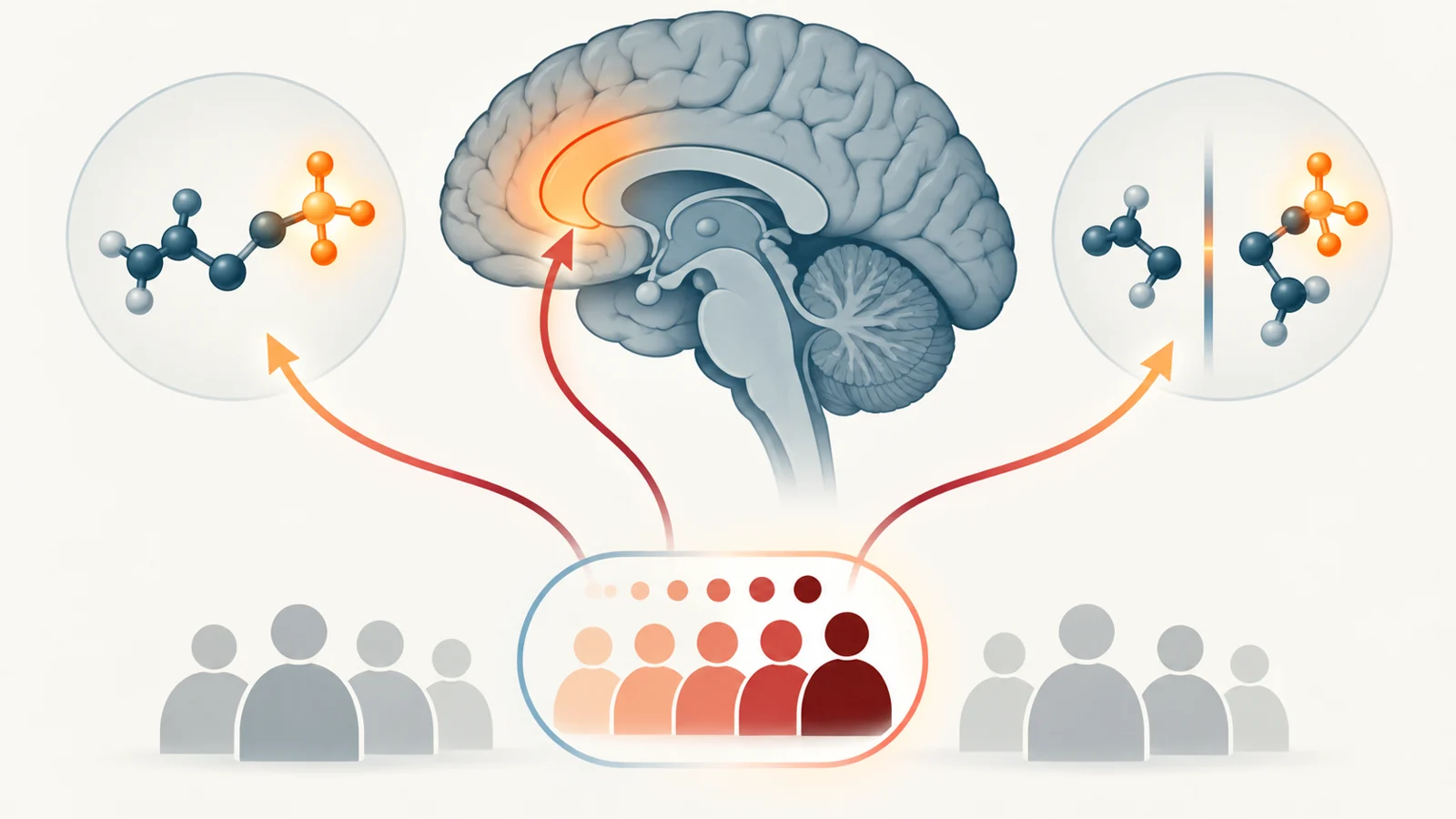
The finding was specific: within the bipolar I group, greater physical and sexual abuse severity was associated with higher phosphocreatine in one brain region and with a lower creatine-to-phosphocreatine ratio. That result may help shape a research question about why childhood abuse is associated with worse outcomes for some people with bipolar disorder. It does not, by itself, explain that connection.
Two ways of measuring the same research question
The study included 59 people with bipolar I disorder and 59 healthy comparison participants. The bipolar I participants were euthymic, meaning they were in a stable mood state when assessed.
Researchers used two measurement channels. The Childhood Trauma Questionnaire was used to assess reported childhood abuse severity. The participants also underwent a 3-tesla proton magnetic resonance spectroscopy scan, a technique used here to measure metabolites in the brain rather than to produce a conventional image of brain structure.
The measurement focused on the anterior cingulate cortex, or ACC. The study therefore connected questionnaire-based reports about physical, sexual and emotional abuse with chemical measurements from a defined brain region.
What differed between the groups
The bipolar I group had higher total Childhood Trauma Questionnaire scores than the healthy comparison group. The researchers also reported greater severity rates of sexual and physical abuse among the bipolar I participants.
Those group differences in questionnaire scores are separate from the study’s main metabolite associations. The key chemistry result came from examining how abuse severity related to metabolite levels within each group. Greater physical and sexual abuse severity was associated with increased ACC phosphocreatine in the bipolar I group, while the abstract reports no corresponding metabolite association in the healthy comparison group.
The study did not establish that the bipolar group had a different metabolite level simply because it had higher abuse scores. It identified a relationship between abuse severity and chemistry within the bipolar participants.
Why the ratio matters
Creatine and phosphocreatine are related compounds, and the creatine-to-phosphocreatine ratio compares their measured levels. A lower ratio in this study occurred alongside higher phosphocreatine as abuse severity increased within the bipolar I group.
A lower ratio should not be read as proof that creatine itself was reduced. Ratios can change because one component rises, the other falls, or both change. The supplied findings support the direction of the reported association, but they do not establish impaired mitochondrial energy production or show that the brain was damaged.
An association is not yet an explanation
The results are observational. They show that questionnaire-assessed abuse severity and ACC creatine-cycle measures varied together in the bipolar I participants. They do not show that childhood abuse caused the metabolite pattern, or that the metabolite pattern caused worse bipolar outcomes.
The report of an association in the bipolar group only also should not be treated as proof that the association was statistically stronger than in the healthy comparison group. Establishing that kind of between-group difference requires a formal comparison of association strength, not simply a finding reported in one group and not the other.
The study also was not a treatment test. It cannot show whether changing creatine metabolism would alter symptoms or clinical outcomes, and it does not support a recommendation about creatine supplements. Nor can a measurement from this sample diagnose bipolar disorder or predict how an individual’s illness will develop. The findings concern bipolar I participants in a stable mood state and cannot automatically be extended to every bipolar condition, every mood state or everyone who experienced childhood abuse.
What this could reveal about bipolar illness
The potential scientific value is a possible biological link between lived experience, creatine metabolism and differences in the course of bipolar illness. If other research reproduces the association, and if the relationship is then shown to connect reliably with clinical outcomes, it could help researchers identify a pathway contributing to why bipolar illness becomes more severe or difficult for some people.
That capability would depend on two steps that this study did not complete: replication and a demonstrated connection to clinical course. At the July 2021 publication point, the finding was an association to investigate, not a diagnostic marker, a forecast for an individual or a basis for treatment.
Key Sources
- Primary source: Altered brain creatine cycle metabolites in bipolar I disorder with childhood abuse: A 1 H magnetic resonance spectroscopy study.
DOI or Journal Page · Peer-Reviewed Paper · 2021-07-13
Keep exploring