
Research Signal – Source date 2021-01-01
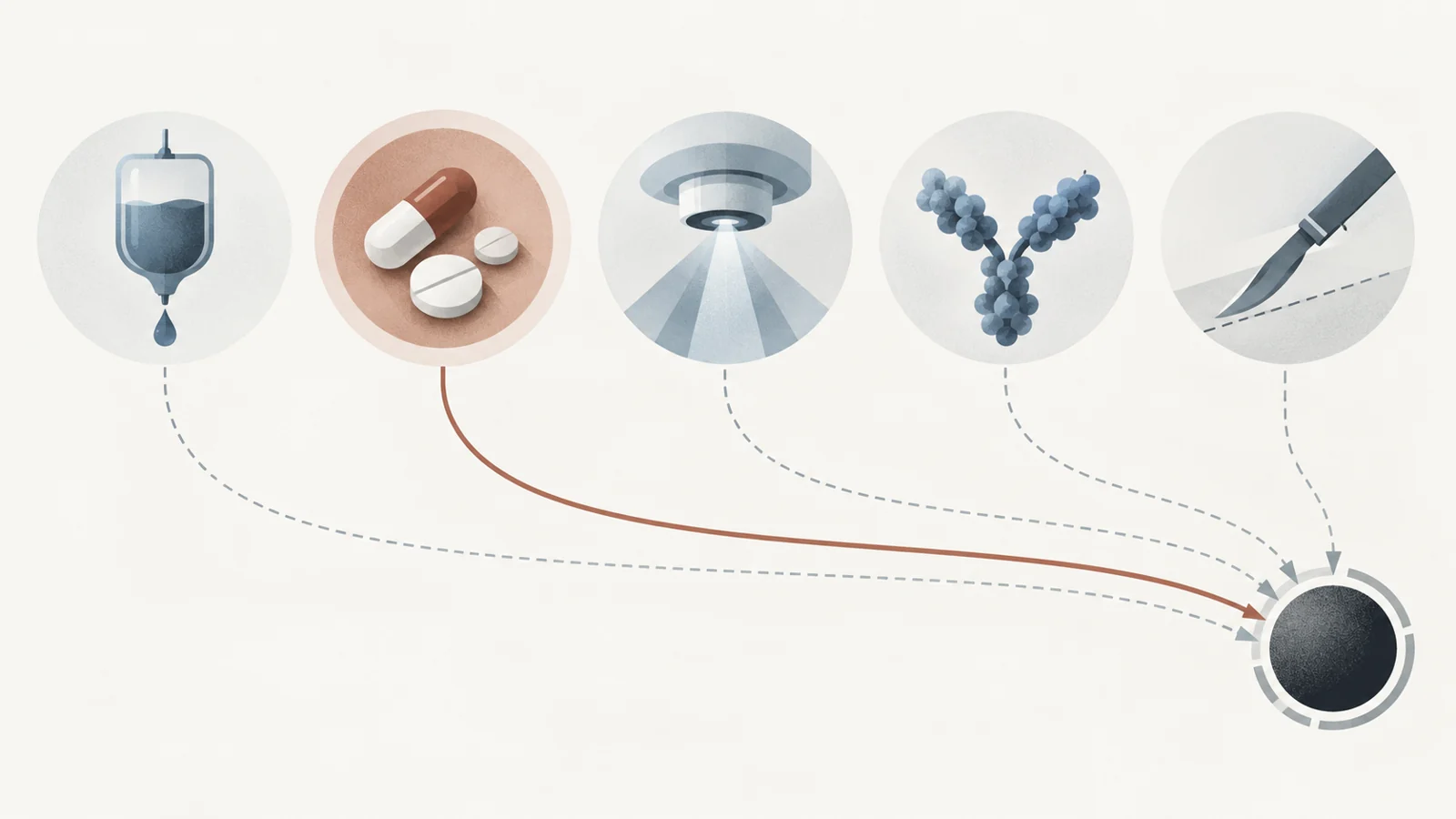
A review of early COVID-19 studies found a higher pooled odds of death among cancer patients receiving active chemotherapy than among those not receiving it. The analysis did not identify a statistically significant association for several other treatment categories. The finding raised a specific question about chemotherapy, but it did not show that chemotherapy caused deaths or tell an individual patient their personal risk.
The paper was published in 2021 and included studies found through a search updated on 10 October 2020. Its results describe the evidence available at that time, not later research or current treatment guidance.
Chemotherapy had the clearest reported association
Across 16 retrospective and prospective studies involving 3,558 cancer patients diagnosed with COVID-19, the pooled odds ratio for death was 1.60 for active chemotherapy compared with no active chemotherapy. The reported 95% confidence interval was 1.14 to 2.23. In this combined analysis, the odds of death were higher in the group receiving chemotherapy.
An odds ratio compares the odds of an outcome between groups. An estimate of 1.60 means the chemotherapy group had 1.60 times the odds of death in the pooled comparison; it does not mean that 60% of patients died, or that any one patient’s chance of dying rose by 60%. Absolute risk depends on how often death occurred in the relevant patients, and that personal probability cannot be read from this odds ratio alone.
The authors also pooled estimates adjusted for multiple patient characteristics. In that analysis, the chemotherapy odds ratio was 1.42, with a 95% confidence interval of 1.01 to 2.01. The adjusted estimate remained above 1, so the association was still present after the adjustments used in the contributing studies. Adjustment can make groups more comparable on measured characteristics, but it cannot ensure that all relevant differences between patients have been accounted for. The interval also indicates uncertainty around the estimate; its lower end is close to no difference.
The comparison was treatment by treatment
The outcome was death among people with cancer who had diagnosed COVID-19. For each treatment category, the analysis compared patients with active or recent exposure to that modality against patients without that modality. It then combined study estimates using a random-effects approach, which allows for the possibility that the underlying association varies across studies.
This was not a single direct comparison in which every patient was assigned to one cancer treatment or another. A person not receiving chemotherapy, for example, could differ from someone receiving it in ways that also relate to COVID-19 outcomes. The available summary does not establish that the groups were otherwise alike, and the pooled estimate does not erase differences in how the original studies selected patients or recorded treatment and outcomes.
The search covered PubMed and Embase from their inception through 1 July 2020, with an update on 10 October 2020. The researchers also searched major oncology conference proceedings and preprint databases. The 10 October date marks the reported search update; it is not the paper’s publication date. The evidence base therefore reflects an early and still developing period of the pandemic.
Other treatment categories had a different result
The pooled analyses did not identify a statistically significant association with death for active targeted therapy, immunotherapy, chemoimmunotherapy, or recent surgery. In these data, those categories did not produce the same reported association as active chemotherapy.
A result that is not statistically significant does not certify that a treatment is risk-free. It means the analysis did not detect a clear association with death for that category using the available studies and estimates. The supplied summary does not give the category-specific estimates or their precision, so it cannot show how large or small an effect might still be compatible with those results. The findings distinguish the reported evidence; they do not rank treatments as safe or unsafe.
An association leaves its cause unresolved
The analysis included retrospective studies, which look back at patient records, and prospective studies, which follow patients forward. Such studies can identify patterns across many patients, and combining results can make a recurring pattern easier to see. But treatment was not randomly assigned for this comparison. Factors connected to both treatment and the chance of dying could contribute to the observed difference.
The multivariate-adjusted estimate matters because it shows that the association persisted after the contributing analyses accounted for multiple characteristics. It does not prove that every important factor was measured or handled in the same way. The information available here does not show how much results varied across studies, so the consistency of the pooled association remains unclear. Together, these constraints leave open whether chemotherapy itself, other differences among patients, or a combination accounts for the pooled association.
The careful conclusion is therefore narrower than a treatment warning: in evidence available by the October 2020 search update, active chemotherapy was associated with higher odds of death among cancer patients with COVID-19. This synthesis alone cannot establish a causal effect, estimate an individual patient’s absolute risk, or support advice to delay or change cancer treatment.
How treatment-specific evidence could guide cancer care
If the chemotherapy association persists in better-controlled evidence and its causes become clearer, clinicians and patients could have more tailored discussions about treatment risk and protective care during COVID-19. Separating treatment categories could help those conversations address the circumstances around a particular therapy instead of treating every cancer treatment as one exposure. The early pooled result points to a question worth resolving; it is not, by itself, a reason to change an individual’s care.
Key Sources
- Primary source: Association of active oncologic treatment and risk of death in cancer patients with COVID-19: a systematic review and meta-analysis of patient data.
DOI or Journal Page · Review or Meta-Analysis · 2021-01-01
Keep exploring