
Research Signal – Source date 2022-01-01
Survival for children with blood cancers has improved over recent decades, but treatment remains a pressing challenge when the disease returns or resists therapy. Drugs that release the immune system’s brakes have shown promise in adult studies and preclinical research. What that promise means for children, adolescents, and young adults is a separate question: experience in these age groups was still limited when a 2022 review surveyed the evidence.
Releasing a brake on the immune response
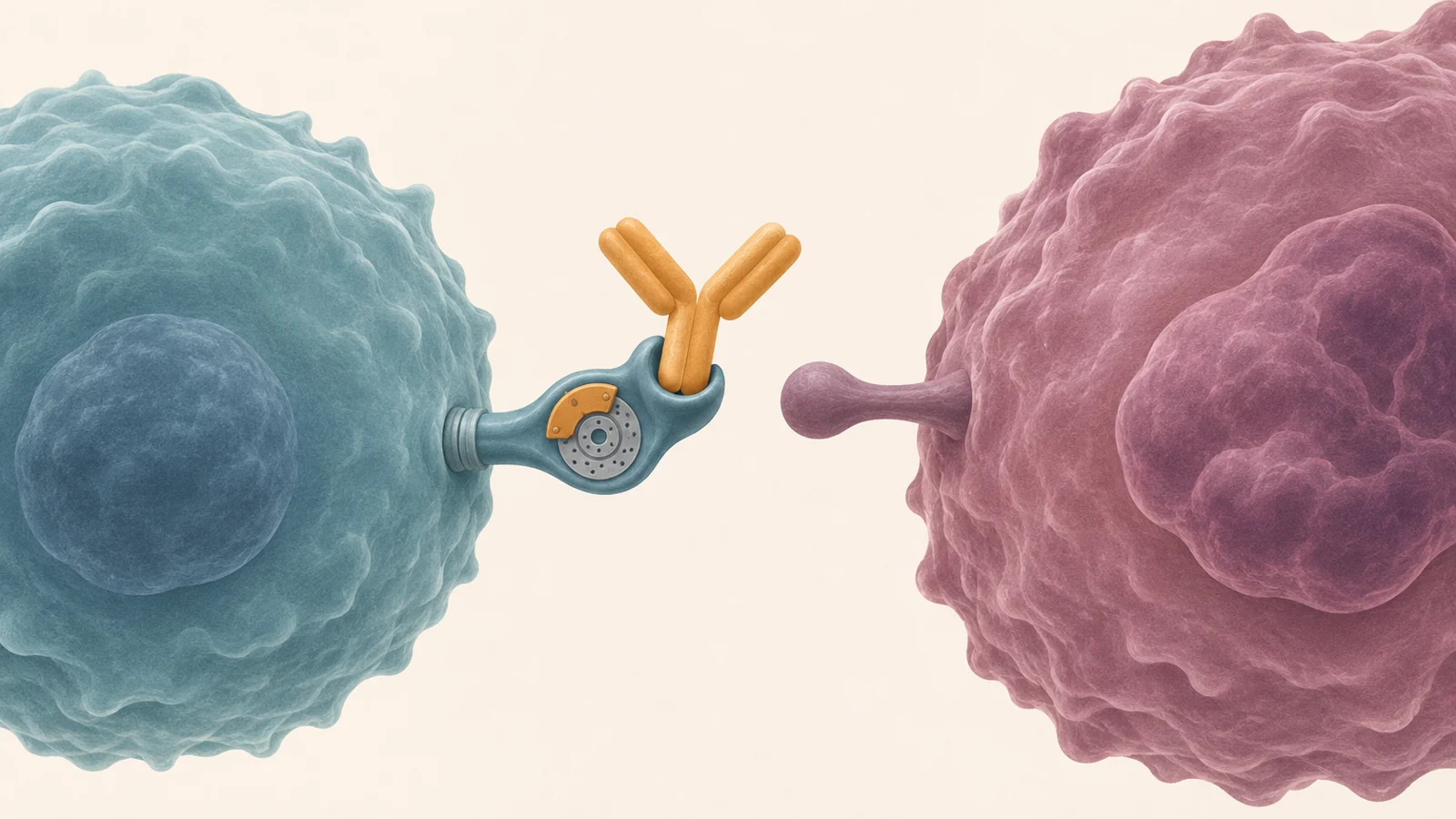
The immune system has inhibitory receptors that can restrain an attack on cancer. Immune checkpoint inhibitors are drugs designed to block those receptors, with the aim of allowing a stronger antitumor immune response. The treatment idea is to change a signal that holds the response back; it is not, by itself, evidence that a young patient’s cancer will respond.
That distinction matters because the review brings together evidence from several settings. Findings in preclinical models and adults helped motivate interest in these drugs, but they cannot answer on their own whether the approach works safely in children and young adults with blood cancers.
Different reports answer different questions
The review surveys case reports, case series, and clinical trials involving children, adolescents, and young adults. A case report can describe one patient’s experience. A case series can show experiences across a group. A clinical trial can evaluate treatment in a defined study setting. Each offers a different view, and none should be read as interchangeable with the others.
Two questions also need to stay distinct. Treatment activity asks whether the cancer responds to therapy; safety asks what harms or complications occur. The review addresses both kinds of evidence, but its abstract supplies no pediatric response rate, survival benefit, or adverse-event rate. Readers therefore cannot use this summary to estimate the likelihood of benefit or harm for an individual young person.
The central point is the scope of the evidence: by 2022, the review described pediatric experience as limited, even as it surveyed reports and trials. That makes the existence of research meaningful, while leaving the size and reliability of any treatment effect unresolved here.
New approaches widen the research questions
The authors also discuss novel targets, combination treatments, and registered clinical trials. These directions raise questions about whether changing other immune signals or pairing treatments could help address the needs of young people whose disease has returned or resisted therapy. They are research possibilities discussed by the review, not established pediatric treatment gains.
A registered trial marks a study being pursued; it does not establish that the treatment is effective or safe. For any proposed approach, evidence about activity and safety in the young-patient group being studied would be needed to judge what it may offer.
What this could make possible
For a young person facing blood cancer that has returned or resisted treatment, a meaningful future possibility would be an additional option supported by evidence gathered in children, adolescents, or young adults. Checkpoint inhibitors offer a biological rationale for exploring that possibility: blocking inhibitory receptors is intended to release a restraint on antitumor immunity. Moving from that rationale and the limited evidence reviewed in 2022 to a dependable care option would require further clinical development.
A nearer observable milestone would be a pediatric trial that reports both treatment activity and safety for a clearly defined group of young patients. Those results would help show what the treatment did and what risks accompanied it in that group. They would be an evidence readout, not yet a promise that every young person with relapsed or refractory disease could benefit.
Key Sources
- Primary source: Safety and Efficacy of Immune Checkpoint Inhibitors in Children and Young Adults with Haematological Malignancies: Review and Future Perspectives.
DOI or Journal Page · Review or Meta-Analysis · 2022-01-01
Keep exploring