
Research Signal – Source date 2021-03-01
CAR T therapy had already shown it could treat some blood cancers, prompting researchers to investigate whether engineered immune cells might also help people with pancreatic and biliary tract cancers. A review published March 1, 2021, found seven early clinical trials relevant to those cancers. The trials offered initial safety observations, but the review described assessments of treatment benefit as still ongoing.
The review searched medical literature through April 24, 2020. That search cutoff matters: its account reflects the studies identified by then, not later trial results.
The treatment is built to recognize a target
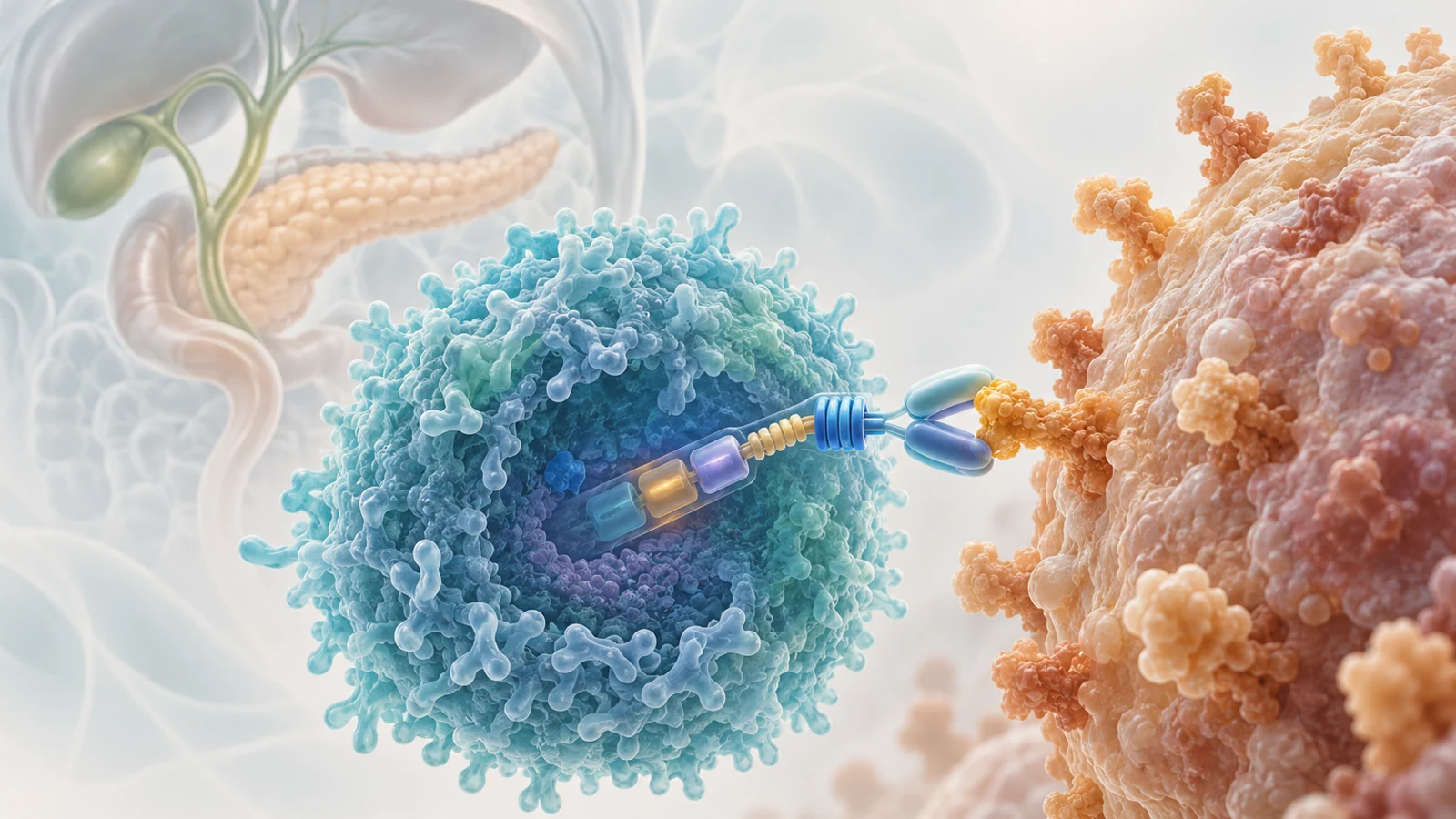
CAR T therapy starts with T cells, immune cells that can be equipped with a chimeric antigen receptor, or CAR. The added receptor is designed to recognize a particular antigen—a feature on tumor cells that the treatment is aimed at. The approach gives the cells a selected target; it does not, by itself, show that they will control a cancer in patients.
Across the trials in this review, researchers tested CAR T cells aimed at mesothelin, CD133, prostate stem cell antigen, claudin 18.2, epidermal growth factor receptor, and human epidermal growth factor receptor 2. This range shows that the studies were testing several targeting approaches. The review does not identify one target as more effective than another.
Seven trials did not mean seven matching tests
Six trials were in phase 1, and one was in phase 1/2. These were early-stage clinical studies. Some focused specifically on pancreaticobiliary cancers; others enrolled people with different solid cancers, including pancreatic or biliary tract cancers.
That mix affects what the combined findings can tell readers. The seven trials were not all tests in the same cancer population, using the same target or study stage. An observation from a study that included several cancer types cannot automatically be assigned to its pancreatic or biliary participants. The review offers a snapshot of early clinical investigation, not a single, uniform test of CAR T therapy for these cancers.
The review found few severe side effects
The authors reported very few grade 3 or 4 side effects and said most adverse events were associated with cytokine release syndrome, an immune reaction involving the release of signaling proteins called cytokines. These findings describe two related but different aspects of safety: the reported severity of side effects and the type of reaction linked to most adverse events.
The observation is useful because safety is a central question for an unfamiliar treatment approach. But a report of few severe side effects in these early trials cannot answer whether the therapy shrank tumors or helped patients live longer. Those are benefit questions, and they require efficacy evidence. The review said efficacy assessments were ongoing in dose-expansion and phase 2 studies at the time of its account.
What CAR T could change for pancreatic and biliary tract cancers
If later studies show meaningful benefit while maintaining acceptable safety, CAR T could become a targeted cellular treatment option for people with pancreatic or biliary tract cancers. The seven trials reviewed here had not established that outcome. As of the review’s evidence cutoff, they showed that several targeting approaches had reached early clinical testing and provided initial safety observations, while the question of patient benefit remained open.
Key Sources
- Primary source: CAR T Cell Therapy in Pancreaticobiliary Cancers: a Focused Review of Clinical Data.
DOI or Journal Page · Review or Meta-Analysis · 2021-03-01
Keep exploring