
Research Signal – Source date 2021-01-01
CAR-T therapy has a two-part challenge: engineered immune cells need to attack tumors effectively while causing fewer adverse events. A 2021 review surveys CAR-T therapy in blood cancers and solid tumors, and considers whether combining approaches could help address both problems in clinical care.
Giving T cells a tumor-directed receptor
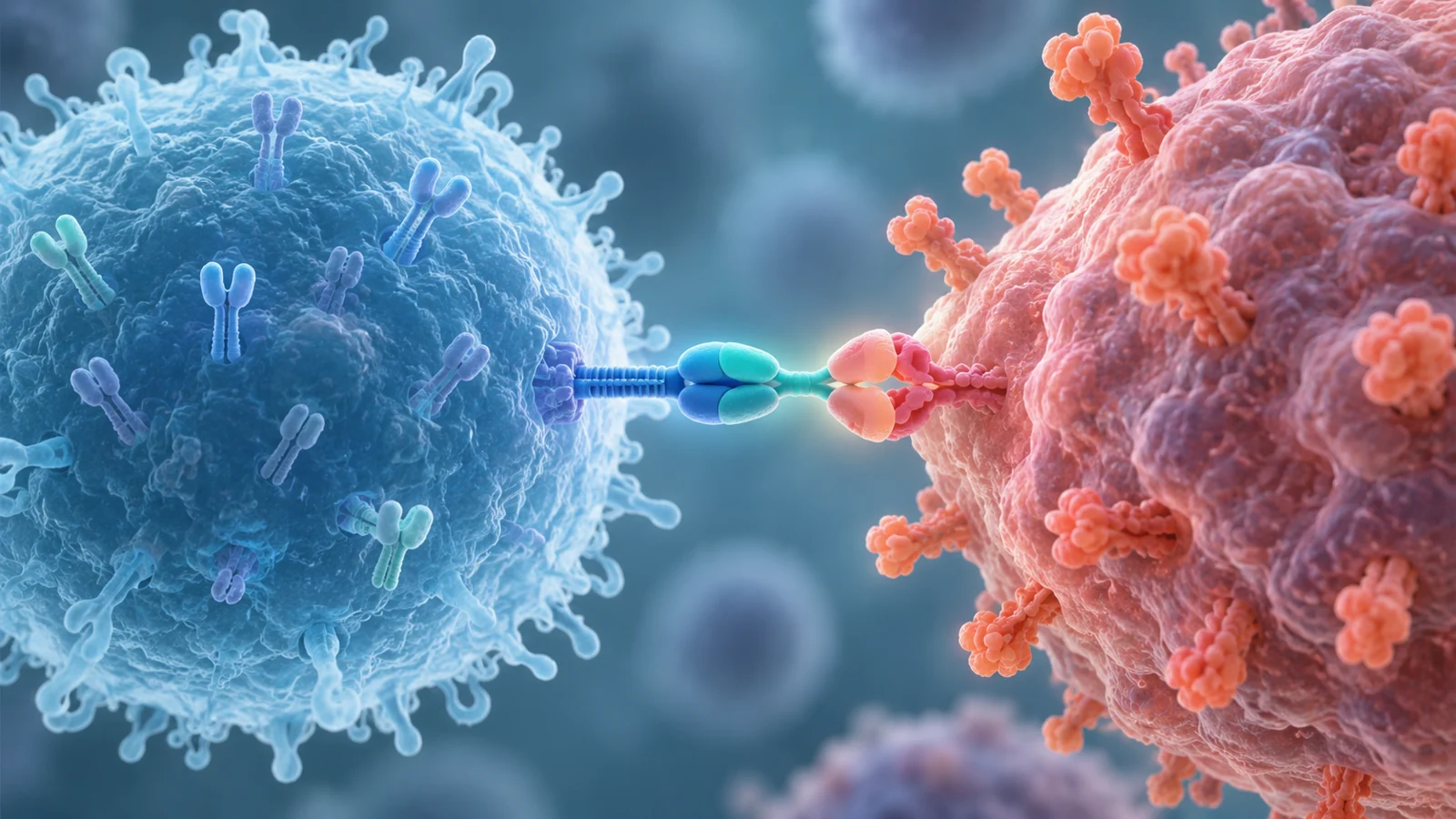
T cells are immune cells. In CAR-T therapy, they are engineered to express a chimeric antigen receptor, or CAR, directed against tumors. The added receptor is the feature that gives the cells their intended tumor target; the treatment strategy centers on using these engineered cells against cancer.
That design has shown potential, but the review frames efficacy and safety as linked challenges for current CAR-T therapy. Better tumor-directed activity would not by itself resolve the question of adverse events. The treatment must advance on both fronts for its promise to translate into a useful clinical option.
The review spans blood cancers and solid tumors
The authors discuss clinical applications in hematological malignancies, meaning blood cancers, as well as solid tumors. Including both settings shows the breadth of the review’s scope. The abstract, however, does not provide outcome comparisons between them or establish how well CAR-T therapy works in either setting.
This distinction matters because the review is describing a field of clinical application and the obstacles facing it, rather than presenting a new trial result. Its central question is how to improve efficacy while minimizing adverse events across the areas it discusses.
Combining approaches is a proposal
The review authors point to combining different approaches as a promising direction. They suggest that combining approaches might improve how well the therapy works against tumors and help address barriers to its clinical use. The abstract does not name a particular combination or identify which approach would work best, so this is an outlook, not a measured result from a specific optimization strategy.
The abstract does not report effect sizes, adverse-event rates, or numerical comparisons of optimization methods. Those details would be needed to judge the size of any benefit or harm and to compare approaches; they cannot be inferred from the proposal alone.
What better CAR-T therapy could offer patients
If future approaches can improve tumor control while keeping adverse events manageable, CAR-T therapy could become an effective cellular treatment option for more people with malignancies, including in the solid-tumor setting considered by the review. That was a conditional prospect in the review’s 2021 outlook: realizing it depends on solving both the efficacy and safety challenges.
Key Sources
- Primary source: CAR-T Cell Therapy: Challenges and Optimization.
DOI or Journal Page · Review or Meta-Analysis · 2021-01-01
Keep exploring