
Evidence date · 2024-06-01 · Research note 3 of 3
1 2 3
See current Track status →
Since the previous research note · Earlier expectation not tested
Track continuity
Since the previous research note: Why cell collection and infusion are separate questions in lymphoma care
Previous expectation: Earlier collection and dependable delivery could help more people reach CAR-T treatment while their T cells remain suitable for production.
What this study adds: The June 2024 review describes several approved CD19-directed medicines alongside research on different targets. Its distinct contribution to the timeline is a treatment-target landscape, without supplied evidence testing the earlier collection-and-delivery forecast.
What changed in this study
CAR-T is an immune-cell cancer treatment being studied for B-cell non-Hodgkin lymphoma, or B-NHL. A review published on June 1, 2024, focuses on its progress in common B-NHL, with particular attention to people whose disease is high risk, has returned, or has not responded to treatment.
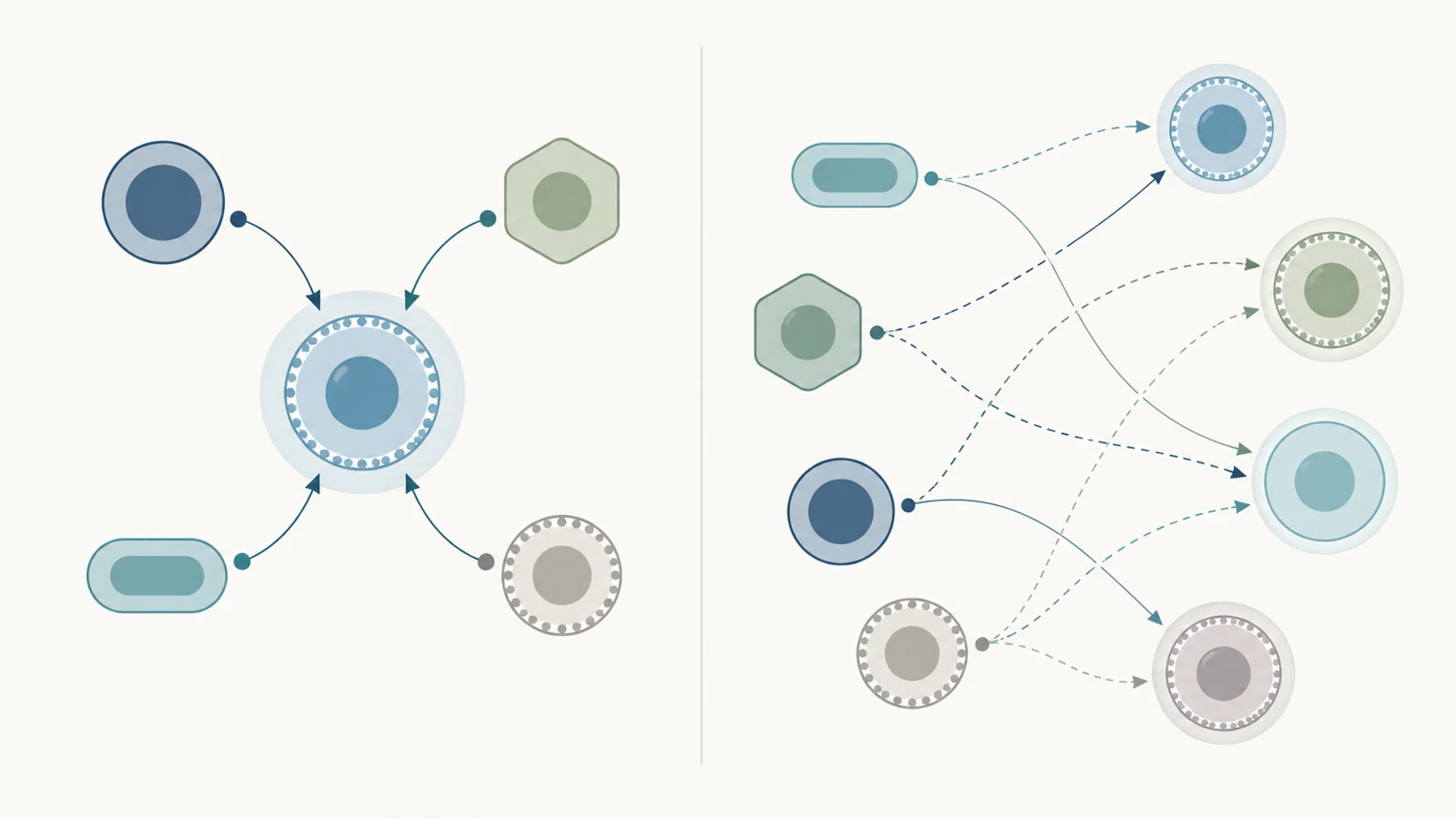
The review presents two connected parts of the field. Several CAR-T medicines already represent an established approach aimed at one target, while research is exploring whether directing CAR-T cells at different targets could widen the treatment landscape.
A shared target links four approved medicines
The review identifies axicabtagene ciloleucel, tisagenlecleucel, lisocabtagene maraleucel, and brexucabtagene autoleucel as examples of FDA-approved anti-CD19 CAR-T medicines for B-NHL. CD19 is the target named in the abstract.
The product names distinguish the medicines, but different names do not necessarily mean different targets. In the review’s summary, all four belong to the same broad CD19-directed group. That makes the current landscape easier to read: multiple approved products can share a target even as their individual clinical evidence may differ.
Alongside these approved examples, the authors describe active research into CAR-T cells directed at different targets. The abstract does not identify those targets or establish that any of the approaches already provides a clinical benefit. It presents them as a research direction rather than as ready replacements for the approved CD19-directed medicines.
What the review can tell us about outcomes
The review’s authors characterize CAR-T as advantageous compared with other therapies for high-risk and relapsed or refractory B-NHL. That is a qualitative assessment from the review summary. The abstract does not provide the underlying comparisons or numerical outcomes needed to estimate an individual patient’s likely benefit or rank the named medicines.
That boundary matters because a treatment landscape is not the same as a treatment recommendation. The supplied material does not establish product rankings, eligibility criteria, subtype-specific indications, response rates, survival estimates, durability, or adverse-event estimates. It supports understanding which approaches the review places on the established side of the field and which it describes as still under investigation.
How new targets could expand lymphoma treatment options
From the June 2024 perspective, CAR-T approaches aimed at different targets could eventually give people with relapsed or treatment-resistant B-cell lymphoma additional treatment options. The possible benefit is practical: a broader set of targets could create more than one path for research and care when a single target does not cover the needs of every patient.
That remains conditional. Clinical evaluation would need to establish useful benefit and acceptable safety before a differently targeted approach could be considered an effective option. The review’s abstract does not promise that a new target will rescue patients whose existing treatment has failed; it shows why expanding the target landscape was an important research possibility at that point in the field.
Key Sources
- Primary source: [Research Progress of CAR-T Cell Immunotherapy in B-Cell Non-Hodgkin's Lymphoma–Review].
DOI or Journal Page · Review or Meta-Analysis · 2024-06-01