
Research Signal – Source date 2025-01-01
CAR-T therapy has produced major clinical successes in some blood cancers, including B-cell acute lymphoblastic leukemia, lymphomas, and multiple myeloma. Solid tumors have proved harder to address. A January 2025 review considers whether invariant natural killer T cells, or iNKT cells, could offer a useful foundation for another engineered cell therapy.
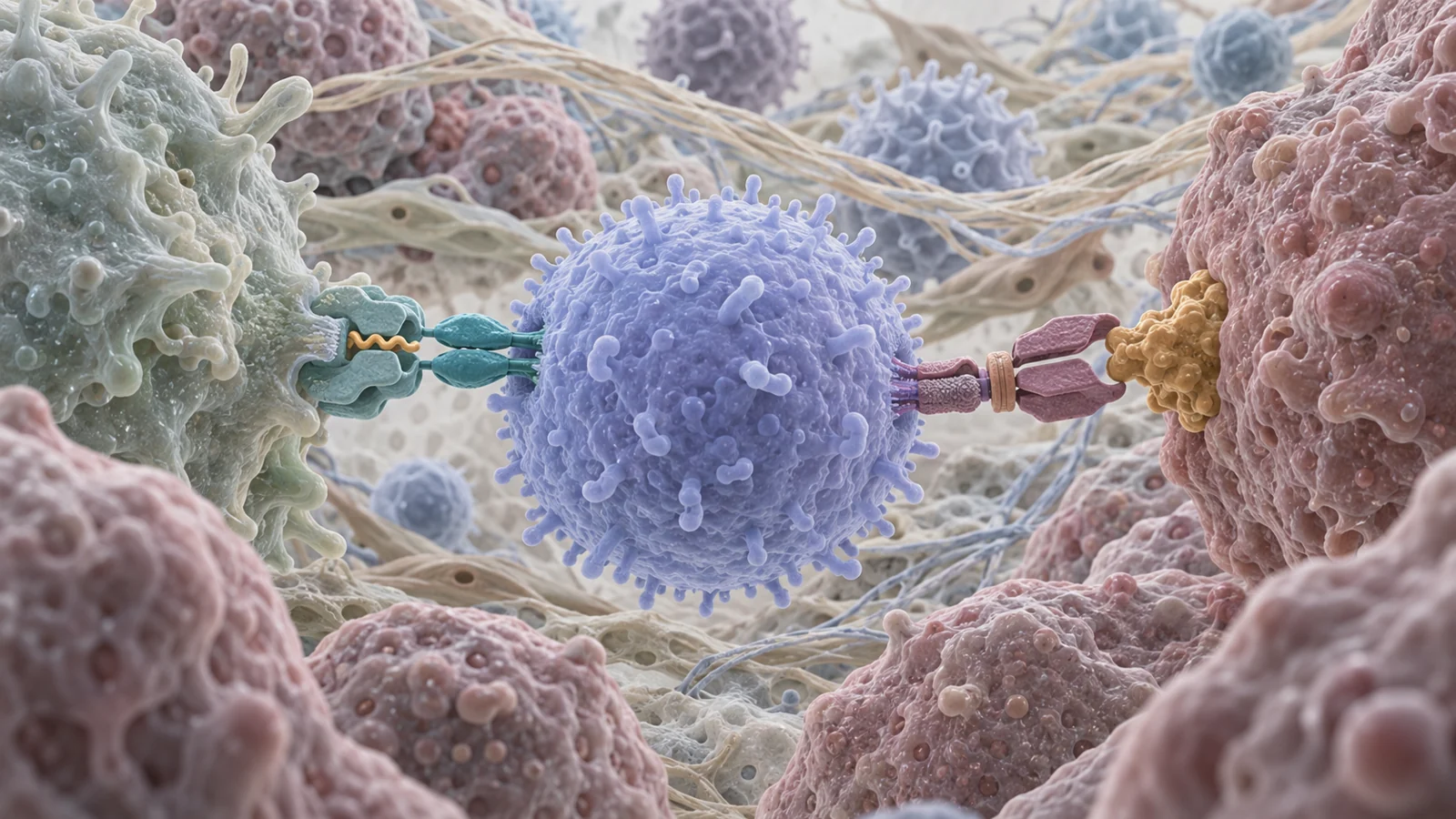
The proposal combines two kinds of recognition: an iNKT cell’s own receptor for lipid antigens and an added chimeric antigen receptor, or CAR, intended to direct the cell toward a tumor target. The review describes biological reasons this pairing may be worth investigating. It does not establish that CAR-iNKT therapy has improved outcomes for people with solid tumors.
Why solid tumors pose a different challenge
CAR-T cells have demonstrated clinical efficacy in several blood cancers, but the review identifies obstacles that limit their application to solid tumors. These include an immunosuppressive tumor microenvironment, uneven expression of target antigens, and treatment-associated toxicities.
These barriers concern both where an engineered cell must work and what it must recognize. A tumor environment can suppress immune activity, while variation in antigen expression means a target may not be present uniformly. The review presents iNKT cells as a platform researchers are exploring in response to these difficulties, not as a proven way around them.
A native receptor that recognizes lipid antigens
iNKT cells are a subset of T lymphocytes with a semi-invariant T-cell receptor. Rather than recognizing only the kinds of targets associated with conventional T cells, this receptor recognizes lipid antigens presented by CD1d molecules. In plain terms, CD1d displays lipid molecules for the iNKT cell to detect.
The review connects this biology to iNKT cells’ ability to bridge innate and adaptive immunity. It describes them as having antitumor activity and the capacity to modulate the tumor microenvironment. Their native recognition route is therefore part of the rationale for choosing iNKT cells as a starting point: the cell may interact with both tumor-associated targets and the immune surroundings in which it operates.
Adding a CAR changes the targeting design
A CAR is an engineered receptor intended to give an immune cell an additional way to target a tumor. In the approach discussed by the review, the CAR is added to an iNKT cell, combining engineered tumor targeting with the cell’s existing CD1d-linked lipid recognition.
That is the design logic, rather than a reported patient outcome. The review discusses CAR-iNKT cells as a way to enhance tumor-targeting capabilities while drawing on iNKT biology. The supplied evidence does not establish a quantified clinical advantage over conventional CAR-T cells, or show that the combined design has overcome the barriers facing solid-tumor treatment.
Potential advantages meet the translation test
The review describes iNKT cells as having intrinsic resistance to exhaustion and an enhanced ability to infiltrate solid tumors compared with traditional T cells. It also highlights their capacity to affect the tumor microenvironment. These are proposed platform advantages that help explain scientific interest in CAR-iNKT cells.
A property of a cell type does not by itself demonstrate that an engineered therapy will work better for patients. Whether these features persist in CAR-iNKT cells, and whether they yield safe and effective treatment, remains a separate question. The review’s abstract supplies a biological rationale; it does not report evidence establishing improved solid-tumor outcomes with CAR-iNKT therapy.
Could engineered immune cells reach more solid tumors?
For people with solid tumors that remain difficult to treat with cell therapies, the potential payoff would be another engineered immune-cell option: one designed to target tumors while retaining iNKT cells’ native biology and activity in the tumor environment. That possibility depends on the proposed advantages translating into treatment that is both safe and effective. The January 2025 review lays out why researchers are pursuing the idea, while leaving patient benefit to be demonstrated.
Key Sources
- Primary source: CAR-iNKT cell therapy: mechanisms, advantages, and challenges.
DOI or Journal Page · Review or Meta-Analysis · 2025-01-01
Keep exploring