
Research Signal – Source date 2021-03-24
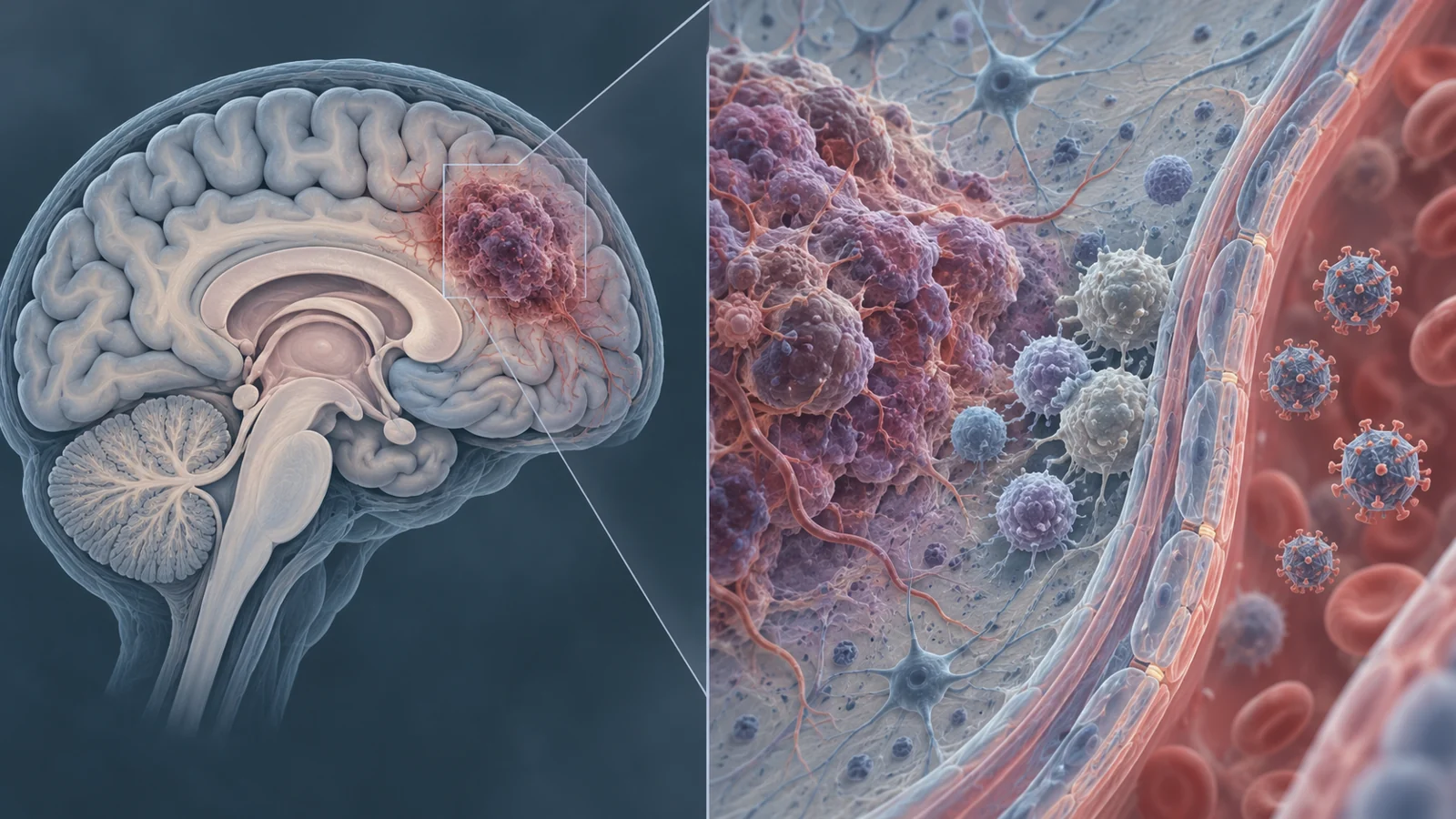
Gliomas present two linked challenges for treatment: they are in the brain, behind a protective barrier, and they can suppress immune responses. Those obstacles help explain why researchers investigated oncolytic viruses—cancer-targeting viruses—as a possible approach. A review published on March 24, 2021, gathered completed human clinical investigations of several such viruses in gliomas. Its scope shows that the approaches had reached human study; it does not establish that they helped patients.
A brain barrier and an immune obstacle
The blood-brain barrier is a boundary that limits what passes from the bloodstream into brain tissue. For gliomas, the review’s abstract identifies this barrier as part of the reason conventional treatments can face resistance. It also describes a separate problem: the tumors’ suppressive effect on immune responses.
These are distinct obstacles. One concerns access across a physical boundary; the other concerns the immune environment around the tumor. Together, they make the interest in immune-based treatments understandable, while also making clear why results from other cancers cannot simply be assumed to apply to gliomas.
Why virus approaches attracted attention
Immunotherapy had gained attention through successes in systemic cancers such as lung cancer and melanoma. That wider progress helped motivate investigation of immunotherapies for gliomas, including oncolytic viruses. The review names PVSRIPO and DNX2401 and notes that they had received Breakthrough and Fast Track designations.
Those designations indicate regulatory attention to the approaches. They are not evidence, by themselves, that a treatment works or that patients benefit. The abstract places the named viruses within a field of clinical investigation, rather than presenting a head-to-head comparison or a new trial result.
What this review shows about human research
The review’s stated contribution is a compendium of completed human clinical investigations of several oncolytic viruses for glioma. That matters because it places the discussion in human research, rather than only in a proposed treatment idea. The review’s publication is not itself a new clinical event.
The evidence available here does not establish improved survival or another patient outcome. It also does not support conclusions about patient numbers, trial methods, safety findings, or which of the named approaches performed better. The grounded conclusion is narrower: several virus-based approaches had been investigated in people, against a disease whose physical and immune barriers helped drive interest in new treatment strategies.
What virus-based treatment could mean for glioma
If human evidence shows that a virus-based approach is effective and usable for patients, it could offer another treatment option for gliomas that resist existing approaches. That possibility depends on demonstrating both meaningful benefit and practical use in people; the review’s abstract establishes clinical interest, not that those conditions have been met.
Key Sources
- Primary source: Oncolytic virus in gliomas: a review of human clinical investigations.
DOI or Journal Page · Review or Meta-Analysis · 2021-03-24
Keep exploring