
Research Signal – Source date 2025-04-16
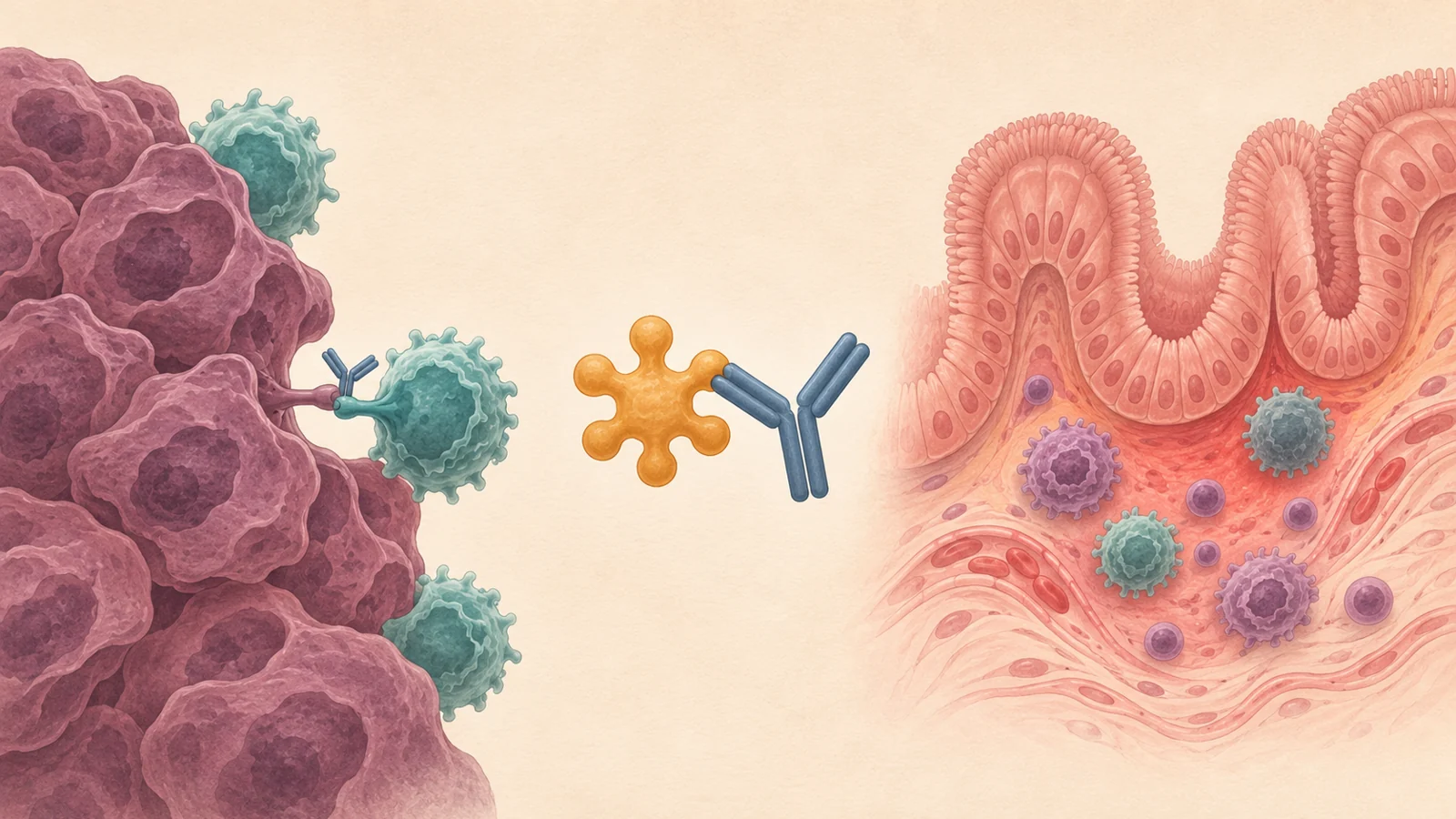
Cancer checkpoint inhibitors can help treat cancer, but they can also trigger inflammation in healthy tissue. That makes managing a side effect a consequential choice: clinicians need to control the harm while considering what suppressing inflammation could mean for the anti-tumor response.
A review published April 16, 2025, considers cytokines—messengers that help direct inflammation—as possible treatment targets. It describes existing use of some cytokine-blocking antibodies for difficult immune-related adverse events, or irAEs, and discusses other pathways implicated in particular kinds of toxicity. The central idea is that “inflammation” may describe several different biological routes, while the treatment question also reaches beyond symptom control to cancer response.
From steroids to targeted blockers
The review describes high-dose corticosteroids as a common treatment for irAEs. For severe cases or those that do not respond to treatment, additional immunosuppression may be used. Among the second-line options it discusses are antibodies that block TNF-alpha, an inflammatory messenger, or the receptor for interleukin-6 (IL-6), the structure through which cells receive that messenger’s signal.
These approaches differ in what they block. Steroids are used to suppress inflammation broadly; the antibodies target particular signaling pathways. The review identifies anti-TNF-alpha and anti-IL-6 receptor antibodies as commonly used second-line treatments. Their place in practice makes them relevant starting points for considering more precise control, but the supplied evidence does not compare their outcomes with each other or with steroids.
One label can cover different inflammatory routes
Colitis, dermatitis, and eosinophilia-related toxicities are among the side effects the review connects to cytokine pathways. Colitis involves bowel inflammation; dermatitis affects the skin; eosinophilia refers to an elevated level of eosinophils, a type of white blood cell. The review also names IL-17, IL-23, IL-4/13, and IL-5 among cytokines involved in inflammatory cascades associated with such side effects.
These molecules are not interchangeable treatment targets simply because each is associated with inflammation. The review’s discussion points to distinct pathways across different toxicities, raising the possibility that a treatment choice could eventually reflect the kind of inflammation involved. It does not provide a validated rule for matching a particular patient or side effect to a specific inhibitor.
The tumor remains part of the decision
Suppressing an inflammatory pathway may help address harm to healthy tissue, but a cancer team would also need to understand how that intervention relates to the treatment’s anti-tumor response. The review makes that potential relationship part of the question; the abstract provided here does not establish that blocking any named pathway preserves, improves, or weakens cancer control.
That uncertainty matters because the treatment decision has two connected aims: manage the immune toxicity and understand the consequences for cancer treatment. Without evidence about both, the presence of a plausible cytokine target alone cannot tell clinicians which option is best for a given situation.
What this could make possible
A person with checkpoint-treatment colitis could one day receive a treatment chosen using evidence about both that particular inflammation and the tumor response. The starting point is already present: commonly used second-line antibodies target TNF-alpha or the IL-6 receptor, and the review identifies other cytokine pathways implicated in distinct toxicities. What remains to be built is dependable evidence for matching a toxicity to a pathway and for understanding the effect on the cancer. That could give a patient and cancer team a more informed treatment choice, while other clinical advances would still be needed before such matching became dependable.
A nearer milestone would be a study that compares treatments for one clearly defined immune side effect and tracks both control of that side effect and the cancer’s response over time. Those paired results could help show whether pathway-specific treatment offers a useful choice in that setting. The review frames the question; it does not yet resolve it.
Key Sources
- Primary source: Precision immunomodulation: Understanding and harnessing cytokine pathways to treat and prevent immune-related adverse events (irAEs).
DOI or Journal Page · Review or Meta-Analysis · 2025-04-16
Keep exploring