
Research Signal – Source date 2021-03-01
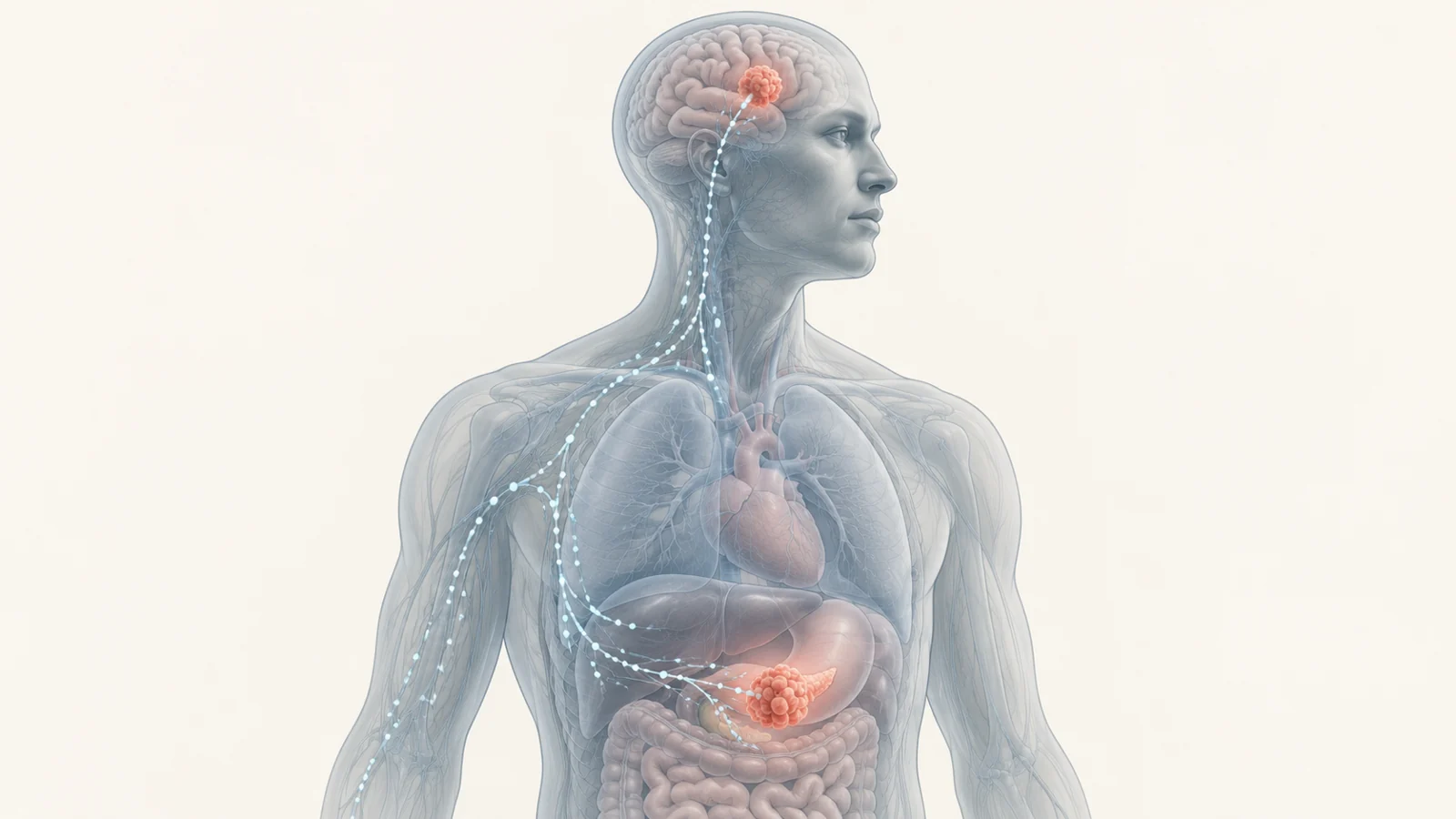
A cancer drug’s success elsewhere in the body does not by itself show that it can control tumors that have spread to the brain. Yet a March 2021 review of lung cancer, melanoma and breast cancer describes high activity inside the brain for several newer targeted drugs and immunotherapies. The question is how much that activity can tell clinicians when many drug trials left people with brain metastases out.
The review saw activity from two newer drug classes
The review focuses on systemic treatments: medicines intended to treat cancer through the body. It covers tyrosine kinase inhibitors, a class of targeted drugs, and immune checkpoint inhibitors, a class of immunotherapies. The authors report high activity against tumors inside the brain for several newer drugs in these groups, especially among patients whose brain metastases had not caused symptoms.
That is a meaningful observation because it concerns activity at the site of the metastases, not just a drug’s effects elsewhere. But the review’s finding is qualitative: the evidence provided here does not support comparing individual drugs, estimating response rates, or ranking treatments. Nor does activity in the brain mean that every drug in either class works there, or that the same result applies across all cancers and patients.
The authors also cover systemic treatment intended to prevent brain metastases. Their review’s scope is limited to three cancers that commonly spread to the brain: non-small-cell lung cancer, melanoma and breast cancer. It does not report a new treatment trial; it brings together prior findings and identifies questions that remained open.
Earlier detection changes the treatment question
With screening more widely available and used, a growing share of patients are diagnosed with brain metastases before they notice symptoms. In other words, the cancer has reached the brain, but the person may not yet feel effects from it. Being symptom-free describes how the metastases were detected; it does not mean they are harmless or that treatment is unnecessary.
This timing makes the choice of treatment less straightforward. When brain metastases are found before symptoms appear, clinicians must consider whether a systemic drug with activity in the brain could be enough, or whether treatment directed specifically at the brain is also needed. The review describes this as an ongoing discussion, not a decision its findings settle.
Why trial exclusions leave a gap
Many registered trials of newer targeted drugs and immunotherapies excluded people with brain metastases. As a result, evidence that a drug helps patients whose cancer is elsewhere may not answer whether it works against cancer inside the brain. The review links those exclusions to limited knowledge of newer drugs’ intracranial effects.
The authors call for studies focused on brain metastases and for trials to include outcomes specific to the brain. Those data would help clarify how well systemic treatments work at that site and whether treatment decisions for symptom-free patients can rely on them. The review does not provide agent-level estimates that would resolve those questions, and its reported activity should not be read as proof that systemic treatment can replace local treatment.
Could drugs alone treat some symptom-free brain metastases?
If brain-focused studies establish when systemic drugs can control brain metastases on their own, clinicians could better identify which symptom-free patients may be able to rely on an effective medicine and which still need treatment directed at the brain. That could spare some patients additional local treatment while helping others receive it when needed. The March 2021 review describes the possibility, but leaves the role of systemic treatment alone unresolved.
Key Sources
- Primary source: Brain metastases in metastatic cancer: a review of recent advances in systemic therapies.
DOI or Journal Page · Review or Meta-Analysis · 2021-03-01
Keep exploring