
Research Signal – Source date 2022-08-13
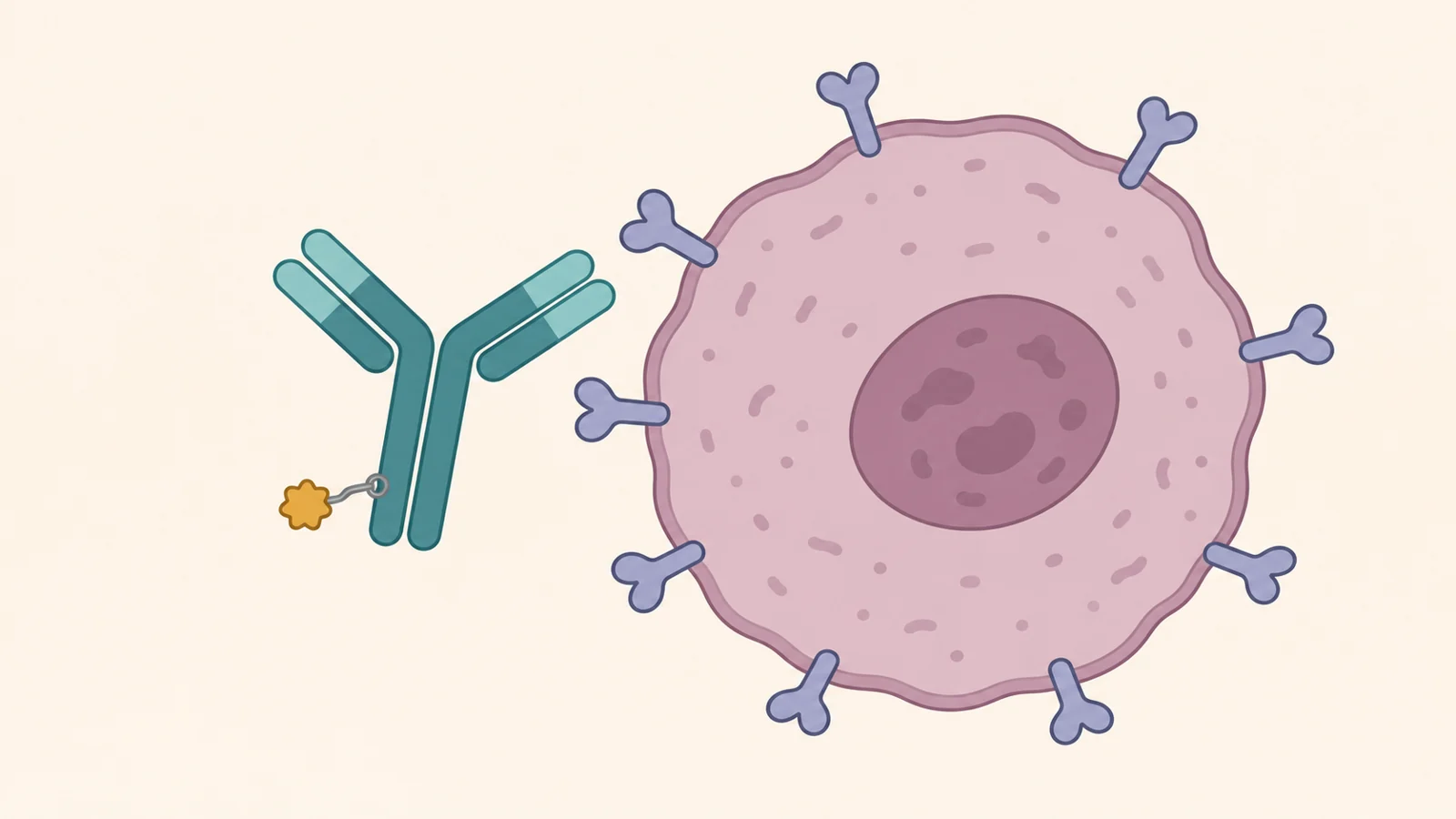
An antibody-drug conjugate is an antibody linked to a cell-killing drug. The design aims to have the antibody recognize a marker on cancer cells and help deliver its attached drug there. Yet in trials for metastatic urothelial cancer, treatment-related side effects were common. At the same time, one of these medicines, enfortumab vedotin, improved survival compared with chemotherapy in a specific group of patients previously treated with chemotherapy and immunotherapy.
A scoping review published August 13, 2022, gathered evidence from 11 prospective trials involving 1,417 people. The authors searched PubMed and Embase in January 2022. Most of the treatments they summarized were studied in early trials, while enfortumab vedotin had a phase 3 survival comparison. The result is a picture of both promise and burden, with the strongest evidence applying to a particular drug and treatment sequence.
A delivery design with a difficult tradeoff
The antibody component is meant to recognize an antigen, a marker found on tumor cells. Linking it to a potent cancer drug is intended to focus delivery on cells bearing that marker. This design offers a reason to expect targeted delivery; it does not guarantee that treatment will spare patients from serious side effects.
The review identified five antibody-drug conjugates studied in metastatic urothelial cancer: enfortumab vedotin, sacituzumab govitecan, disitamab vedotin, ASG-15ME, and trastuzumab deruxtecan. They were tested in different trials, sometimes alone and sometimes alongside an immune-checkpoint inhibitor, a type of immunotherapy. Their results therefore answer different questions about different patient groups and treatment combinations.
Response percentages describe different settings
Across the trials, reported response rates ranged from 27% with sacituzumab govitecan in previously treated patients to 73.3% with enfortumab vedotin plus pembrolizumab as first-line treatment for patients ineligible for cisplatin chemotherapy. A response rate describes how often a tumor met the trial’s criteria for shrinking or otherwise responding. The two percentages come from different drugs, treatment combinations, and clinical settings, so they do not rank the medicines fairly or show which one is best.
Most of the drug studies in the review were phase 1 or phase 2 trials. Those studies contributed to the broad view of activity and safety, but their response rates are not interchangeable. The more direct survival comparison came from a phase 3 trial of enfortumab vedotin.
EV-301 compared survival after two prior treatments
In EV-301, people with metastatic urothelial cancer who had received platinum-based chemotherapy and an immune-checkpoint inhibitor were assigned to enfortumab vedotin or chemotherapy chosen by their investigator. Median overall survival was 12.88 months with enfortumab vedotin and 8.97 months with chemotherapy. “Median” means that half the participants lived longer and half lived less time than that point; it is a group measure, not an individual forecast.
The hazard ratio was 0.70, with a 95% confidence interval of 0.56 to 0.89—a range showing uncertainty around the estimate. In plain language, the trial estimated a lower rate of death over time in the enfortumab vedotin group than in the chemotherapy group. This phase 3 comparison supports a survival benefit in that post-chemotherapy, post-immunotherapy setting. It does not establish the same benefit for every antibody-drug conjugate in the review.
Side effects were frequent, with different patterns
In the phase 2 and phase 3 trials summarized, more than 90% of patients had at least one treatment-related adverse event. The proportion experiencing a severe event—grade 3 or higher—ranged from 51.4% to 73.5% across different trials. Those figures underscore that a delivery design intended to focus a drug on tumor cells did not eliminate substantial treatment burden.
The adverse effects of particular interest differed by medicine. Enfortumab vedotin was associated with rash, nerve damage (neuropathy), and high blood sugar (hyperglycemia). Sacituzumab govitecan was associated with diarrhea and blood-related toxicity. The specific risks and their frequency varied across trials; the overall figures should not be read as a prediction for a particular person.
The review also reported a more reassuring, narrower finding: phase 2 and phase 3 data for enfortumab vedotin suggested no overall impact on quality of life and improved pain symptoms compared with the control arm. These observations add context to the survival result, but they do not erase the adverse events reported in the trials.
How this could shape the future
For someone with metastatic urothelial cancer, a future with several antibody-linked treatments whose survival and side-effect profiles are well characterized could make it possible to weigh meaningful tradeoffs with a clinician. The review’s five-agent landscape and EV-301’s survival result offer an early bridge toward that possibility. Dependable choices across more medicines would require further trials and progress beyond what this review had gathered by its January 2022 search.
One nearer milestone would be a randomized trial of another antibody-drug conjugate in a clearly defined treatment setting that reports both survival and adverse events. Such a trial could test whether another medicine improves survival in its own defined treatment setting and document its adverse events.
Key Sources
- Primary source: Efficacy and toxicity of antibody-drug conjugates in the treatment of metastatic urothelial cancer: A scoping review.
DOI or Journal Page · Review or Meta-Analysis · 2022-08-13
Keep exploring