
Research Signal – Source date 2021-01-01
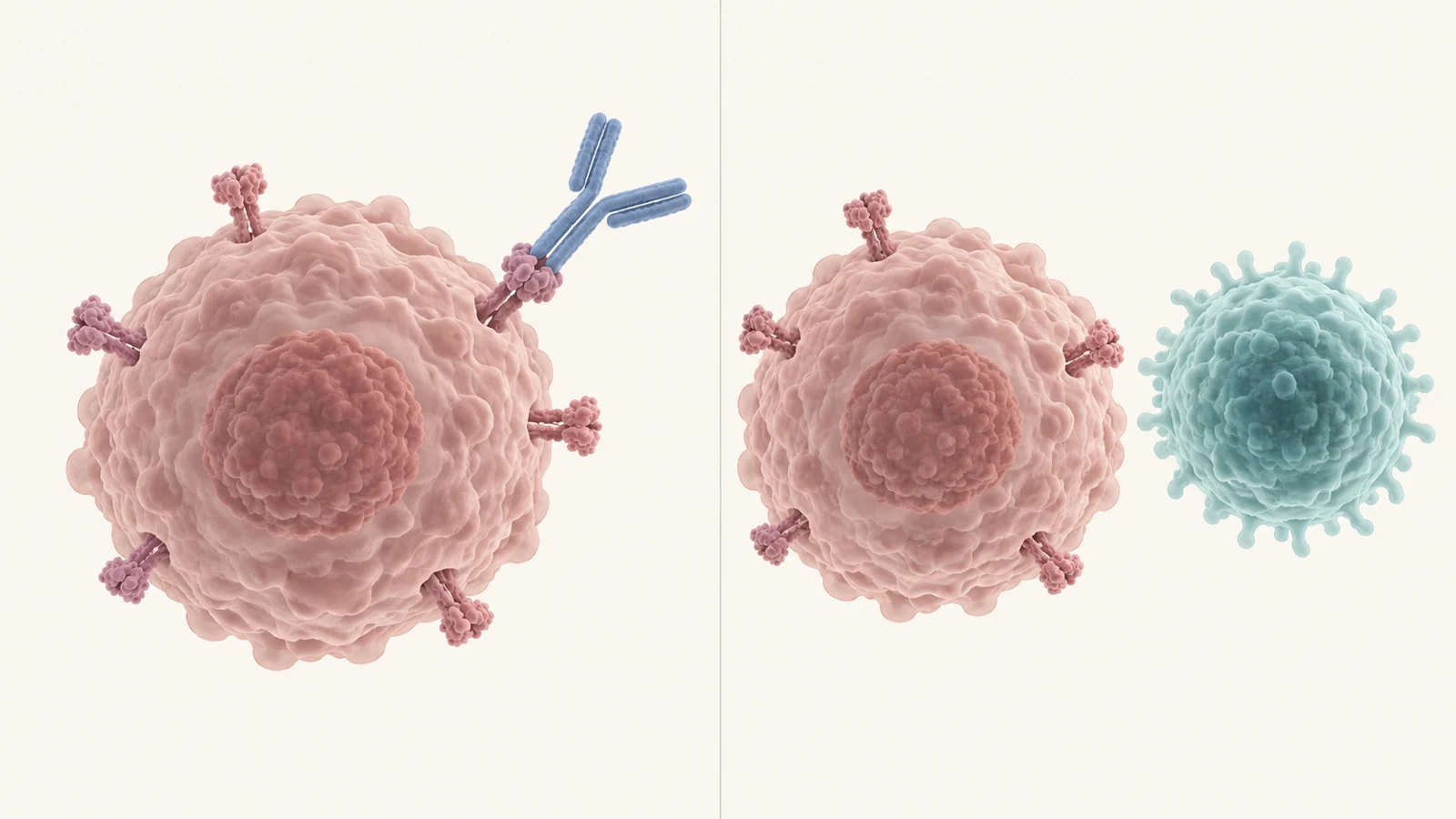
Cancer immunotherapy can work through antibodies aimed at proteins on cancer cells, or through a person’s own T lymphocytes—immune cells that can be engineered or boosted to target cancer. The difference is where the treatment acts: on proteins expressed by cancer cells, or through the person’s immune cells.
A 2021 review, Cancer immunotherapy: Recent advances and challenges, describes both approaches as part of a growing treatment landscape. Its examples clarify what “using the immune system” can mean, even though the abstract does not provide results that compare the approaches.
Two different intervention points
In the antibody approach, antibodies bind to proteins expressed by cancer cells and inhibit their function. The treatment acts on those proteins. In the other approach, a person’s T lymphocytes are engineered or boosted to target cancer, so the intervention acts through the person’s immune cells.
These are distinct ways to direct immune-system components against cancer. The review names both, but the abstract does not establish that one is more effective than the other or identify which cancers or patients benefit.
Where immunotherapy fits
The review places immune-based treatment alongside standard chemotherapy and targeted small molecules. The examples represent different treatment strategies: chemotherapy, medicines aimed at molecular targets, and approaches that use antibodies or a person’s T lymphocytes against cancer.
The review also describes how errors in copying genetic material can produce changes associated with cancer. That biological background helps explain how cancer can arise; it does not establish which immunotherapy approach to use.
The review acknowledges shortcomings and challenges, but the abstract provides no study-level outcomes, response rates, safety comparisons, or cancer-specific findings. It therefore supports a conceptual explanation of the approaches, not a judgment about their comparative results or suitability for individual patients.
How more immune-based options could change cancer care
If particular approaches show reliable benefit with acceptable harms in the cancers where they are used, more patients could have a useful way to direct immune defenses against their cancer. Whether that possibility becomes real depends on evidence for each approach in the settings where it is used.
Key Sources
- Primary source: Cancer immunotherapy: Recent advances and challenges.
DOI or Journal Page · Review or Meta-Analysis · 2021-01-01
Keep exploring