
Research Signal – Source date 2021-01-01
A man with primary mediastinal large B-cell lymphoma had an initial response to axicabtagene ciloleucel, an engineered T-cell treatment often called CAR T. About three and a half months after the infusion, new active areas appeared on scans. He then received pembrolizumab, an immune drug, and scans showed a complete metabolic response after four treatment cycles. The response persisted after treatment had to stop because of lung inflammation.
The case raises a question: did pembrolizumab help surviving CAR T cells regain activity, act directly against the lymphoma, or do both? The report offers clues for weighing those explanations, but the scans cannot identify which cells produced the response.
A response, followed by new active areas
A scan 48 days after the CAR T infusion showed a complete response. A later PET-CT, a scan that detects areas of increased metabolic activity, showed new lesions in the chest and near the kidneys. The report describes the relapse as occurring about three and a half months after treatment. At a subsequent evaluation, the lesions remained visible and active.
The first complete response was recorded after CAR T treatment. The later complete metabolic response meant that PET-CT no longer detected activity suggestive of lymphoma after pembrolizumab. Neither scan result shows whether the later response came from the engineered cells or another effect of the drug.
Two possible routes to the same scan result
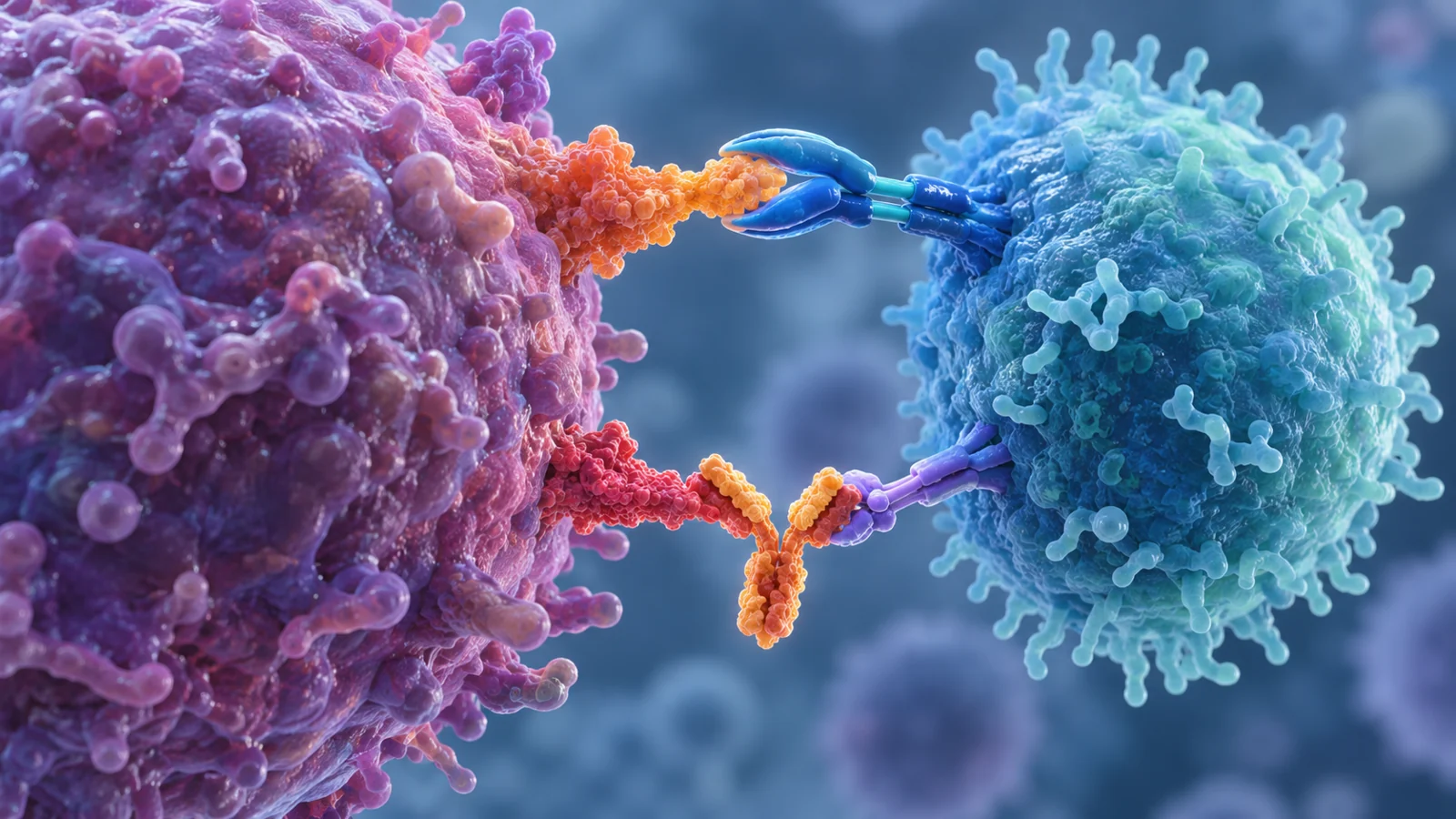
Pembrolizumab blocks PD-1, a protein that can act like a brake on immune cells. Its partner, PD-L1, can help tumors engage that brake. The case authors proposed that blocking this pathway may have helped residual CAR T cells recover from exhaustion and fight again.
There was a reason to consider that route. CAR T cells were detected in the patient’s blood after relapse, and he had profound B-cell aplasia: a marked absence of B cells, which the report treated as a sign that CAR T cells remained functional. The tumor tissue also had strongly positive PD-L1 expression and a rearrangement at chromosome region 9p24.1, findings relevant to the proposed checkpoint pathway.
A second possibility is that pembrolizumab acted against the lymphoma itself. Primary mediastinal large B-cell lymphoma can be sensitive to drugs that block PD-1, and the tumor findings gave the authors a reason to consider that explanation. The two routes could also have contributed together.
The blood findings suggest that engineered cells persisted, but the authors did not directly measure CAR T-cell expansion after pembrolizumab. The PET-CT documents the response; it cannot show which mechanism caused it.
Other patients and treatment sequences are not interchangeable
The paper discusses KEYNOTE-170, a trial of pembrolizumab in previously treated patients with this lymphoma. In that separate group, 45% had an overall response and 11% had a complete response. Those figures cannot be used as an expected response rate after CAR T relapse; the separate trial did not measure the benefit of this treatment sequence.
The authors also review studies combining or sequencing checkpoint drugs and CD19-directed CAR T therapy. Some used an immune drug after relapse or signs of CAR T exhaustion; others scheduled it at set points around the CAR T infusion. Some were still under way. Differences in patient groups and timing make these studies context for the idea, rather than a direct test of the approach used in this case.
Remission continued after lung inflammation stopped treatment
The patient received six pembrolizumab cycles at 200 mg every three weeks. After the sixth, he developed severe shortness of breath with activity, and chest imaging showed changes consistent with pneumonitis, an inflammation of lung tissue. Tests described in the report did not identify a specific infection. Treatment was stopped, and the report says the lymphoma remained in remission for eight months after the last dose.
Because the response appeared by cycle four and continued after pembrolizumab ended, the authors suggested that a shorter course might sometimes be enough to prompt activity in residual CAR T cells. They also raised the possibility of earlier use for selected high-risk patients. Neither proposal was tested by this one case, and the pneumonitis underscores why a potential benefit must be weighed against treatment harms. The report cannot establish an optimal duration or show that a brief course will work for other patients.
Could an immune drug offer a second chance after CAR T relapse?
For some people whose large B-cell lymphoma returns after CD19-directed CAR T treatment, pembrolizumab could become a salvage option if further research confirms repeatable responses and manageable harms. This case makes that possibility tangible: the lymphoma cleared on scans during treatment, and remission continued after treatment stopped. Larger prospective studies would need to show whether that outcome can be achieved reliably enough to give patients another route to disease control.
Key Sources
- Primary source: Pembrolizumab-induced Remission After Failure of Axicabtagene Ciloleucel: Case Report and Literature Review.
DOI or Journal Page · Review or Meta-Analysis · 2021-01-01
Keep exploring