
Research Signal – Source date 2025-09-07
Hyaluronic acid is a water-attracting chain found in biomaterials research. Could it help cancer immunotherapy reach a tumor while also bringing relevant cells into contact? A review published online September 7, 2025, considers two related ideas: modifying the chain to carry therapeutic material, and using it to alter cell surfaces through binding associated with CD44.
Immunotherapy uses the immune system against cancer. The review explores how hyaluronic acid (HA) might support that goal, but its PubMed abstract offers a high-level account rather than study-by-study results. It describes proposed material strategies; it does not show that a particular design benefits patients.
A modifiable chain for carrying treatment
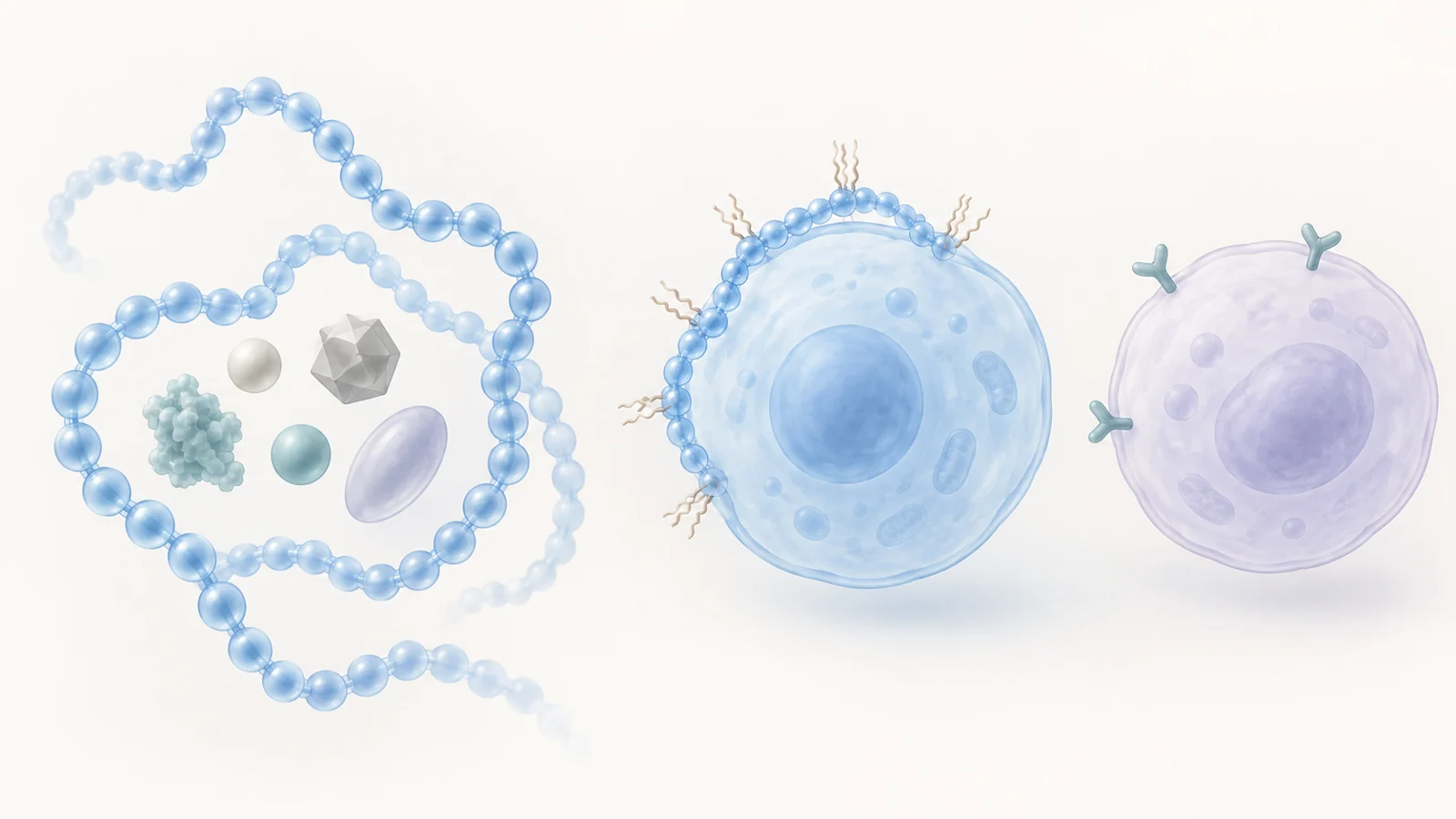
HA’s water-attracting chain can be chemically modified into biomaterials. The review describes these materials as a way to shield therapeutic cargo from the body’s physiological environment and support its uptake into specific cells. In this design, HA is part of the delivery vehicle: its chemistry can be adapted around the therapeutic material it carries.
That carrier role is one route into cancer immunotherapy. A material that protects cargo during delivery and supports cellular uptake could help bring immune-active treatment where it is intended to act. The abstract describes this purpose, but does not provide enough detail to compare delivery performance or establish how reliably any design reaches a tumor.
Changing the cell surface
The review also discusses a different use: lipid-modified HA for cell-surface engineering. Here, HA is used to change how cells interact, with binding involving CD44 described as a way to improve cell-to-cell interactions. The emphasis is on arranging contact between cells as part of an approach intended to encourage antitumor immune responses.
This is distinct from carrying cargo. One strategy modifies a material that holds treatment; the other modifies a cell surface to influence interactions. The abstract links both ideas to localized tumor therapies and immune responses, but does not specify a validated targeting rate or establish treatment effects in people.
Several material forms, open comparisons
The review covers HA-drug conjugates, HA-lipids, HA-peptides, and HA-liposomes. These names describe different ways to configure HA-based materials: joined with a drug, combined with lipids or peptides, or arranged as liposomes. The abstract groups them within a broader discussion of delivery and immune modulation through HA-CD44 interactions.
That range signals a design space rather than a performance ranking. From the abstract alone, readers cannot tell which form works best, for which setting, or whether one outperforms another. Nor does it identify a single trial, animal study, or prototype as the defining demonstration. The evidence available here is a review-level summary of proposed approaches, not clinical validation.
What more local immune treatment could enable
If HA-based materials can reliably direct immune-active treatment toward tumors, produce antitumor effects, and remain safe, they could help make cancer treatment more locally focused while supporting useful interactions between cells. Patients would be the eventual beneficiaries if those capabilities translate into effective care. The September 2025 review summary presents the rationale for exploring that possibility; it does not establish that the targeting, immune effects, or safety have been achieved in patients.
Key Sources
- Primary source: Functionalized hyaluronic acid biomaterials-encouraged cancer immunotherapy through CD44-mediated targeting and cell surface engineering: A review.
DOI or Journal Page · Review or Meta-Analysis · 2025-09-07
Keep exploring