
Research Signal – Source date 2022-07-22
CAR T-cell therapy has produced durable clinical responses in some B-cell leukemias and lymphomas. Yet the same broad idea has been harder to extend across other blood cancers and solid tumors. The difference is not simply whether engineered cells can kill cancer cells in principle. It also depends on whether they can reach the tumor, continue to recognize it, remain active in its surroundings and be controlled when their activity becomes dangerous.
A review published on July 22, 2022, examines those problems through earlier clinical studies, animal experiments and other preclinical work. Its examples involve different cancers, targets, treatment designs and outcomes, so they are not direct head-to-head comparisons. They do, however, show why CAR T-cell therapy is best understood as a series of biological tests rather than a single treatment design that works everywhere.
How engineered T cells learn what to recognize
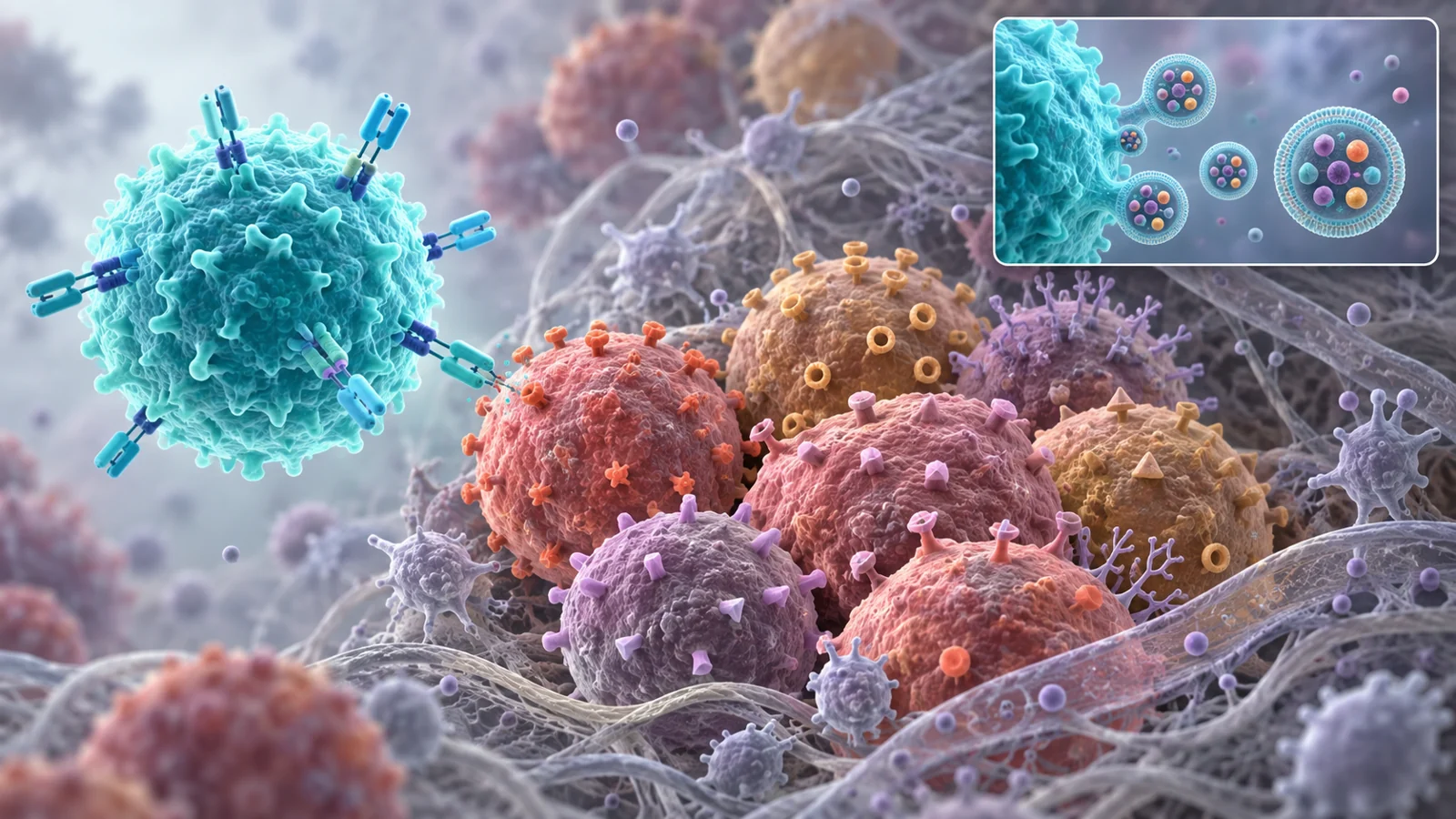
CAR T-cell therapy begins with T cells collected from a patient or, in some approaches, a donor. The cells are genetically modified to make a chimeric antigen receptor, or CAR. This artificial receptor is built with a target-recognizing portion on the outside of the cell, a flexible connection and membrane-spanning region, and internal signaling parts that activate the T cell when the target is encountered.
After engineering, the cells are expanded outside the body and infused into the patient. The receptor is designed to recognize an antigen displayed on the surface of a cancer cell. This gives the T cell a direct route to its intended target, rather than depending on the usual presentation pathway used by many ordinary T-cell responses. Viral vectors are commonly used to deliver the genetic instructions, although non-viral approaches are also discussed in the review. The manufacturing process therefore has its own safety and quality requirements before the cells can be administered.
The central appeal is straightforward: give immune cells a receptor that can identify a cancer-associated surface marker and then return those cells to the body. The harder question is what happens after infusion, especially when the tumor is physically difficult to enter or changes the conditions around it.
Reaching a tumor does not guarantee recognition
Solid tumors can create several sequential obstacles. A therapeutic cell may circulate, find the tumor and still fail to produce a durable response because the target is unevenly distributed, disappears from some cancer cells or is surrounded by signals that reduce T-cell activity. Getting to the right place and remaining effective there are related problems, but they are not the same problem.
The review’s glioblastoma example makes the distinction concrete. In a human study of recurrent glioblastoma, intravenously administered CAR T cells directed at EGFRvIII expanded in the blood and trafficked toward the tumor region. The review reports antigen loss in five of seven evaluated patients, alongside an environment with more inhibitory molecules and a higher occurrence of regulatory T cells. In other words, movement toward the tumor was observed, but the cancer could become less recognizable while the local environment became less favorable to immune activity.
Researchers have explored different engineering responses to these separate barriers. In animal and other preclinical models, adding chemokine receptors such as CXCR1 or CXCR2 was investigated as a way to improve movement toward chemical signals associated with tumors. Other designs tried to broaden recognition. A CAR T cell aimed at more than one antigen may be less dependent on a single marker remaining present on every cancer cell, and the review discusses multi-target approaches as a way to reduce escape. A glioblastoma model also tested cells engineered to produce a bispecific T-cell engager aimed at another form of EGFR.
These examples are proposals under investigation, not evidence of one universal solution. A design that improves trafficking in a model does not automatically solve antigen loss in a patient, and recognizing multiple targets does not by itself guarantee sustained activity inside a solid tumor.
Persistence brings a control problem
A useful response requires therapeutic cells to remain present and functional long enough to suppress the cancer. The review notes that anti-CD19 CAR T cells have persisted for years in some patients, linking long-term persistence with the possibility of durable antitumor activity. Persistence can be affected by how the cells are expanded outside the body, how steadily the inserted gene remains active and whether the patient’s immune system reacts against the engineered elements.
More activity and longer survival also make control more important. CAR T-cell therapy can cause cytokine release syndrome, an intense inflammatory reaction that follows large-scale immune activation. Symptoms described in the review include fever, nausea, headache, low blood pressure, breathing-related complications and effects on organs such as the kidneys. The reaction can become life-threatening. The review discusses treatment with tocilizumab, an antibody directed at the interleukin-6 receptor, as one approach used to rapidly reduce cytokine release syndrome.
The difficulty is not limited to treating inflammation after it begins. Researchers have also considered ways to remove or switch off the engineered cells once their desired effect has been reached. Proposed approaches include temporary genetic expression, surface markers that allow antibody-directed elimination and suicide-gene systems. These strategies could add a safety control, but removing the cells may also remove antitumor activity that is still helping the patient. The balance between persistence and reversibility is therefore part of the treatment design itself.
The review also associates severe toxicity with factors such as disease burden, preparative chemotherapy, the number of cells infused and peak inflammatory signals. Those associations do not produce a single risk ranking across products or patients. They show why stronger immune activity cannot be treated as an uncomplicated improvement.
Vesicles offer a different therapeutic format
The review describes another possibility derived from CAR T cells: extracellular vesicles. These are tiny membrane-bound packages released by cells. They can carry biological cargo, including proteins and nucleic acids, and can reflect features of the cells that produced them. CAR T-cell-derived vesicles may therefore carry cytotoxic molecules without being living cells that can expand and persist in the same way.
That difference is the basis of the proposal. A vesicle cannot proliferate like a CAR T cell, which could make its behavior easier to contain in some circumstances. The review presents vesicles as a possible way to preserve selected cell-derived functions while changing the safety and delivery problem. It also discusses the possibility that vesicles may be less exposed to some features of the tumor environment that interfere with living immune cells. These are biological propositions under study, not established clinical advantages.
The summarized experiments were preclinical. CAR T-cell-derived vesicles carried cytotoxic molecules such as perforin and granzyme B and were studied in preclinical breast-tumor models. The CD19-positive leukemia experiment instead used exosomes from HEK293T cells engineered to express a CD19 CAR. In a comparison involving HER2-directed CAR T cells, the living cells produced more rapid cytotoxicity than their derived vesicles, while the vesicles showed different levels of selected immune and cytotoxic molecules. The comparison is important because it prevents the format change from being mistaken for an automatic upgrade: a package carrying useful cargo may behave differently from the cell that made it.
CAR T-cell-derived vesicles consequently represent a separate research path. They may eventually help address some problems associated with living-cell persistence, but the supplied review evidence does not establish durable patient benefit, human safety superiority or interchangeability with CAR T-cell therapy.
What this could mean for hard-to-treat cancers
Patients with cancers that are poorly served by existing CAR T-cell approaches could eventually gain additional targeted treatment options. The route to that possibility runs through several bottlenecks: engineered cells must reach the tumor, recognize enough of its cancer cells, remain active in the local environment and produce benefit without unacceptable inflammatory harm. Vesicles may offer another experimental format, but their potential usefulness still depends on whether the activity seen in preclinical models translates into durable benefit and manageable safety in people.
From the July 2022 perspective of this review, the important prospect is not a universal CAR design or a ready replacement for cell therapy. It is a broader set of ways to match immune-cell engineering and delivery format to the particular reasons a cancer resists treatment. That could widen the range of cancers for which targeted immune treatment is practical, provided the proposed solutions work in patients rather than only in models.
Key Sources
- Primary source: CAR T-Cell-Based gene therapy for cancers: new perspectives, challenges, and clinical developments.
DOI or Journal Page · Review or Meta-Analysis · 2022-07-22
Keep exploring