
Research Signal – Source date 2026-08-13
A ClinicalTrials.gov record describes a research question rather than a treatment result. The planned study will test whether photobiomodulation, a treatment using light, could help adults with chronic insomnia who regularly use sedative-hypnotic medication. The available record lists the study as not yet recruiting and reports no posted results.
The proposed trial is intended to include 60 adults who use these medications at least four days per week. Its purpose is not simply to ask whether participants sleep better. It also asks whether they use hypnotic medication less often while sleep and daytime functioning are being measured.
The proposal moves beyond an earlier population
The investigators describe nighttime near-infrared light as a possible alternative or complement to conventional bright-light approaches. Their rationale is that the proposed light treatment would be used during sleep, when timing and melatonin effects matter to the design. They also cite earlier project findings in older adults with insomnia who were not taking hypnotics, where 850-nanometer photobiomodulation was associated with better subjective sleep quality and longer sleep duration.
Those earlier observations are background for the new question, not results from this trial. The current study shifts attention to people who regularly use sedative-hypnotics, a population for whom a change in medication-use patterns would be more consequential and more complicated to interpret. The supplied description does not assign the earlier 850-nanometer setting to the new device. It says the researchers propose to develop a wearable prototype using near-infrared LEDs.
What the comparison is meant to isolate
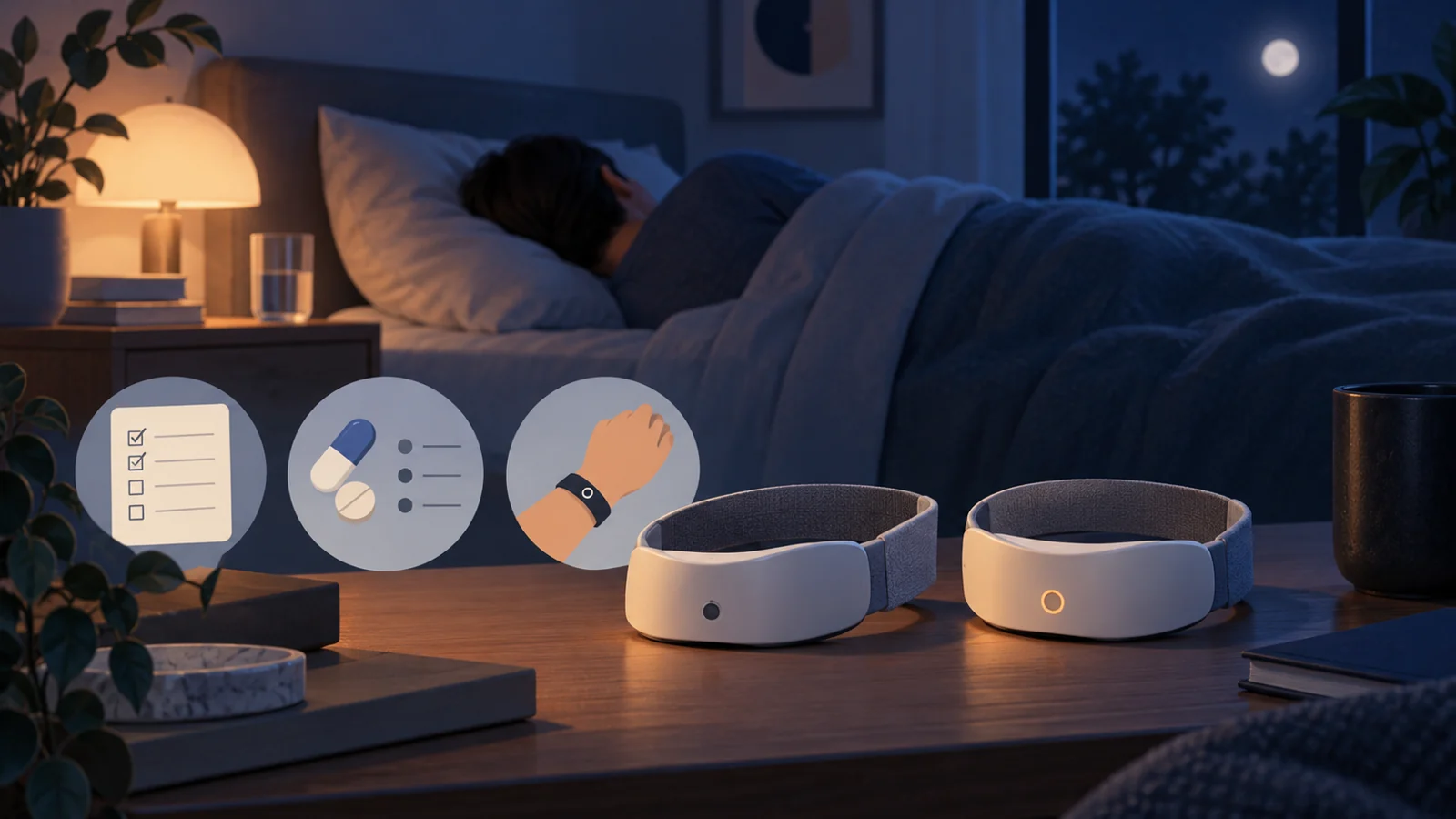
The study is planned as an eight-week, single-blind, randomized trial with two parallel groups. Participants would be assigned in equal numbers to the photobiomodulation device or an inactive sham device. Both groups are described as using an assigned device during the sleep period at points identified in the registry as Ex-HN 22; the supplied evidence does not provide an anatomical translation or operating dose.
The inactive-device group gives the researchers a planned comparison for the effects of taking part in the study and following a device-use routine. The wearable itself remains a proposed development, not a product shown by this record to have been built, certified, or used by participants. The registry lists an estimated start date of August 1, 2026 and estimated completion dates of May 5, 2027; those dates are not verified treatment milestones.
Sleep quality and medication use are different measurements
Assessments are planned at baseline, week four and week eight. The Pittsburgh Sleep Quality Index would capture participants’ reported sleep quality, with higher scores indicating poorer sleep. Hypnotic-use frequency would track how often medication is used. Wrist actigraphy would provide an objective measurement of sleep-related patterns alongside the questionnaire and medication record.
These measures answer related but separate questions. A participant might report better sleep without using medication less often, or use medication on fewer occasions without demonstrating a lower dose, safe withdrawal, or lasting independence from sleeping medication. The planned eight-week observation period also cannot establish whether any change would persist.
The study description includes daytime sleepiness, emotional symptoms and psychomotor vigilance among its secondary areas of interest. The narrative names KSS for daytime sleepiness, while the structured outcome entry names the Epworth Sleepiness Scale. That difference matters because the instruments are not interchangeable labels for a single confirmed measurement plan. The supplied evidence also does not establish a tapering protocol or authorize conclusions about medication safety, dementia prevention, long-term cognitive benefit, or comparative device safety.
What nighttime light therapy could mean for sleeping-medication users
The practical possibility is a portable treatment used at home during sleep that could help regular sleeping-medication users preserve or improve sleep while taking medication less often. For patients, that would be meaningful because it could combine a familiar nighttime routine with a non-drug intervention rather than requiring a daytime light schedule.
That possibility depends on the trial showing a credible benefit against the inactive device, along with acceptable safety and effects that last beyond the short study period. The available record does not show that those conditions have been met, and it does not tell people to change how they take medication. It defines a test of whether nighttime photobiomodulation can support a different path for people who currently rely on sedative-hypnotics.
Key Sources
- Primary source: Photobiomodulation for Reducing Sedative-Hypnotic Use:Clinical Trial of a Light-Therapy Device
Government or Regulator · Clinical Trial · 2026-08-13
Keep exploring