
Research Signal – Source date 2026-06-15
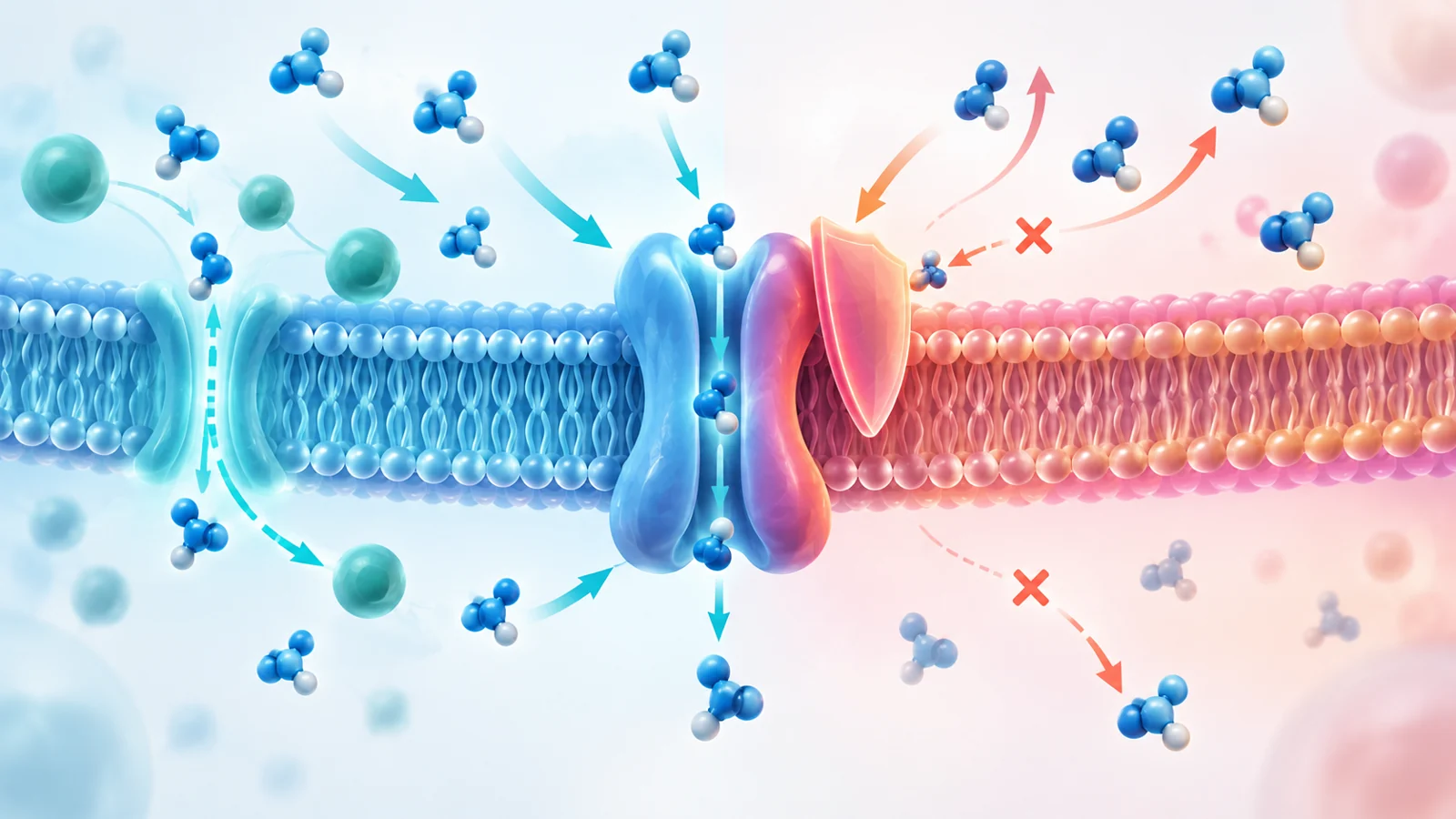
A review published on June 15, 2026, examines why changing creatine transport could require opposite strategies in different diseases. SLC6A8 is a sodium- and chloride-dependent protein that carries creatine across cell membranes. By helping maintain intracellular creatine pools, it supports cellular energy homeostasis. The important distinction is between creatine being available outside a cell and creatine being able to enter it. A transporter problem can make those two conditions very different.
When supplying more creatine is not enough
Creatine transporter deficiency, or CTD, is associated with impaired SLC6A8 function. The review states that conventional creatine supplementation provides limited therapeutic benefit for most people with CTD. That finding follows a simple biological problem: increasing the amount of creatine available does not necessarily correct a defect in the system that moves it into cells.
The review therefore highlights several approaches being investigated beyond conventional supplementation. Gene therapy, small-molecule correctors and lipophilic prodrug strategies have each shown preliminary efficacy in preclinical models of CTD. The supplied material does not establish that one approach is better than another, or specify enough about their delivery and operation to compare them. Their shared significance is that researchers are looking for ways to address transporter deficiency through more targeted therapeutic strategies.
Cancer research takes the opposite direction
In cancer, the research question can reverse. The review describes abnormal SLC6A8 expression across numerous cancer types and discusses inhibition of the transporter as a possible antitumor strategy. One named inhibitor is RGX-202, also called ompenaclid and chemically identified as β-GPA. The review reports broad antitumor activity for this inhibitor in preclinical models of colorectal cancer and hepatocellular carcinoma, a type of liver cancer.
Here, the goal is not to help deficient cells acquire more creatine. Researchers are testing whether limiting creatine transport could affect cancers that depend on this cellular pathway. The contrast is useful because it shows why the same protein can be considered a therapeutic target for opposite reasons: restoring its function may be relevant to transporter deficiency, while reducing its function is being explored in particular cancer models.
Associations are not all treatment findings
The review also links altered SLC6A8 expression or function with neurological disorders, diabetes, obesity and heart failure. These disease contexts broaden interest in the transporter, but they should not be read as evidence that targeting SLC6A8 already treats each condition. The treatment findings summarized in the abstract are more specific: preliminary results for several approaches in preclinical CTD models, and inhibitor activity in preclinical colorectal cancer and hepatocellular carcinoma models.
That evidence is not enough to determine patient benefit, acceptable safety or comparative effectiveness. The verified material does not establish the relevant model species, dosing, delivery methods, clinical trial status or the size and consistency of the reported effects. It also cannot show whether a strategy that appears promising in one disease context would work in another. The review offers a view of a developing therapeutic field, not a basis for changing supplementation, diet or cancer treatment.
What targeted treatments could offer patients
For people with creatine transporter deficiency, a therapy that meaningfully addresses the underlying transport problem could eventually expand options beyond conventional supplementation, if the preclinical approaches produce reliable patient outcomes with acceptable safety. In cancer, transporter inhibition could become a treatment avenue for tumors that respond to this strategy, provided that activity seen in models translates into useful clinical benefit without unacceptable harm. These are separate prospective possibilities, and the June 2026 review presents them as areas for continued translation rather than established care.
Key Sources
- Primary source: Targeting the creatine transporter SLC6A8: Mechanisms and emerging therapeutic strategies for multiple diseases.
DOI or Journal Page · Review or Meta-Analysis · 2026-06-15
Keep exploring