
Research Signal – Source date 2026-05-22
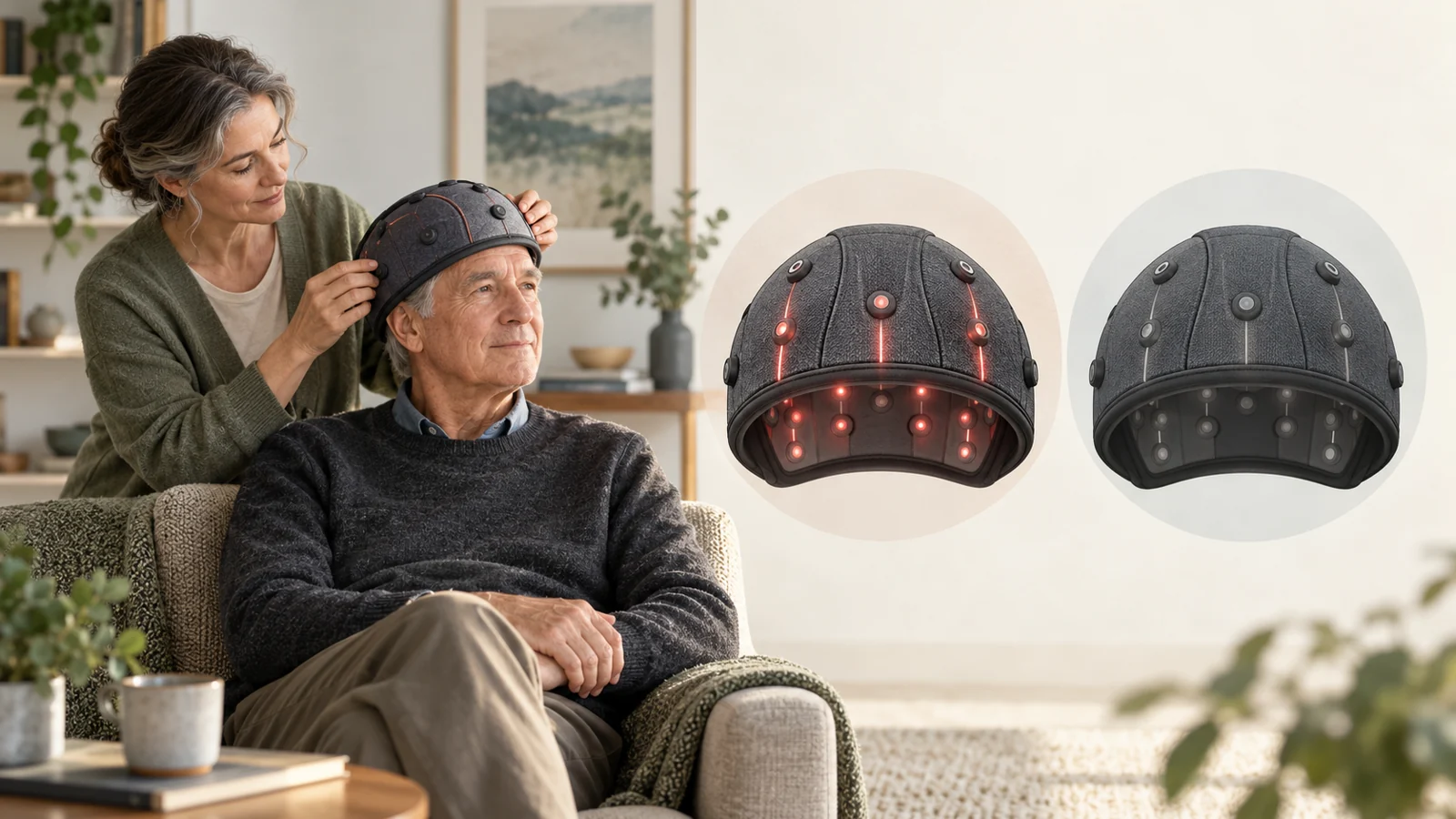
A new registry entry describes a planned study of red-light therapy for people with dementia with Lewy bodies, or DLB. The treatment would use a helmet-like cap at home, with help from a caregiver. But registering that study does not show that the treatment already improves memory, attention, daily life, or brain activity.
What it does provide is a way to test those questions. The proposed comparison would place an active light-emitting cap against an imitation cap designed to look, heat, and operate in the same way. That structure matters because wearing a device, following a routine, and receiving attention from a caregiver could affect the experience even without the intended light treatment.
Why this question matters in Lewy body dementia
DLB can involve cognitive problems that vary from person to person and may fluctuate over time. The registry describes difficulties involving memory, planning and organizing, attention, visual processing, and language. Those changes can affect more than test performance: they may shape how someone manages ordinary activities and how much support a caregiver provides.
The study is intended to examine whether transcranial photobiomodulation, a technical term for applying red or near-infrared light to tissue, might have a useful supportive-care role. Its stated design is interventional, randomized, parallel-group, and focused on supportive care. The planned enrollment is 40 participants.
The device description identifies the LUCIOLE cap as a non-invasive device intended to shine near-infrared light through the skin and skull. Its LEDs emit light at 810 nanometers, with illumination power listed in the registry. Those specifications describe what the device is designed to deliver; they do not show how much light reaches a relevant brain area or which biological process might lead to a clinical change.
The proposed treatment would become part of household life
People assigned to the active group would use the cap twice a day for six months. Each session would last 32 minutes, including 24 minutes of active near-infrared illumination and cooling periods spaced through the session. At least four hours would separate the two daily sessions, and the cap would turn itself off at the end.
This is therefore not a one-time clinic procedure. A caregiver would help position the cap, check that it was working, and start each session. The arrangement makes the household routine part of the question being tested. A therapy could have an interesting biological rationale yet prove difficult to use consistently if the schedule, setup, or supervision is too demanding.
The supplied record describes the LUCIOLE cap as being used for the first time in a clinical investigation involving people diagnosed with DLB. It also says the device does not have a CE mark. That detail characterizes the device as described in this registry record; it is not a prediction about future authorization or availability.
How the imitation cap sharpens the comparison
The sham group would follow the same schedule: two 32-minute sessions each day for six months, with the same assessments as the active group. Its cap is designed to mimic the active version’s appearance, heating, and operation, while its internal electronics and firmware prevent it from delivering photobiomodulation.
Participants and the research team would not know which caps were active or sham. This planned masking helps separate the effect of the light delivery from expectations, handling, warmth, caregiver involvement, and the repeated experience of taking part in a study. It does not guarantee that masking will work perfectly in practice, and the supplied evidence contains no participant outcomes with which to judge that question.
The comparison could therefore address a more specific question than whether people feel different after receiving a new device. It is designed to ask whether the active light-emitting version produces a meaningful difference beyond a closely matched imitation experience.
What the study plans to measure
The study would assess cognitive functions, clinical symptoms, neurological status, quality of life, and functional cerebral connectivity. These measures serve different purposes. Cognitive and clinical assessments can examine symptoms and performance. Brain imaging is intended to examine connectivity. Patient quality-of-life measures address how the condition and treatment relate to everyday experience rather than focusing only on a test score.
Caregivers would also complete measures of their own quality of life and burden. That is important because a home treatment can affect the person with DLB and the person organizing or assisting with its use. A change in caregiver experience would not be interchangeable with a change in cognition, and the proposed assessment plan keeps those domains visible separately.
Evaluations are planned at the start of the study and again at three and six months. The active and sham groups would undergo neuropsychological evaluations, clinical and neurological examinations, MRIs, and blood tests at those points. Participants would also be seen at month seven, one month after the sessions end, for clinical, neurological, and neuropsychological evaluations. That later visit creates an opportunity to examine whether any observed change remains after the routine has stopped.
What this registry entry can establish
The supplied ClinicalTrials.gov record describes a research plan, not a treatment result. It lists the study as NOT_YET_RECRUITING and gives an estimated start in June 2026, estimated primary completion in December 2028, and estimated completion in March 2029. Those dates are plans recorded by the registry, not verified evidence here that enrollment or treatment began.
The record consequently cannot establish that the active cap improves cognition, daily functioning, brain connectivity, or caregiver burden. It also cannot establish tolerability, adherence to the twice-daily routine, successful masking, or any benefit that persists after sessions stop. Nor does the study description support claims that the approach modifies the underlying disease, is ready for routine clinical use, or says anything about consumer light devices.
The value of the planned comparison is narrower and more useful: it could generate human evidence about whether this particular device and home regimen produce measurable differences from an imitation cap in a defined group of people with DLB. Until that work is conducted and its results are reported, the light cap remains an investigational proposal rather than an established option.
What this could mean for care at home
A useful result could make a caregiver-assisted, home-based supportive-care option more plausible for people living with Lewy body dementia. That possibility depends on several conditions arriving together: the active cap would need to produce a meaningful difference over the imitation cap, remain acceptably tolerable, and fit into household life without creating an unreasonable burden.
If those conditions were met, the practical benefit would not be limited to a laboratory measure. Better everyday functioning could make some routines easier for the person with DLB and potentially reduce strain on caregivers. The present record cannot forecast approval, availability, or success. It defines the test that would be needed before those possibilities could be taken seriously.
Key Sources
- Primary source: Evaluating How Red-light Therapy Applied to the Head Affects Symptoms, Daily Life, and Brain Activity in People With Dementia With Lewy Bodies
Government or Regulator · Clinical Trial · 2026-05-22
Keep exploring