
Research Signal – Source date 2025-12-04
Can tai chi improve chronic insomnia more than walking? A ClinicalTrials.gov record describes a human intervention study designed to examine that question, but the supplied evidence does not establish that participants’ sleep improved or that tai chi outperformed walking. The registry documents the research question, but its supplied publication date of December 4, 2025 does not establish when participants began treatment or whether the study had finished.
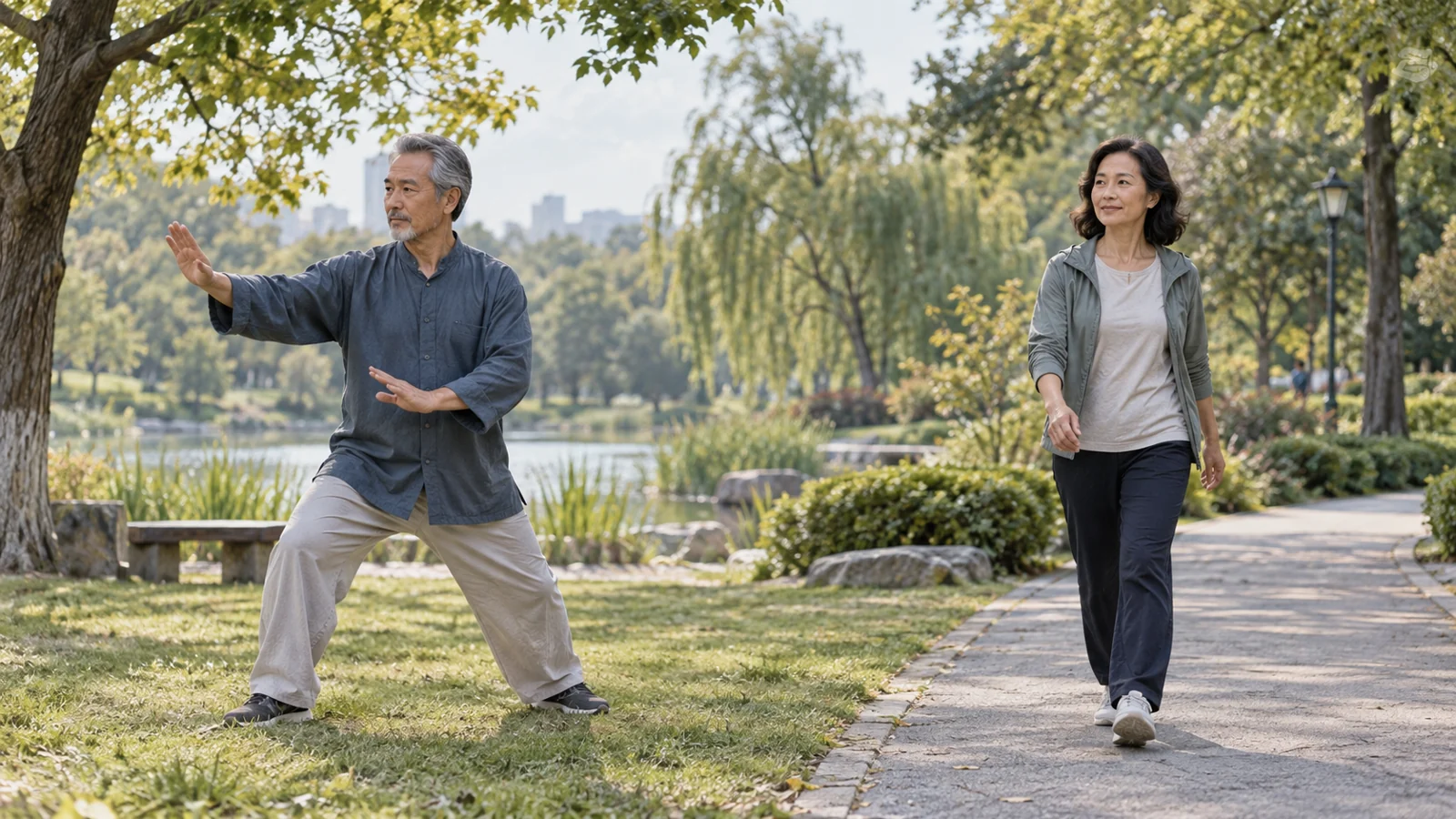
The current registry record describes participants being randomly assigned to either a tai chi intervention group or a walking control group. The comparison gives researchers a way to ask whether tai chi offers something beyond taking part in another exercise routine. It does not, by itself, show that either activity works for insomnia.
Why walking is the comparison
Walking is an active exercise condition, not simply an absence of treatment. That matters because a difference between the groups could be interpreted in relation to two forms of physical activity rather than movement versus no movement. At the same time, the supplied description does not establish that the activities involve matched exercise exposure, identical coaching, or an exact sequence of study phases.
The registry describes tai chi as combining slow limb movements with breathing regulation and mental focus. Those details explain what participants may be asked to practice, but they do not establish a biological mechanism or show which element, if any, would account for a sleep change. The ambiguous phase wording also does not support assigning the study a more specific methodological subtype or reconstructing a precise intervention schedule.
The record’s consent material refers to previous sports medicine research in which 12 weeks of tai chi therapy reportedly improved insomnia symptoms. That statement is background supplied by the registry, not a result from this registered comparison and not an independently verified additional source. The central question here remains whether the described tai chi program produces a meaningful difference relative to walking.
The people this study is meant to represent
The eligibility criteria define a fairly specific group. Participants must be 40 to 69 years old and have insomnia symptoms at least three times a week for three months or longer, including problems such as difficulty falling asleep, waking repeatedly, or waking too early. They must also fall within the stated mild-to-moderate insomnia range, have a baseline insomnia-severity score above 7 and up to 21, and be dissatisfied or very dissatisfied with their current sleep.
The description adds practical sleep thresholds: more than 30 minutes spent falling asleep or awake after sleep begins, and less than 6.5 hours of total sleep per day. Participants must be willing to follow the exercise prescription and coach’s guidance for six weeks, keep their lifestyle and sleep patterns consistent, and remain available at a fixed residence without planned travel or relocation during that period.
Those requirements narrow how readers should interpret any eventual result. People with sleep-affecting conditions such as obstructive sleep apnea or dementia are excluded, as are people taking medications that may affect sleep, including sleeping pills or psychotropic drugs. Recent alcohol or drug abuse, liver or kidney dysfunction, severe cardiovascular or cerebrovascular disease, a history of mental illness, night-shift work, irregular sleep, cross-time-zone travel, and recent participation in another intervention trial are also listed as exclusion factors.
A finding from this group would therefore speak most directly to adults with persistent, mild-to-moderate insomnia who can maintain a stable routine and take part in supervised exercise. It would not automatically apply to every person who sleeps poorly, especially when another medical condition, medication, work schedule, or travel pattern is affecting sleep.
What participation would involve
The supplied description asks participants to cooperate with physicians, complete relevant questionnaires, and attend scheduled follow-up visits. It also describes exercise training, physiological counseling, and standardized assessments, with the research team covering expenses connected with the exercise program. These provisions could make participation more accessible, but access to training and assessment is not the same as receiving a proven therapeutic benefit.
The six-week commitment could also be a practical test of adherence. Participants are expected to follow coaching and preserve consistent daily and sleep routines while attending scheduled study activities. That requirement may make the research setting more controlled, while also limiting how easily the experience transfers to people whose work, caregiving responsibilities, health, or housing make regular attendance difficult.
The consent language identifies muscle pain and joint pain as possible exercise-related harms, particularly for people who have not exercised for a long time. It says these problems could lead to stopping participation, but the supplied material does not establish how often they occurred or how severe they were. Gentle movement should not be treated as automatically risk-free.
Participation is voluntary, and the consent material says people may withdraw at any time without losing their usual medical rights or services. Privacy protections and access to the original medical record for authorized monitoring are also described. These are features of the consent process, not evidence that tai chi improves sleep.
What this could mean for exercise-based insomnia care
If the comparison ultimately shows a meaningful and acceptable sleep benefit for tai chi over walking, it could support a supervised, non-drug option for adults who resemble the enrolled population and want an exercise-based approach. The practical value would depend on more than a difference on a questionnaire: participants would need to tolerate the movements, attend or follow the program, and sustain the routine outside the study setting.
For clinicians and patients, the added value of tai chi over walking would therefore rest on a clear comparative sleep benefit, acceptable discomfort, and a routine people can realistically maintain. The supplied evidence does not yet establish those conditions or show that tai chi should replace existing insomnia care. It establishes a focused question about whether this particular form of supported exercise can offer something beyond walking for a defined group of adults with chronic insomnia.
Key Sources
- Primary source: Tai Chi Improves Sleep Quality in Mild to Moderate Chronic Insomnia Patients
Government or Regulator · Clinical Trial · 2025-12-04
Keep exploring