
Research Signal – Source date 2025-09-23
Bullous pemphigoid is an autoimmune blistering skin disease that can make ordinary parts of life difficult. The condition often affects older adults, and the registry description points to pain, itching, discomfort and trouble with daily activities as reasons to examine whether sleep is also affected. Poor sleep could add to an already heavy physical and emotional burden, but the record supplied here is about how researchers investigated that question, not about a measured answer.
The supplied current ClinicalTrials.gov snapshot describes a study that began on August 4, 2020, reached primary completion on July 10, 2023, and was completed on January 1, 2024. The study is listed as observational, with 122 participants enrolled in total. The snapshot indicates that results are not posted.
Why sleep became the research question
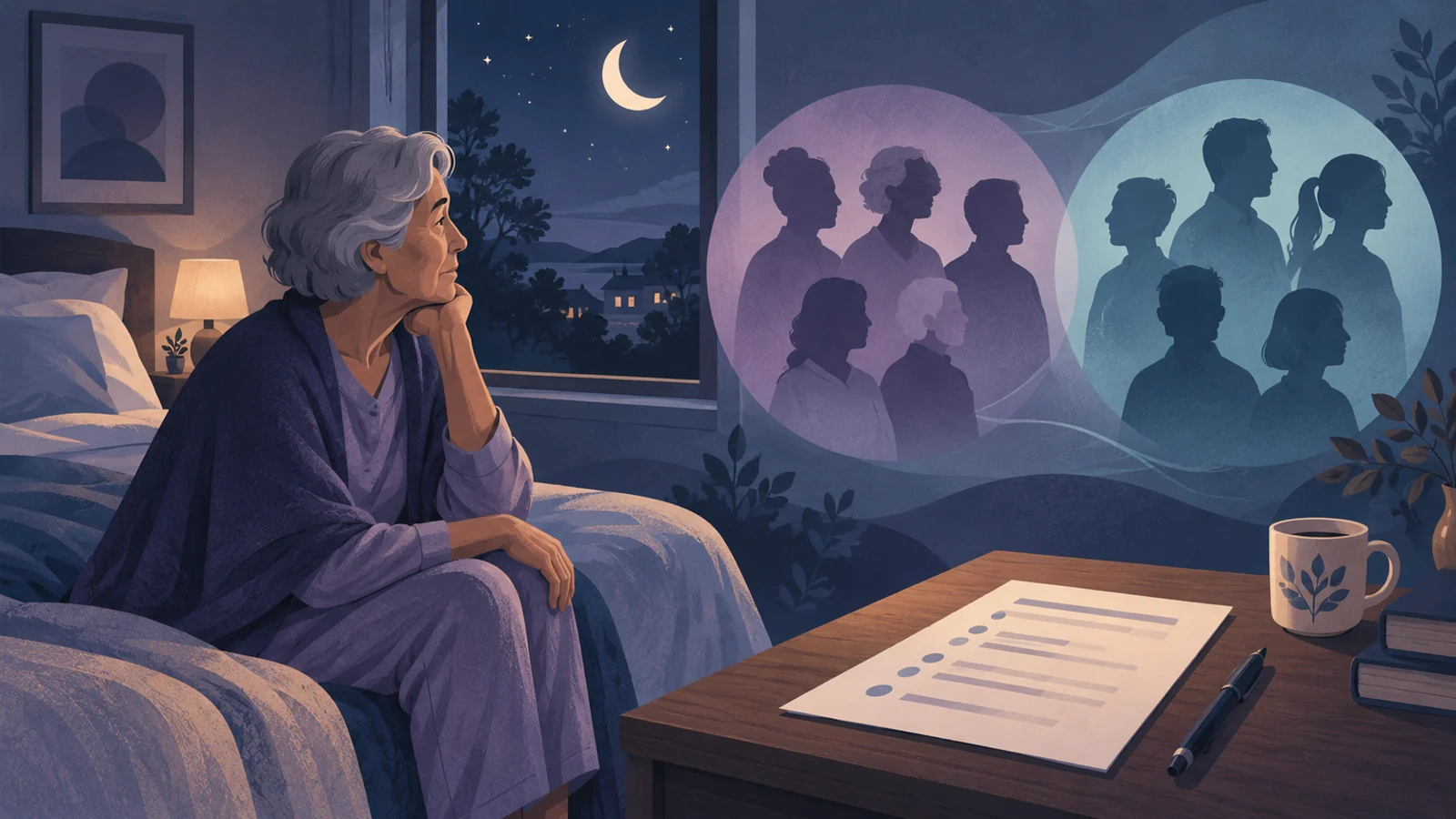
The research question is easy to understand in human terms. It asks whether people living with bullous pemphigoid experience sleep disturbances more often than comparable people without the disease, and whether the severity of the skin condition is related to those disturbances.
The registry describes bullous pemphigoid as a condition that may interfere with dressing, showering, housekeeping and other daily tasks. Pain and itching are presented as part of the rationale for studying sleep, alongside the stress and isolation that can accompany a demanding illness. These statements explain why the study was undertaken; they are not sleep findings from the 122-person cohort.
A completed study with a defined comparison
The planned comparison included people with bullous pemphigoid and age- and sex-matched controls recruited from dermatology consultations. The control participants were being monitored for conditions such as basal cell carcinoma, seborrheic keratosis, actinic keratosis, squamous cell carcinoma or other benign skin tumors, rather than for bullous pemphigoid.
Matching by age and sex helps researchers make the groups more comparable on two characteristics that could otherwise influence sleep patterns. It does not make the groups identical in every respect, and the supplied description does not establish that these clinic controls represent the general population. Other differences between participants could still shape any comparison.
The enrollment figure is a total for the study. The supplied record does not state how many participants belonged to each comparison group, so group proportions cannot be reconstructed from it. The completed status and dated milestones establish the study’s recorded lifecycle, while the absence of posted registry results leaves the central comparison unresolved in this snapshot.
What the questionnaire could measure
The primary outcome used the Insomnia Severity Index, or ISI, a patient questionnaire intended to assess the severity of insomnia symptoms. Participants were to complete it at the enrollment visit and again at month one. The registry describes score bands ranging from no insomnia through subthreshold, moderate and severe insomnia.
Those bands explain how questionnaire responses would be categorized. They do not show how anyone in this study scored. The supplied evidence contains no prevalence estimate, group difference or distribution of ISI categories. A completed observational study can provide a structured way to investigate an association, but its design alone cannot isolate the effect of bullous pemphigoid from comorbidities, medication use, other skin conditions or other influences.
The secondary aim was to look for disease-related predictors of sleep disturbance by relating sleep measures to disease severity. The registry description uses inconsistent names for the disease-severity index, including BPDAI and PDAI, and the supplied evidence does not resolve which terminology or thresholds should govern interpretation. That uncertainty is a reason to avoid treating the secondary aim as a reported predictor finding.
What this record can and cannot tell us
This entry documents a research effort that was designed to compare sleep-related symptoms between a bullous pemphigoid group and a dermatology control group. It does not establish that bullous pemphigoid independently causes insomnia, nor does it show that treating the skin disease improves sleep. It also does not provide enough information to calculate how common sleep disturbance was or whether disease severity predicted it.
The registry’s discussion of an earlier Polish study helps explain the investigators’ interest in the topic, but it is not independently verified evidence for this article and cannot stand in for results from the current study. Likewise, the lack of posted results in this snapshot does not prove that analyses or publications are unavailable elsewhere. It simply means that those outcomes cannot be extracted from the material reviewed here.
What this could change in dermatology care
A useful result from this kind of comparison could make sleep a more visible part of dermatology care for people with bullous pemphigoid. Clinicians might have stronger grounds to ask about troublesome sleep alongside skin symptoms, rather than assuming that the visible disease captures the whole burden a patient is carrying.
That possibility depends on clear comparative findings and workable follow-up care. The study record alone cannot show whether questionnaire screening would improve patients’ lives or whether better control of skin symptoms would restore sleep. It points instead to a practical question: whether recognizing sleep problems as part of the patient’s experience could help care become more attentive to the condition’s wider effects.
Key Sources
- Primary source: Prevalence of Sleep Disturbances in Bullous Pemphigoid Patients.
Government or Regulator · Clinical Trial · 2025-09-23
Keep exploring