
Research Signal – Source date 2023-09-11
At the end of life, a person with dementia may experience apathy, agitation, pain, or sleep disturbance while also becoming less active and less involved in daily activities. Those changes matter to care teams and families, but a questionnaire or conversation may not capture every shift, particularly when communication becomes difficult.
A ClinicalTrials.gov record for DIPH.DEM, or DIgital PHenotyping in DEMentia, describes an observational study designed to add device-based observations to validated assessments. Its central idea is straightforward but easy to overstate: movement and sleep-related patterns may make changing needs easier to notice. Recording such patterns, however, is a different task from reliably predicting when someone will die.
A second way to observe changing needs
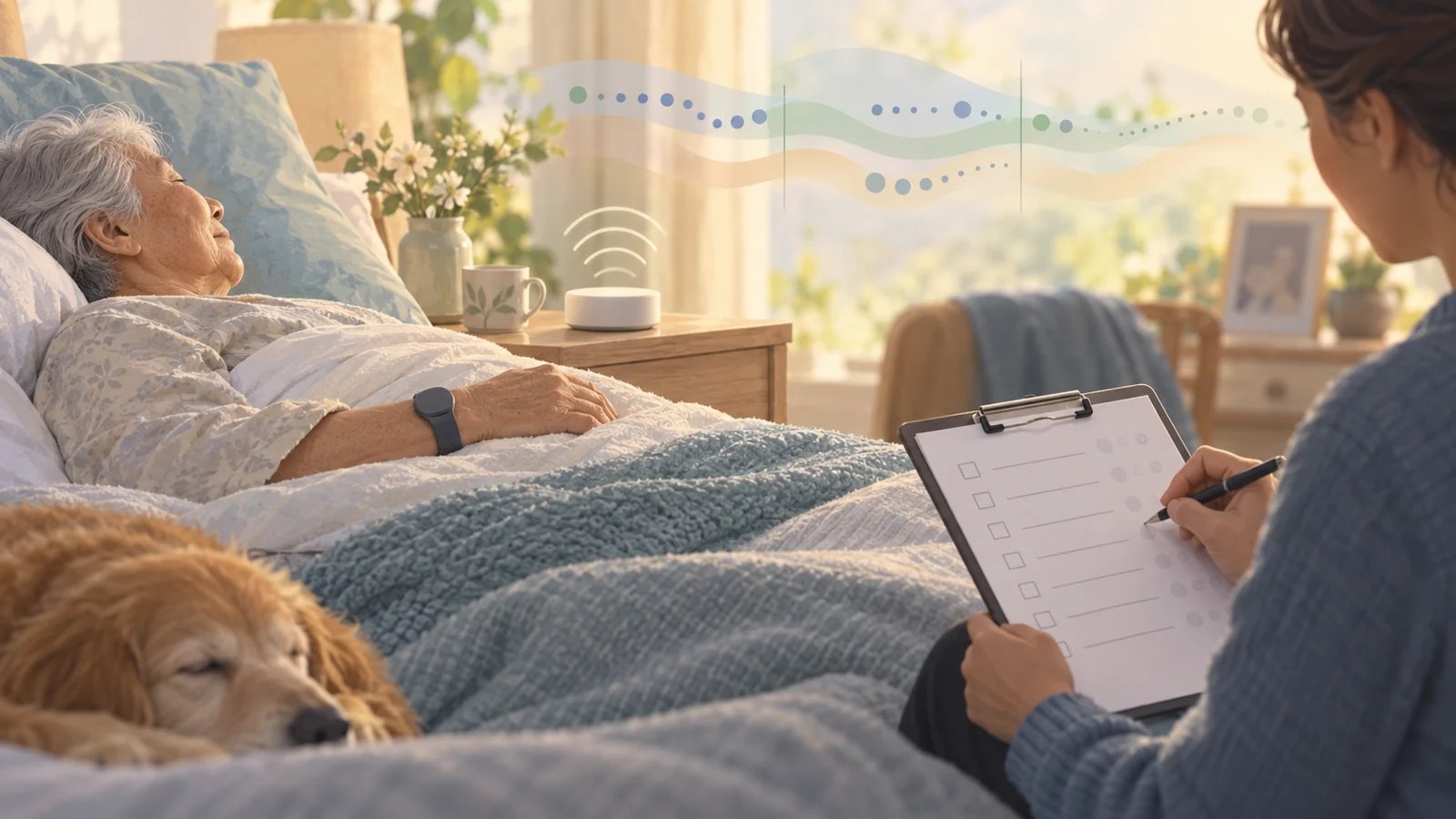
Digital phenotyping here means using device data to describe what a person’s activity and symptoms look like over time. The proposed setup combines a wrist-worn smartwatch with Somnofy, a wireless radar device placed beside the bed, and validated assessment tools. The devices are intended to provide repeated observations of activity and related patterns while assessments add structured clinical context and caregiver input.
That combination matters because each view answers a different question. A sensor can register a change in movement or nighttime pattern; an assessment can help relate that change to apathy, agitation, or another symptom. Neither measurement carries its interpretation by itself. The study is designed around complementary information, not around treating a device trace as a complete account of a person’s experience.
How the observations are planned
The registry description presents DIPH.DEM as a three-year cross-sectional observational study with a target of 50 participants over age 64 living in nursing homes. Participants are intended to be recruited by invitation in Health Region West Norway and Bergen Municipality.
At baseline and every six months, the plan calls for selected traditional assessments and seven days of continuous sensor monitoring. If a participant has a significant change in health status, continuous measurements may begin and continue until the end of life, for up to 12 weeks. Informal caregivers are included to help with outcome measures.
This schedule creates two kinds of information: periodic snapshots across a longer period and closer observation during a major health change. It also keeps the study’s intended scale distinct from a results claim. The material supplied here describes what researchers plan to collect; it does not establish completed enrollment, collected data, or a current recruitment status.
A recorded pattern is not a death prediction
The investigators hypothesize that these observations could support better estimates of time of death and, in turn, more timely discussions about end-of-life interventions and directives. That is the question the study is designed to investigate, not a demonstrated performance result.
Moving from description to prediction would require evidence that particular patterns reliably correspond to timing and that estimates are useful enough to inform care appropriately. The supplied registry evidence provides the rationale, planned sample, and observation schedule. It does not establish a validated death-time estimator, predictive accuracy, or improved care from sensor-guided decisions.
An observed reduction in movement could be important, but its meaning would still depend on the person’s condition and care context. A pattern can prompt closer attention to a possible need without functioning as a diagnosis or a countdown.
What better symptom tracking could mean for dementia care
If sensor patterns become clinically interpretable and useful in real decisions, they could help care teams and families recognize changing needs sooner when a person cannot explain them. That could support earlier conversations about end-of-life preferences, appropriate interventions, and referral to palliative services in nursing homes, hospitals, or home settings.
The potential benefit is practical: a clearer picture of changing needs could give the people around a patient a more timely, shared basis for discussing comfort and care. DIPH.DEM’s description presents that possibility as something to investigate, dependent on whether device observations can be interpreted consistently and used well alongside established assessments.
Key Sources
- Primary source: Digital Phenotyping for Changes in Activity at the End of Life in People With Dementia
Government or Regulator · Clinical Trial · 2023-09-11
Keep exploring