
Research Signal – Source date 2022-08-14
Chemotherapy can kill myeloma cells directly. Some treatments may also change how those dying cells are perceived, giving immune cells clues that help them recognize cancer. Whether that second effect happens depends on more than a drug’s ability to damage a tumor cell: the dying cell must send the right messages, the immune system must interpret them, and the bone marrow must allow an attack to develop.
A 2022 review in Cells brought together earlier mechanistic, preclinical, and clinical observations about this possibility in multiple myeloma, a cancer of plasma cells that grows in the bone marrow. The review’s central idea is that some forms of treatment-related cell death can be immunogenic: they can prompt a response that involves the immune system, rather than simply leaving dead cells to be cleared away. That is a promising way to think about chemotherapy, but it is not evidence that choosing a regimen by these markers improves patient outcomes.
Cell death can carry a message
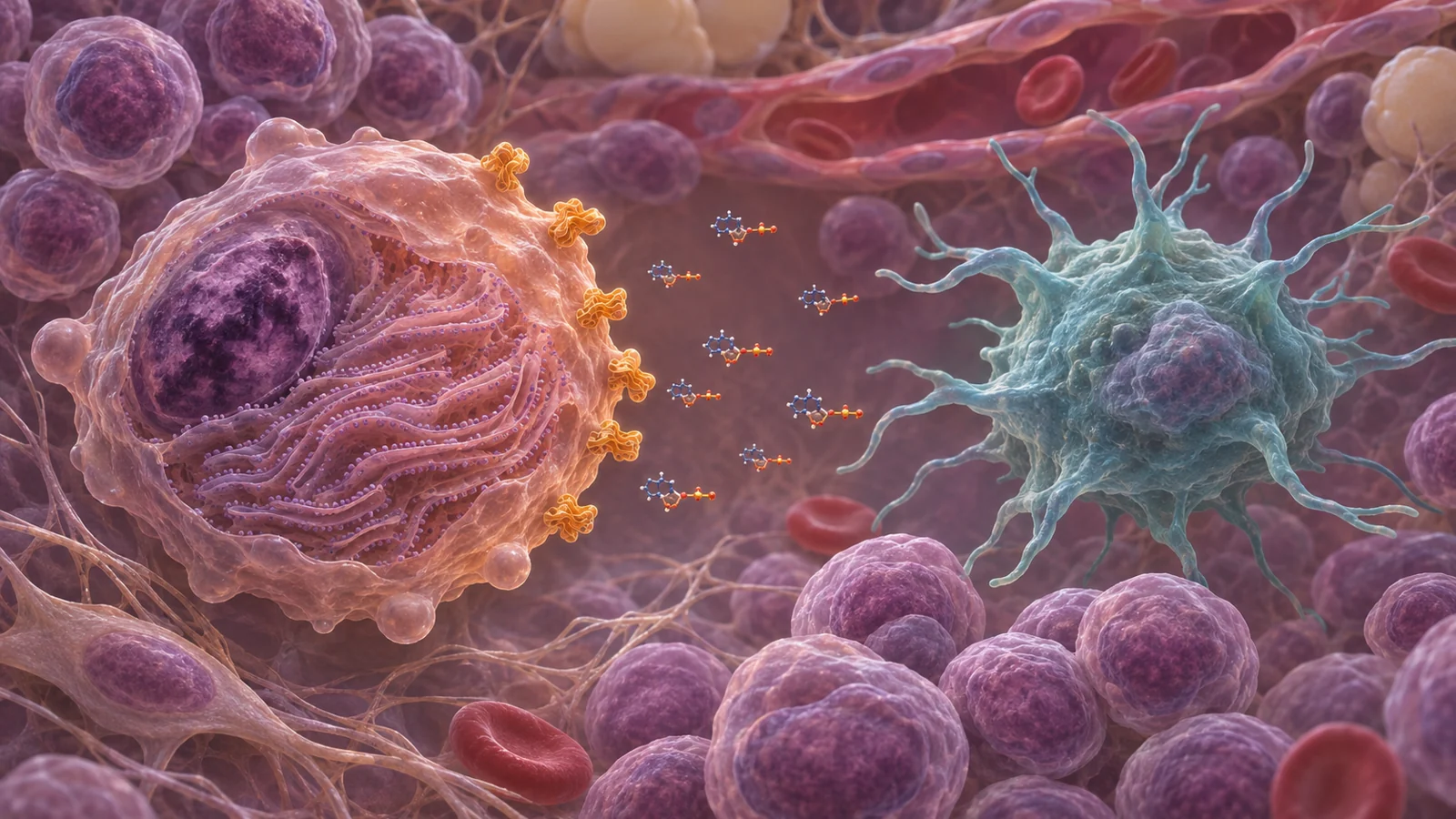
When a cancer cell dies, immune cells may encounter more than cellular debris. In a process called immunogenic cell death, the dying cell changes its surface and releases molecules in a sequence that can help alert nearby defenses. These molecules are known as damage-associated molecular patterns, or DAMPs. They act as danger cues that can prompt immune cells to take up material from the dying cell and prepare a response.
One early cue is calreticulin, a protein normally found inside cells. With certain treatments, it moves to the surface of a dying cancer cell before that cell has fully broken down. There, calreticulin can act like an “eat me” signal. It can bind to CD91, a receptor on dendritic cells and macrophages—immune cells that can engulf cellular material. In the review’s account, this surface display helps those cells take up the dying cancer cell and its contents.
Another cue is ATP, best known as a molecule cells use for energy. During some chemotherapy-induced cell death, ATP is released outside the cell. In that setting, it can act as a “find me” signal, helping recruit immune cells, including dendritic cells, to the tumor. ATP can also contribute to signals that prime T cells, which can recognize and attack targets carrying the relevant features. The steps are connected, but they do different jobs: calreticulin can help with uptake, while released ATP can help draw immune cells in and support their activation.
Taking up tumor material does not automatically teach the immune system to attack it. Dendritic cells must present recognizable cancer antigens—features the immune system can target—and the surrounding environment must support the response. A dying cell can emit danger cues without presenting targets that lead to an effective, specific attack. In that case, the result may be inflammation without useful adaptive immunity, the arm of immunity that includes targeted T-cell responses and immune memory.
The marrow can interrupt the response
Multiple myeloma makes the surrounding environment a central part of the question. The disease changes the bone marrow’s immune community, and the review describes immune suppression developing even in precursor conditions. As myeloma progresses, several types of immune and supporting cells can contribute to weakened surveillance or exhausted responses. The review names regulatory T cells, suppressive myeloid cells, tumor-associated macrophages, stromal cells, and osteoclasts among the participants in this environment.
The balance of immune cells matters. A marrow environment with more suppressive cells, fewer effective T-cell responses, or barriers that hinder immune-cell movement may not support the arrival and action of well-primed cancer-fighting cells. So a danger signal is only one part of the process. Cancer targets must be recognizable, and immune cells must be able to reach and respond to them. The same marrow that houses myeloma cells can also make that response harder to build.
Myeloma drugs offer clues, not a proven selection rule
The review points to several myeloma treatments with observations relevant to immunogenic cell death. Bortezomib and belantamab mafodotin were reported to trigger cell-death-related changes that include surface exposure of calreticulin and HSP90, another stress-associated protein. The review also discusses decitabine and quisinostat, drugs that affect gene regulation, as treatments associated with calreticulin exposure and immunogenic cell death.
These observations help explain why researchers are asking whether some myeloma drugs can make cancer cells more visible to immune defenses. But a marker on a dying cell is not, by itself, proof that a full, lasting immune response follows in patients. The review cites experimental evidence in living organisms that calreticulin is needed for dying myeloma cells to stimulate immunity, but this does not establish a lasting response in patients.
One patient-related clue came from bortezomib. The review describes an association between an interferon-related gene signature in myeloma cells and better clinical outcomes after bortezomib treatment. Interferons are immune signaling proteins; genes activated in response to them can indicate that this kind of signaling is occurring. The association makes the immune effects of treatment worth investigating, but it does not show that the signature caused better outcomes or that selecting treatment by it would improve them.
A combination can help one part of immunity and hinder another
A regimen affects more than cancer cells. It can also change immune-cell numbers and function, sometimes in opposing ways. For example, glucocorticoids are used in myeloma regimens and can help control treatment-related nausea and vomiting while also directly affecting myeloma cells. The review raises a further concern: findings in other cancer types suggest that glucocorticoids may suppress parts of the immune response to immunogenic cell death. Those results do not establish the same effect in myeloma, but they make the combined immune effects of a regimen important to study.
Other treatment effects matter too. The review identifies myelosuppression and lymphopenia—reductions in blood-forming activity and lymphocyte numbers—as potential contributors to immune deficiency and infection risk. A therapy might create useful danger cues in tumor cells while also weakening the cells needed to respond. The direction and size of those effects may depend on the drug, combination, disease, and timing.
Combining chemotherapy with immunotherapy is therefore not a simple matter of adding two ways to attack cancer. The review describes early clinical trials of PD-1 or PD-L1 checkpoint blockade in myeloma as discouraging, including immune-related toxicities when checkpoint inhibitors were combined with immunomodulatory drugs. This experience underscores why proposed combinations need to be assessed together for immune activation, clinical durability, and harm. The review points to timing as an open question, including whether treatment might work differently before immune dysfunction is advanced or after a transplant.
What this could make possible
A future patient and care team might be able to choose among myeloma combinations using dependable evidence that a treatment both damages cancer cells and leaves immune cells able to recognize them. If those signals reliably led to a durable response in the marrow, treatment could be matched not only to the cancer cell but also to the immune conditions needed to keep it in check. The review’s discussion of calreticulin, ATP, and marrow immune barriers sketches the evidence that such a choice would have to connect.
The nearer milestone is a prospective myeloma combination study that measures cell-death signals, functional immune responses, clinical durability, and adverse effects together. That would test whether the cellular messages translate into meaningful patient responses, and whether the rest of the regimen supports or undermines them. The 2022 review makes the case for asking this question; it did not establish a new regimen or demonstrate that marker-guided treatment improves outcomes.
Key Sources
- Primary source: Promises and Challenges of Immunogenic Chemotherapy in Multiple Myeloma.
DOI or Journal Page · Review or Meta-Analysis · 2022-08-14
Keep exploring