
Research Signal – Source date 2022-08-01
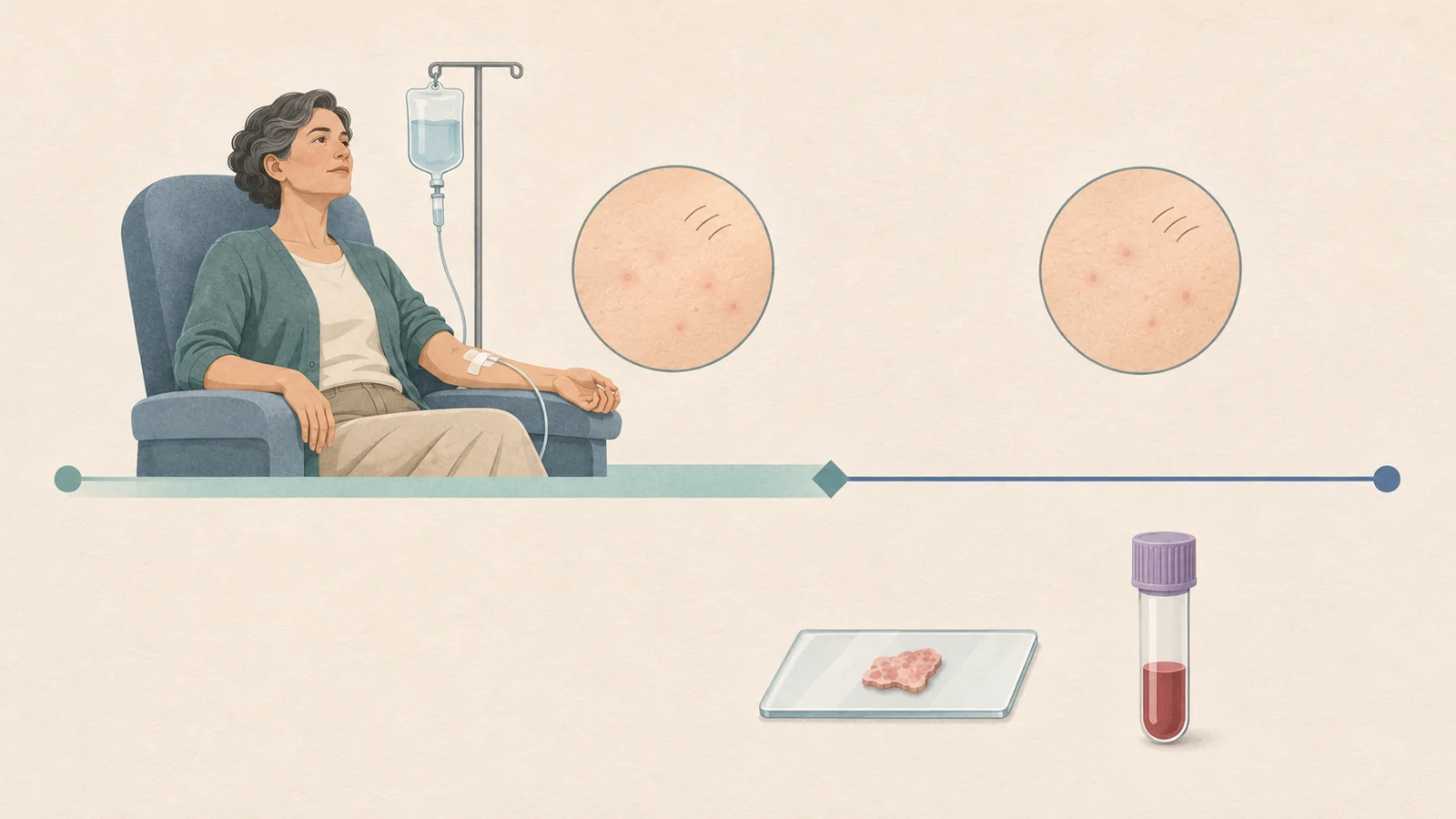
Itching or a vague rash during cancer immunotherapy may be an early symptom of bullous pemphigoid, a blistering skin condition. Bullous pemphigoid was also reported several months after treatment had stopped. The timing can make the condition harder to connect to therapy, while the early skin changes alone cannot identify it.
A systematic review published in 2022 gathered reports of 127 people who developed bullous pemphigoid during or after treatment with immune checkpoint inhibitors, a type of cancer immunotherapy. The cases describe a pattern clinicians may need to consider, including symptoms that can precede blisters and onset after treatment ends. They do not tell an individual patient how likely the condition is.
Itching can come before the blisters
About half of the patients in the review had earlier symptoms such as itching or nonspecific skin eruptions. These signs are clues, not a diagnosis: the review does not show that itching by itself identifies bullous pemphigoid. A symptom can prompt further assessment, but the reported cases do not establish how accurately any particular symptom pattern predicts the condition.
Timing also varied. The reported cases involved several types of checkpoint inhibitor, so the review was not limited to one treatment class. Bullous pemphigoid was also reported up to several months after checkpoint inhibitor treatment ended. That delay matters when clinicians are considering possible explanations for a persistent skin problem, because the treatment may no longer be ongoing when symptoms become apparent.
The review drew on 70 studies, most of the existing knowledge having come from individual case reports or small case series. Researchers searched four databases, selected articles reporting eligible individual patients, and abstracted a predefined set of information. This brought scattered accounts together across multiple treatment classes. It did not create a comparison group or a count of everyone who received these therapies.
Tests add evidence beyond the symptoms
When undertaken, examination of skin tissue or blood-based testing helped establish the diagnosis. In plain terms, tissue examination looks at a skin sample, while blood tests can look for relevant diagnostic findings. These tests can add evidence to what a clinician sees and hears; the review does not specify a validated testing sequence or how accurate one would be for people with these early symptoms.
That distinction is useful because itching and vague eruptions are not specific to bullous pemphigoid. The assembled reports show that such symptoms preceded the condition in approximately half of the patients described, but they cannot tell us how often those symptoms in all immunotherapy patients would lead to a confirmed diagnosis. There is no treated-population denominator in these cases from which to calculate an individual’s risk.
Reported care involved difficult choices
Immunotherapy was discontinued in most of the reported patients after bullous pemphigoid developed. The most common treatments were corticosteroids, steroid medicines applied to the skin or given to act throughout the body. Antibiotics and other medicines that affect immune activity throughout the body were also used alongside corticosteroids or as options intended to reduce reliance on them.
Other medicines, described in the review as biologic or targeted agents, were used mainly when corticosteroids had not worked well enough. Their use was associated with marked symptom improvement in most of the reported patients who received them. Because the evidence comes from collected patient reports rather than controlled treatment comparisons, it cannot show which option works best or determine the right choice for an individual. The review describes treatment decisions made in these cases; it does not introduce a new clinical trial or a validated care protocol.
How this could shape the future
Imagine a person who develops a skin problem months after cancer immunotherapy ends. Their care team could recognize whether the symptom pattern resembles cases described in the review and use tissue or blood tests to investigate the possibility of bullous pemphigoid. More dependable guidance on when those symptoms merit testing—and how to choose among treatment options—could make the cause and the next clinical decision less uncertain.
The review contributes a clearer account of delayed onset, early symptoms, diagnostic testing, and reported treatments. Turning that account into reliable decisions would require further clinical validation and stronger treatment evidence. One measurable step would be a prospective study following people during and after checkpoint inhibitor therapy to test how well early itching or rash predicts confirmed bullous pemphigoid. The tests already described can help establish a diagnosis; future evidence could clarify when and how clinicians should use them.
Key Sources
- Primary source: Association of Bullous Pemphigoid With Immune Checkpoint Inhibitor Therapy in Patients With Cancer: A Systematic Review.
DOI or Journal Page · Review or Meta-Analysis · 2022-08-01
Keep exploring