
Research Signal – Source date 2022-06-22
Checkpoint inhibitors have helped some people with melanoma by enabling immune cells to attack cancer. Yet many patients gain limited benefit. A review published on June 22, 2022, examines why: a tumor’s relationship with the immune system can hinder treatment in more than one way, and even the presence of immune cells may not tell the whole story.
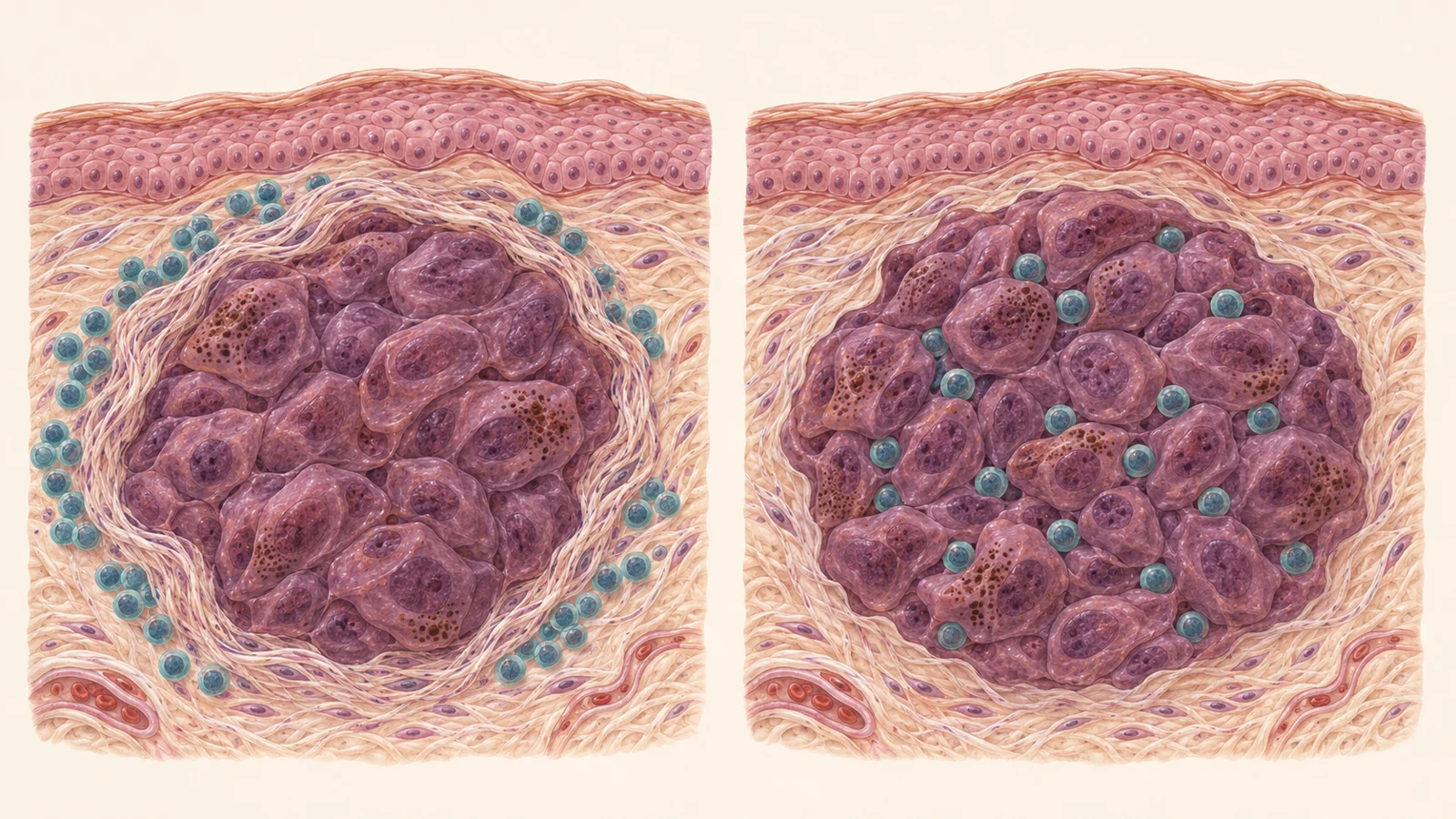
The review focuses on the tumor microenvironment (TME), the cells and conditions surrounding cancer cells inside a tumor. It describes two broad patterns. In a non-inflamed melanoma, relatively few immune cells have entered the tumor. In an inflamed melanoma, immune cells are present, but their presence alone does not ensure an effective attack. These patterns help explain possible resistance; they are not a test for deciding how an individual patient will respond.
When a melanoma is hard for immune cells to reach
A non-inflamed tumor may have few tumor-infiltrating lymphocytes (TILs)—immune cells that have moved into the tumor. The review describes several possible reasons, which affect different steps in the immune response.
One is a shortage of recognizable tumor signals. Tumor mutational burden (TMB) refers to the number of genetic changes in tumor cells. Some changes can give rise to new features, called neoantigens, that the immune system may recognize. When a tumor has a low mutational burden, it may offer fewer such signals for immune cells to detect.
A second obstacle is defective antigen presentation. Antigen presentation is how cells display recognizable pieces of proteins to immune cells. Even if a tumor contains unusual signals, problems with this display can make them harder for the immune system to identify.
A third obstacle is physical: barriers in the tumor environment can restrict immune-cell migration. In that case, immune cells may have difficulty reaching cancer cells, regardless of whether they could recognize them.
These are distinct possible routes to a sparse immune presence: there may be fewer recognizable signals, those signals may not be presented effectively, or cells may be impeded on the way in. The review discusses them as biological explanations for why some melanomas may respond less to immunotherapy. It does not establish that changing a tumor from non-inflamed to inflamed improves outcomes.
Inside the tumor, immune cells can lose function
The more surprising problem arises when tumor-specific CD8+ T cells—the immune cells that can recognize a particular tumor—have already entered the melanoma. Persistent exposure to the signals they recognize can leave these cells dysfunctional. The review calls this state exhaustion: the cells remain present, but their ability to respond effectively is reduced.
That helps explain why counting immune cells alone can give an incomplete picture. A tumor with infiltrating cells may still resist checkpoint immunotherapy if those cells have become less capable of attacking it. The relevant biological question is not only whether immune cells are there, but also whether they can do their job.
The review also connects resistance with genetic and epigenetic mechanisms. These are changes in how cancer cells and their surroundings behave or regulate activity; they can shape the interaction between a tumor and the immune system. The broad point is that resistance can emerge through the tumor’s biology and the state of the immune response together, rather than from one simple feature.
A biological clue is not yet a treatment-selection test
The inflamed and non-inflamed patterns offer ways to think about resistance, but the review describes a continuing challenge: reliable predictors of response and toxicity are lacking. The supplied evidence does not provide a validated test, or performance estimates showing that immune-cell counts or exhaustion can reliably predict an individual patient’s outcome.
That gap matters clinically. A biological explanation can suggest what may be going wrong, but it does not by itself show which treatment will work for a particular person. The review considers potential biomarkers in both adjuvant treatment—given after the main treatment to address risk of recurrence—and metastatic disease, where cancer has spread. It presents this as an area for research, not a completed method for choosing treatment.
How this could shape the future
A future melanoma consultation could become more specific if a validated assessment could distinguish immune cells that cannot enter a tumor from cells that have entered but no longer work effectively. For people whose tumors look similar by cell count alone, that added information could help explain why the immune response is falling short and make treatment discussions more tailored. Reaching that point would require reliable tests and treatment choices shown to help in the relevant setting; the review does not establish either.
A nearer milestone would be prospective evidence that a combined measure of immune-cell location and function predicts checkpoint-treatment response better than cell presence alone. That would test whether the review’s access and exhaustion distinctions add useful information for patients, rather than serving only as explanations of tumor biology.
Key Sources
- Primary source: Targeting inflamed and non-inflamed melanomas: biological background and clinical challenges.
DOI or Journal Page · Review or Meta-Analysis · 2022-06-22
Keep exploring