
Research Signal – Source date 2022-01-11
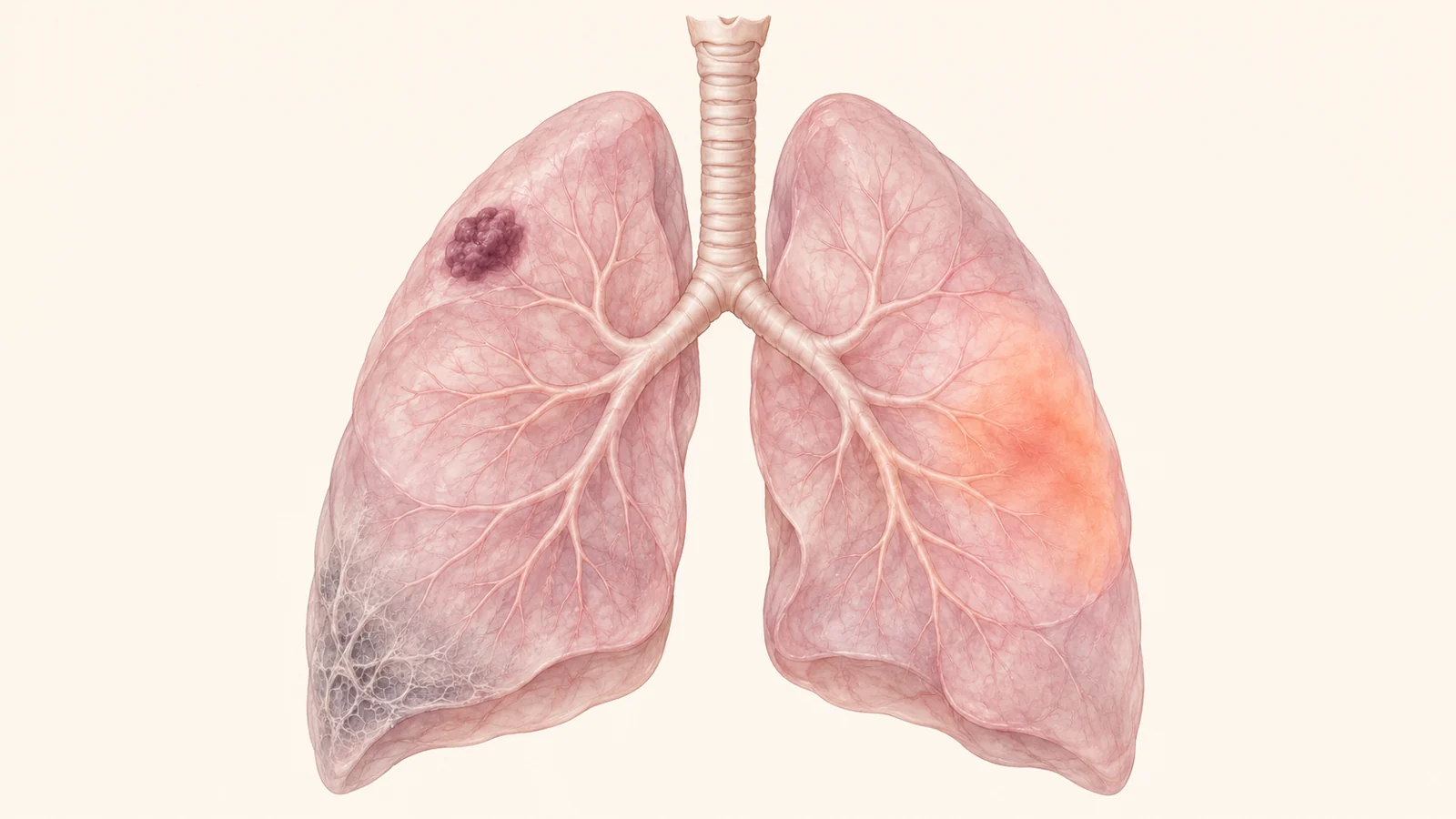
People with advanced non-small-cell lung cancer and preexisting interstitial lung disease face two findings that matter at once: immune checkpoint inhibitors showed tumor activity in this group, and lung inflammation was more common than among patients without the lung disease. Interstitial lung disease affects lung tissue. Because people with it are often excluded from checkpoint-inhibitor trials, clinicians have had less evidence to guide discussions about treatment.
A systematic review and meta-analysis published January 11, 2022, pooled results from 179 patients across 10 studies. It estimated an overall response rate of 34% and a disease-control rate of 66% among patients with preexisting interstitial lung disease. The same analysis found higher rates of checkpoint-inhibitor pneumonitis, a treatment-associated inflammation of the lungs. These pooled figures describe groups; they cannot determine whether treatment offers a net benefit to any one person.
Tumors responded in a substantial minority
The pooled overall response rate was 34% (95% confidence interval, 20%–47%). In plain terms, about one in three patients in the included group had a tumor response as counted by the studies. The disease-control rate was 66% (95% CI, 56%–75%), a broader measure of cancer control than tumor shrinkage alone.
Compared with patients without preexisting interstitial lung disease, the group with it had higher reported odds of tumor response: odds ratio 1.99 (95% CI, 1.31–3.00). An odds ratio compares the odds of an outcome between groups; it does not say that the response probability itself was twice as high. The comparison suggests that tumor activity was not obviously absent in the group often left out of trials, but it does not show that interstitial lung disease caused the higher response odds.
For disease control, the pooled odds ratio was 1.46 (95% CI, 0.94–2.25). Because that confidence interval includes 1, the analysis does not establish a clear advantage for either group on this measure. The abstract also says progression-free survival was not inferior in patients with interstitial lung disease, without supplying a pooled estimate here. The response result is therefore one part of the picture, not a complete account of how long treatment helped or whether its benefits outweighed its risks.
Lung inflammation was more frequent and sometimes severe
Checkpoint-inhibitor pneumonitis is inflammation in the lungs associated with this treatment. The pooled estimate for any-grade pneumonitis was 27% among patients with preexisting interstitial lung disease, compared with 10% among those without it. For grade 3 or higher pneumonitis, the estimates were 15% and 4%, respectively. These are not small differences: the more severe category was estimated in roughly one in seven patients with the preexisting disease and about one in 25 without it.
The meta-analysis found higher odds of pneumonitis in the interstitial-lung-disease group for both any-grade cases (odds ratio 3.23; 95% CI, 2.06–5.06) and grade 3 or higher cases (odds ratio 2.91; 95% CI, 1.47–5.74). The authors characterized pneumonitis in this group as often mild and manageable. That interpretation sits alongside the pooled 15% estimate for grade 3 or higher cases, which makes clear that the overall pattern also included substantial illness. A group estimate cannot tell a patient which course they would experience.
The coexistence of tumor responses and increased lung inflammation changes how the efficacy findings should be read. A response rate alone might suggest promise, while the pneumonitis estimates show a safety concern that could weigh heavily in the same treatment decision. The analysis does not establish that interstitial lung disease itself caused either pattern, and it does not identify a selection, monitoring, or prevention approach that improves outcomes for this subgroup.
What pooling these studies can tell us
The review searched PubMed, EMBASE, and the Cochrane Library through April 2021, with no language or study-design restrictions stated in the abstract. It brought together 10 studies with 179 patients and compared pooled outcomes for patients with and without preexisting interstitial lung disease. This gives a broader view than a single small report and makes the paired response and pneumonitis estimates visible.
The evidence remains a synthesis of a small patient group. The abstract does not describe the mix of study designs or how much the results varied across studies, so this account cannot judge their consistency. The comparisons are associations across groups, not proof that the lung disease produced a particular treatment response or complication. Nor do they set a treatment rule: individual decisions require information beyond these pooled estimates.
What this could change
In a future consultation, a person with advanced lung cancer and existing interstitial lung disease could discuss checkpoint treatment with dependable estimates for both tumor response and serious lung inflammation in patients like them. The possible advance is a more reliable basis for that conversation, not a new checkpoint drug. This synthesis provides a starting bridge by placing efficacy and pneumonitis findings side by side; wider clinical benefit would depend on stronger evidence and care approaches that are tested separately.
One nearer milestone would be a prospective cohort that includes patients with preexisting interstitial lung disease and reports tumor response alongside pneumonitis by severity, with comparable patients who do not have the disease. Such evidence could clarify how reliably the pooled pattern applies to this often-excluded group. It would not, by itself, establish which treatment or care approach is best for an individual.
Key Sources
- Primary source: Clinical Outcomes of Immune Checkpoint Inhibitor Therapy in Patients With Advanced Non-small Cell Lung Cancer and Preexisting Interstitial Lung Diseases: A Systematic Review and Meta-analysis.
DOI or Journal Page · Review or Meta-Analysis · 2022-01-11
Keep exploring